It has been four years since La Soufrière Volcano roared to life on the island of St. Vincent, after being dormant for decades. Explosions and heavy ash falls blanketed wildlife habitats, further threatening endemic species like the Vulnerable St. Vincent Amazon (Amazona guildingii) and Endangered Whistling Warbler (Catharopeza bishopi). Since this disaster, BirdsCaribbean and partners have been working with the St. Vincent Forestry Department to strengthen conservation capacity through monitoring and research on forest birds and their habitats, as well as outreach and education.
In May 2025, a vital training opportunity arose.
Five forestry officers traveled to Rio Grande, Puerto Rico. There they received technical training in the conservation and management of native Caribbean parrots. This exchange was with the U.S. Fish and Wildlife Service’s Puerto Rican Parrot Recovery Program and, supported by a grant from the United Nations Development Program (UNDP). Over five days spent at the captive rearing and release facility in El Yunque National Forest, the trainees learned how to operate captive breeding facilities, techniques involving the care, monitoring and release of captive and wild parrots, banding and attaching radio transmitters and, critical “parrot first-aid.”
The foresters intend to put to use the valuable lessons learned in current and future efforts to protect the St. Vincent Amazon, their National Bird. Please enjoy this lively account in the words of Leon Matthews (Forestry Officer 3), Ansaki Roberts (Technical Aide) and Felicia Baptiste (Forestry Officer 1), which they describe as “wonderful, nerve-racking, and informative.” They were accompanied by Technical Aides Quasim Roban and Fabian Young, who also added their comments. Enthusiasm was high!


Our Fun and Interesting Experiences on the Island of Enchantment
St Vincent and the Grenadines is home to the St. Vincent Amazon. Our National Bird’s habitat is the interior of the lush mountainous forest in the Jennings-Congo Valley, South Rivers, Vermont, Hermitage and Richmond. Apart from natural disasters like catastrophic hurricanes and volcanic eruptions, this endemic bird’s long-term survival has faced serious threats, including illegal trafficking and conflicts with farmers.
Coming to Puerto Rico
Ansaki: Anyone can dream all they want to visit America—however Caribbean nationals can’t enter without a nonimmigrant visa. A team of five were selected to take part in a training in Puerto Rico, but guess what? None of us had a visa! So on 9th April we traveled, with high hopes, to the U.S. Embassy in Barbados for an interview on the 10th. Thankfully we were all granted visas which meant we could continue with our plans to travel to Puerto Rico.
Leon: The Embassy was a bit intimidating with all the security, but our mission was complete.
Felicia: Our travel date was soon after—27th April. We packed our carry-ons and headed to Argyle International Airport, eager to get to the aviary at the El Yunque National Forest. The boys decided to walk around the airport to kill time and look for food. Ansaki, being the smart one, brought her own food. We sat there and waited for our turn to board the plane, and oh! Were we in for a long wait…
Ansaki: I got to the airport around 10 a.m., and was awaiting the arrival of my other colleagues—just to hear the flight was delayed. We finally boarded our flight at 4:15 p.m. instead of 1:15 p.m. During the flight delay, we appreciated the constant support of the excellent team via Whats App. “Welcome to the world of international air travel!” joked U.S. Fish and Wildlife Service (USFWS) Wildlife Biologist Dr. Thomas White (Tom), our host and Head of the Puerto Rican Parrot Recovery Program in Rio Grande, Puerto Rico.
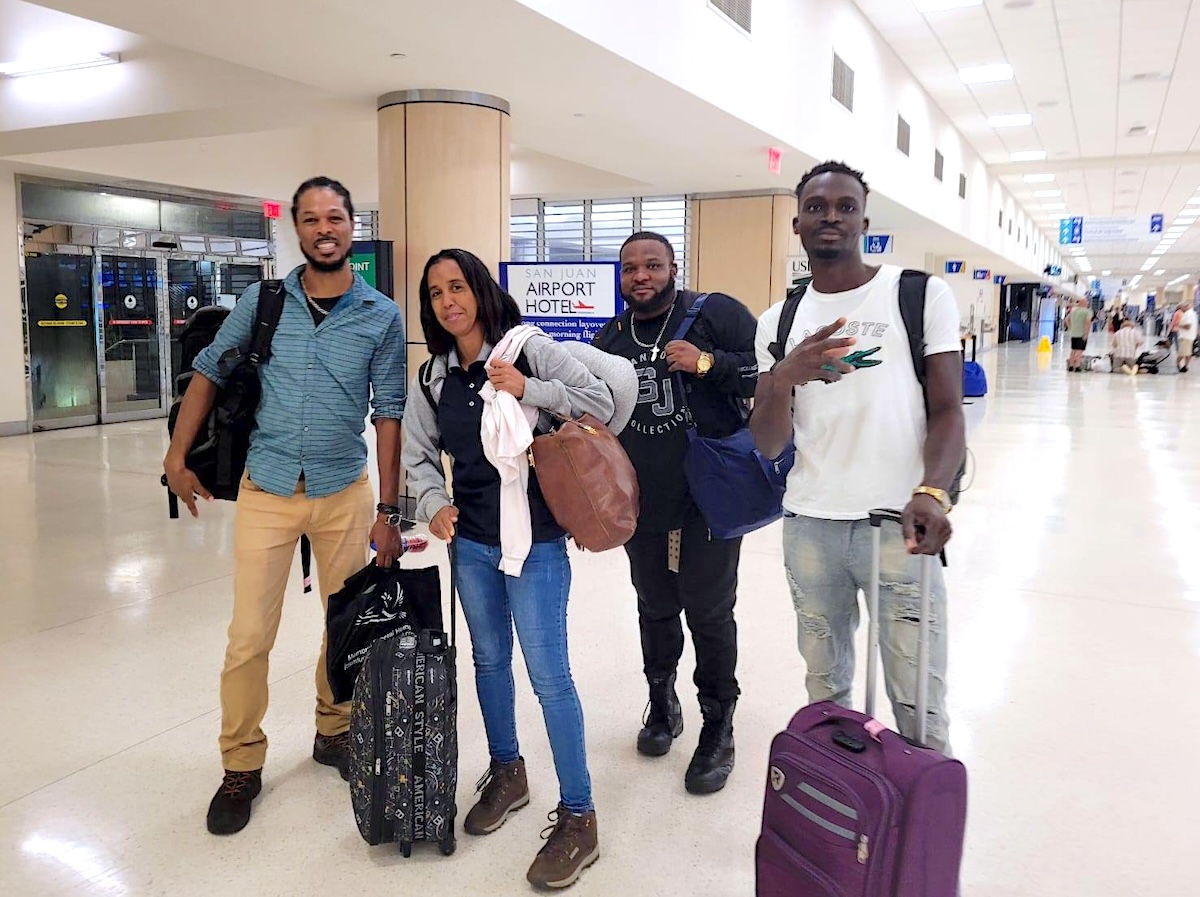
Felicia: We were finally on our way. Now you would think, “We are just going to one of our Caribbean islands, it shouldn’t take too long.” But we were wrong. The two flights took a total of nine hours! The first leg of the journey to JFK International Airport in New York City was five hours, and the second leg to San Juan was another four hours. By the time we arrived in New York, we were officially tired and hungry (time didn’t allow us to grab food at JFK)—and we weren’t even at our destination yet!
Navigating new shores
Ansaki: We arrived in Puerto Rico on 28th April at 3:02 a.m., and were kindly escorted by BirdsCaribbean Operations Officer, Alexia Morales, and her partner, Mario, (our saviours) safely to our Airbnb in Rio Grande. We quickly settled in and rested for a while.
Leon: As the senior officer, I had to take on the driving responsibility. It was an experience! Driving a left-hand drive vehicle for the first time, paired with the task of driving on the right side of the road was scary as I had to adapt immediately. Nerves got the better of me—but I had to do it for the team. I was so happy to get to the Airbnb. My fingers cramped from holding onto the steering wheel so tight like my life depended on it—and yes, it did!
Ansaki: Our team met up with Tom and his beautiful wife Arelis at “El Patio de Lola” for dinner later that evening. Then we headed to the supermarket to buy groceries, because we hadn’t had a good home-cooked meal since the day before. With its size and huge variety, Famcoop Supermarket became our favorite choice for shopping almost every evening.
Felicia: Tom and Arelis were our guides to the supermarket. They led us to the parking lot and then waved “goodbye.” We were happy we found food to cook to our hearts’ content. We shopped, comparing prices back home (it’s a bit cheaper in PR), wandered around the supermarket, and proceeded to the parking lot. It was then we realized we had a small problem—we didn’t really know our way back to the Airbnb! Leon said, “We’ll figure it out—we will count the traffic lights.”
And so we started back home, counting traffic lights, until at the first traffic Ansaki shouted, “Turn left!”
The others insisted, “ No, keep straight, we’re not there yet.”
Fortunately Quasim remembered and guided, “Look out for the big restaurant sign at the next traffic light.”
Leon said, “Ansaki, stop talking, you’re giving wrong directions!”
In spite of everything we got back to the Airbnb safely, with the confidence that we could find our way to and from the supermarket when needed.


Inside the aviary
Ansaki: The next day we packed our lunch and headed out with our ‘trusty’ driver Leon, who drove us to the USFWS compound in El Yunque. The drive took us through the forest. The main highway in St. Vincent is located along the coast of the island, so having a drivable road through a forest was interesting.
Leon: It was time for me to shine again and the nerves kicked in. I had to drive in a strange country, through three-lane highway traffic, heading to somewhere I didn’t know, and all I could think about was Tom’s statement, “It’s so easy to find, even a blind man from St. Vincent can find it.” He was correct! It took us just over 30 minutes to get to the USFWS compound.
Ansaki: We arrived at the El Yunque Parrot Recovery Aviary, where we were greeted and introduced to the Aviary staff. We received a brief history of the Puerto Rico Parrot Recovery Program from Tom. I accompanied Iris to take the baby chick to the foster parent cage. After, Felicia and I assisted Arelis with feeding the parrots. We also looked at live videos of parrot nests. In the evening, we visited the El Yunque National Forest Visitor Center and learned about forest management practices and their application to parrot conservation.


Testing of egg to know when it is fertile
Ansaki: During our time in the incubator room Iris showed us how to check for fertile eggs. “Lights out,” said Iris. In the darkened room she turned on a flashlight and gently placed it under the large end of an egg taken from the incubator; we were able to see the live embryo within the egg shell. Eggs that are not fertile look glossy. An incubator is used to help with the hatching process, especially for parrots that are inexperienced. I didn’t know it was that easy to confirm when an egg is fertile.
Felicia: On day two we learned how to prepare food for the parrots. The bowls, knives, and cutting board were washed in warm water and sterilized. Fruits and vegetables were cut into small pieces, mixed with bird feed, nuts, calcium, and vitamins (given to parrots with chicks).


Another exciting task lay ahead of us that day:
Practicing how to attach radio transmitters on the parrot
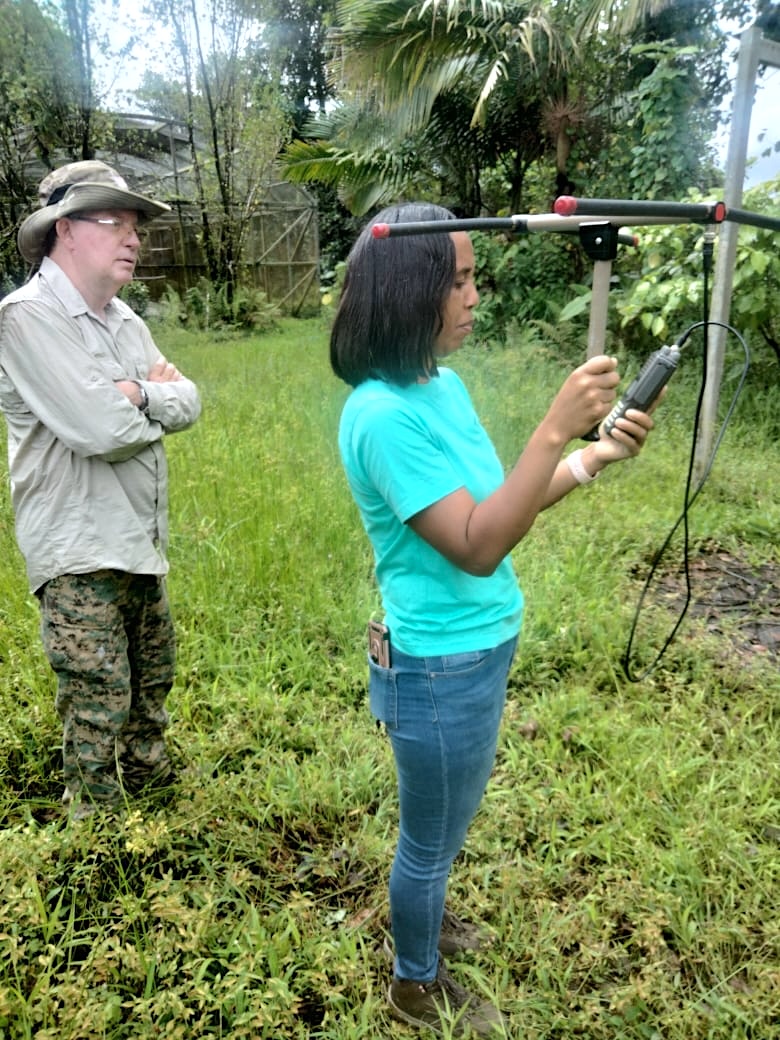
With assistance from Iris, Tom demonstrated how to attach the first radio transmitter on the parrot. He then guided each member of the team on how to do it. Firstly a parrot was selected to practice on with a dummy transmitter. Two people worked together as a team, with one holding the parrot in the correct way, while the other prepared to place a dummy radio transmitter on the parrot.
Many Amazona species favor dense tropical forest canopies. Radio telemetry allows researchers to obtain location and movement data of these birds that would otherwise be extremely difficult to obtain. This technique helps researchers track parrot movement and behaviour throughout the habitat over time which is valuable for the species management and conservation.


The dummy transmitter is placed around the neck of the parrot, then secured, and tightening off is completed using an instrument to clamp both ends together. One finger space is left between the parrot neck and the radio transmitter, before cutting off the excess wire of the radio transmitter.
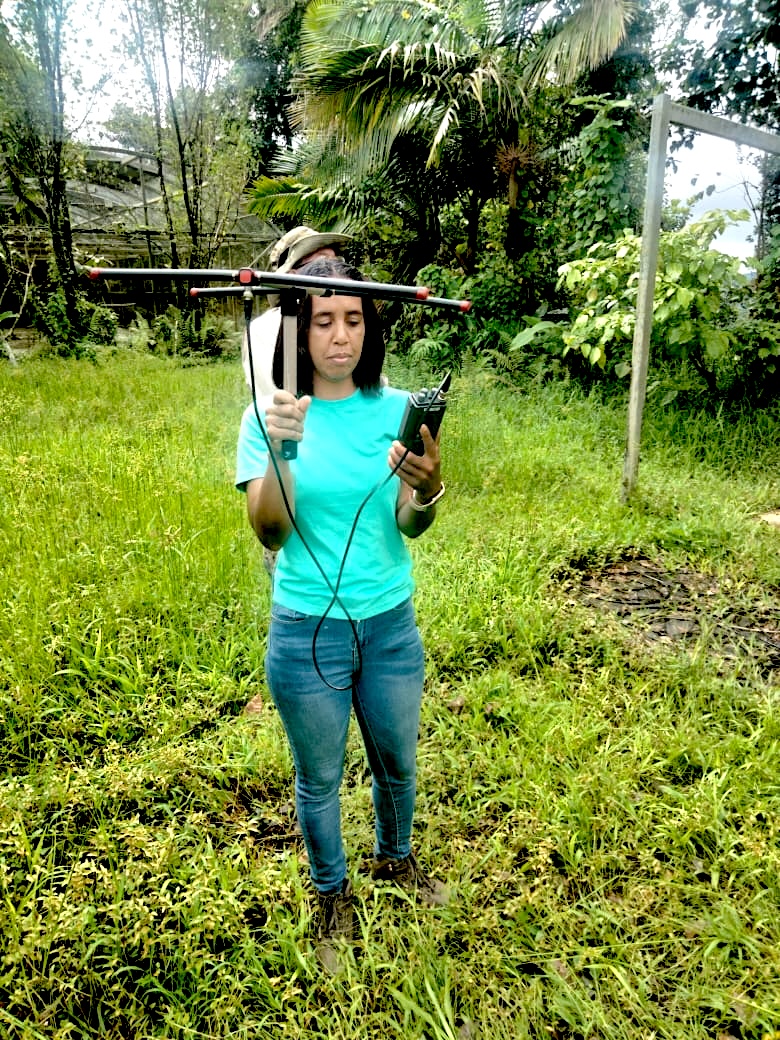
On day three, we practiced using telemetry equipment to locate the parrots in the wild that have been equipped with radio transmitters. We hiked along a narrow trail to identify wild parrot nests.
Afterwards, we headed to the “parrot hospital” where Dr. Tony, the veterinarian, imparted a wealth of knowledge on how to care for sick parrots before the vet can arrive. The consistency of the meal prepared and the instrument used to feed the sick parrot was an eye-opener for me.
Felicia was intrigued with every aspect of the experience in the hospital.
Felicia: On day three, we met Dr. Tony again, who took us through various tools and procedures in caring for sick birds. One of the first procedures was inserting a nasogastric (NG) tube to feed a sick bird. Dr. Tony showed us how to properly position the tube and the parrot for tube placement. This part of the demonstration had to be handled with care as the membrane in the parrot’s throat can easily tear or be damaged. When placing the tube, Tony showed us how to feel and separate the trachea from the esophagus so as to not accidentally push the tube into the parrot’s lungs. Each person was given a chance to practice the placement.
The second procedure took place in the nursery’s hospital. Dr. Tony anesthetized a parrot and demonstrated how to locate and stop bleeding from a blood feather. He explained that feathers, like human hair and nails, are keratinized, and have no blood supply or nerve endings once fully developed.However, growing feathers—called pin feathers—contain a blood supply that nourishes their development. If a pin feather is broken prematurely, it becomes a “blood feather” and can bleed heavily. If not treated quickly, this bleeding can be fatal. This demonstration emphasized just how critical proper handling and monitoring are for the health and safety of the birds.
Dr. Tony also reminded us that as foresters we are the first responders for the parrots. According to Doc, “If you call the vet and he takes more than 30 minutes to get there and your bird is still alive when re arrives, it was never an emergency.” The demonstrations were done on the Hispaniolan Amazon.
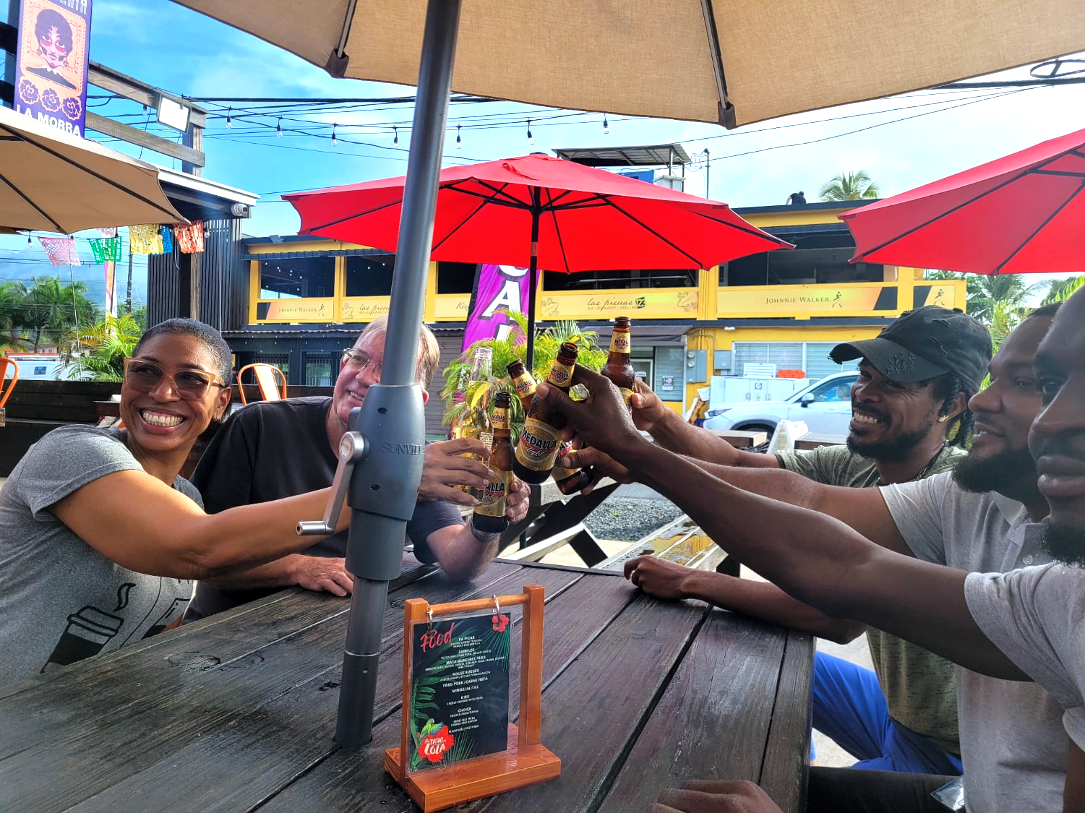
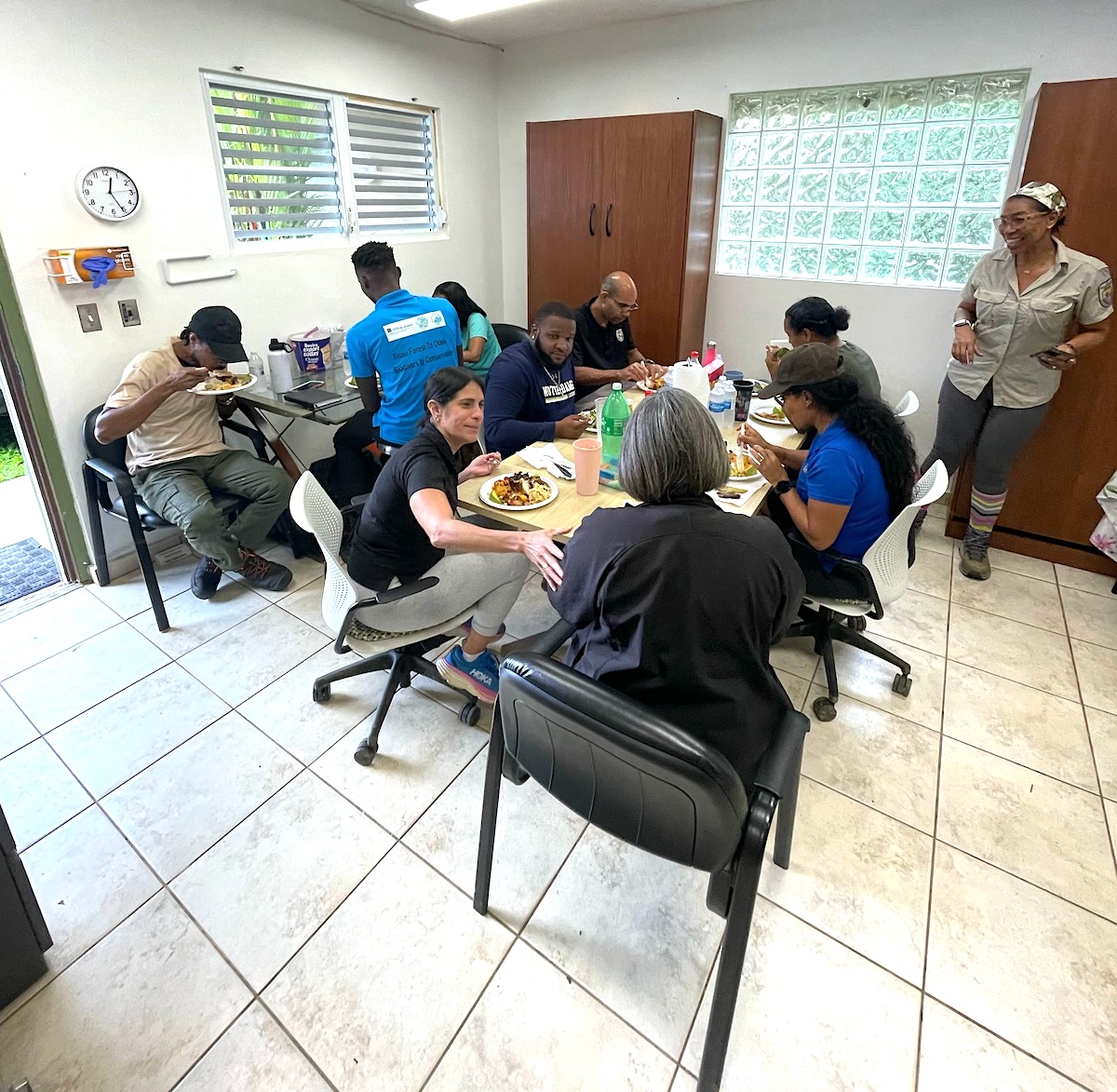
Leon: My main interest was the veterinary component of the workshop, mainly because we lack an avian/wildlife specialist on our island. The training was well received by the team and concluded with some nicely cooked and delicious lunches prepared by the members of the U.S. Fish and Wildlife Service. The cheesecake was savored in my mouth so much that I had to take some back home. Also, we got to sample a few of the locally made beers.
Ansaki: On our final day at the pristine Puerto Rico Parrot Recovery Aviary, we visited a wild parrot nest that had baby chicks. The very skilled climber, Sebastian, put on his climbing gear to retrieve the baby parrots from their nest in a tall tree. During the climb Sebastian removed the old messy nesting material and replaced it with fresh ones, to keep the parrots with baby chicks cozy and prevent the spread of bacteria. We learned how to band parrot chicks. I was given the privilege of holding a parrot chick. We ended our training with a big family lunch where Tom prepared his specialty of Tennessee hickory smoked chicken.


Note: Parrot chick banding was performed by trained and certified banders only. No SVG Forestry Staff participated in the actual banding; their involvement was for demonstration purposes.
Final comments from all participants:
Ansaki: My training experience at the Puerto Rico Parrot Recovery Program Aviary was fun and enriching. This is what stood out for me: testing to know when an egg is fertile, monitoring the parrot on live camera, caring for a sick parrot before the vet arrives—and the success story of how the forest bounced back after devastating Hurricanes Irma and Maria in 2017. And, most of all—the truly remarkable parrot recovery program. It rained every day, but nevertheless I looked forward to gaining new knowledge each day. We certainly look forward to more collaboration in the future.
I can attest that the training was well received by each participant. We will continue our public outreach and education program by raising awareness island-wide among our schools and communities, teaching about the importance of our National Bird, the St Vincent Parrot, and its habitat. SVG Forestry Services could benefit from this experience, developing and enhancing our own captive breeding program, increasing the captive population with the aid of an incubator, and also monitoring nesting boxes via live camera. We will develop an action plan on how to manage and monitor the wild population with the use of radio transmitters; collaborate, and build partnerships with other international organizations; and seek training for an avian vet to care for our St Vincent Parrot.
Felicia: Having the opportunity to learn new things every day is always a wonderful experience. This trip allowed us to see what can happen when a wild population is decimated. Only because of the foresight and hard work of individuals was the survival of the species ensured.
We live on a tropical island where natural disasters are a norm. There exists a possibility that we could lose our wild population at any time. With a program like this, we can be ready if a catastrophe occurs in St Vincent, resulting in the loss of our Amazona guildingii.
My take-away points are as follows:
- We have seen a better and more durable way to build our nesting boxes.
- We learned what we can use to prevent our nesting materials from developing mold or fungus.
- We learned how to set up food in flight cages.
- We learned about administering first aid to ill birds.
- We also learned how to tag and monitor released birds
The St. Vincent Forestry Services can adapt and tailor a program like this to fit our Amazona.
Quasim: It was the first time that I was exposed to tagging and feeding parrots/birds. This was very interesting, especially experiencing the strength of the birds. They may be on the smaller side but they are very strong. The telemetry device is great for keeping track of the birds, enabling you to know their movements. The man-made nests are very practical, with a great workable design. The vet section was quite satisfying—and we sure know how to save the life of a bird. The simplicity of the method used for testing eggs was surprising. It was a great experience and I’ve learned a lot. We had quite an experience and had lots of fun. Thanks to everyone who made the training possible. Special thanks to Tom and his crew. We highly appreciate everything.
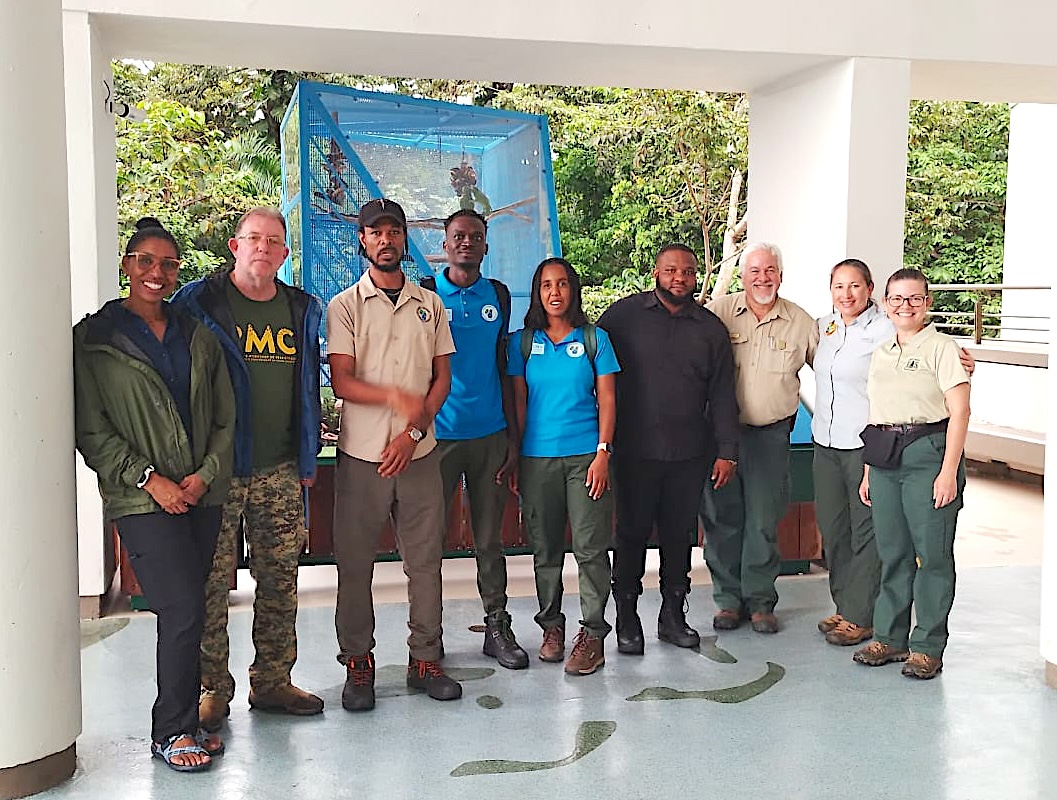
Leon: The friendly and welcoming aura by everyone at the complex made our time comfortable. We blended as a loving family immediately after. We learned the success story of what had transpired some years ago with the Amazona of Puerto Rico up until now, and how everyone contributed to ensuring the existence of a continuously growing population.
Fabian: Our trip to the Luquillo Aviary in El Yunque National Forest was an incredible experience! The staff were absolutely fantastic, providing us with hands-on learning about everything from food preparation for the birds to the ingenious construction of their wild nest boxes. We even learned valuable first aid techniques for assisting sick birds.
The bird hospital was absolutely breath-taking! I was truly amazed to see such advanced equipment available to help these precious birds. But what made it even more special, I made a new friend there. A parrot was recovering from a broken leg, and I was so happy to be able to help him by holding him while Iris cleaned his cage.
After we left the hospital area, I thought it couldn’t get any better! Then, BAM! We were just about to enter the Incubator Lab, and I was completely blown away. I was thinking to myself, ‘This place is truly awesome!’ And to top it off, my colleagues and I were fascinated by the flashlight method used to check the eggs for fertility. Although my team and I at Nicholls Wildlife Complex are familiar with that practice, it was incredibly beneficial for my colleagues to experience it first-hand, especially since they spend so much time out in the wilderness.
I’ll never forget my first time attaching the dummy transmitter to the birds; that was simply unforgettable!.
You know it’s an excellent learning adventure, when even the bird expert gets a taste of the action! I got pecked and for a person who deals with birds on a daily basis—I was the one who got the surprise nibble! The laughter was non-stop, but honestly, it really showed just how much we enjoyed that trip to Puerto Rico. Talk about an endorsement!
It was a truly informative and rewarding trip—highly recommended!
A heartfelt thank you to all who made this trip possible and a success: St Vincent and the Grenadines Forestry Services, BirdsCaribbean, U.S Fish and Wildlife, and UNDP.
Thanks to all who helped our St. Vincent Forestry staff monitor and help our precious parrots to survive and proliferate. Natural disasters will always be part of our lives on our small islands, but with care and training our bird species can be saved.
Thank you so much for your kind comment, Heather! You’re absolutely right—natural disasters will always be part of life on our small islands, but with training, collaboration, and care, our precious birds can be saved.
Every bit of awareness and support matters—whether it’s learning about the challenges these species face, sharing knowledge with others, or helping to protect their habitats. Together, we can build the skills, resilience, and networks needed to ensure that the St. Vincent Parrot and other island species not only survive, but thrive for generations to come.
We’re so grateful for everyone—foresters, partners, and community members—who is part of this shared effort!