Did you know that the simple act of noticing a bird in your backyard could be key to saving a species? From the misty peaks of the Blue Mountains in Jamaica to the sun-drenched mangroves of Bonaire, our 187 endemic bird species are a shared heritage found nowhere else on Earth—and it’s up to us to protect them. As we prepare for the 2026 Caribbean Endemic Bird Festival (CEBF), we are calling on everyone—tell your parents, your friends, even your Nan—to turn their eyes to the skies, the trees, and the ground (we can’t forget our beloved doves!). This year we are celebrating, counting, and conserving our birds together.
CEBF begins on April 22nd (Earth Day) and runs through May 22nd (International Biodiversity Day). This annual regional festival raises awareness of the amazing birds that live only in the Caribbean—their natural history, the threats to their survival, and how we can act to protect them and ensure that they thrive for generations to come.
This year’s theme “Every Bird Counts – Your Observations Matter” shines the spotlight on the power of citizen science, reminding us that you don’t need a lab coat or a PhD to contribute to science; you just need curiosity and a genuine love for nature and community. When we say “Every Bird Counts,”we mean it. Whether it is a tiny, iridescent Antillean Crested Hummingbird darting through your garden or the elusive Imperial Amazon (Sisserou) high up in the canopy in the rainforest, every single sighting you record provides a vital data point. These observations help us build a regional map showing us exactly where our endemic species are thriving and where they might be in trouble.
Dominica’s Imperial Seekers seeking out the magnificent Imperial Amazon for Global Big Day 2024. (Photo by Garry Auguiste)
The Sisserou is endangered and endemic to Dominica. (Photo by Paul Reillo)
This community-collected data is the backbone of informed conservation action because we cannot protect what we do not know. By involving everyone, from curious school children to seasoned experts, we create a massive, islands-wide “neighborhood watch” for our birds. By involving the whole community, we move people beyond casual observation and into the role of proud environmental stewards. Cool, right?
Your contributions help scientists identify which habitats need urgent protection and provide real-time results through platforms like eBird. This allows us to see population trends as they happen, giving us the power to respond faster to environmental changes and ensure our endemic birds are around for years to come.
A little more on citizen science…
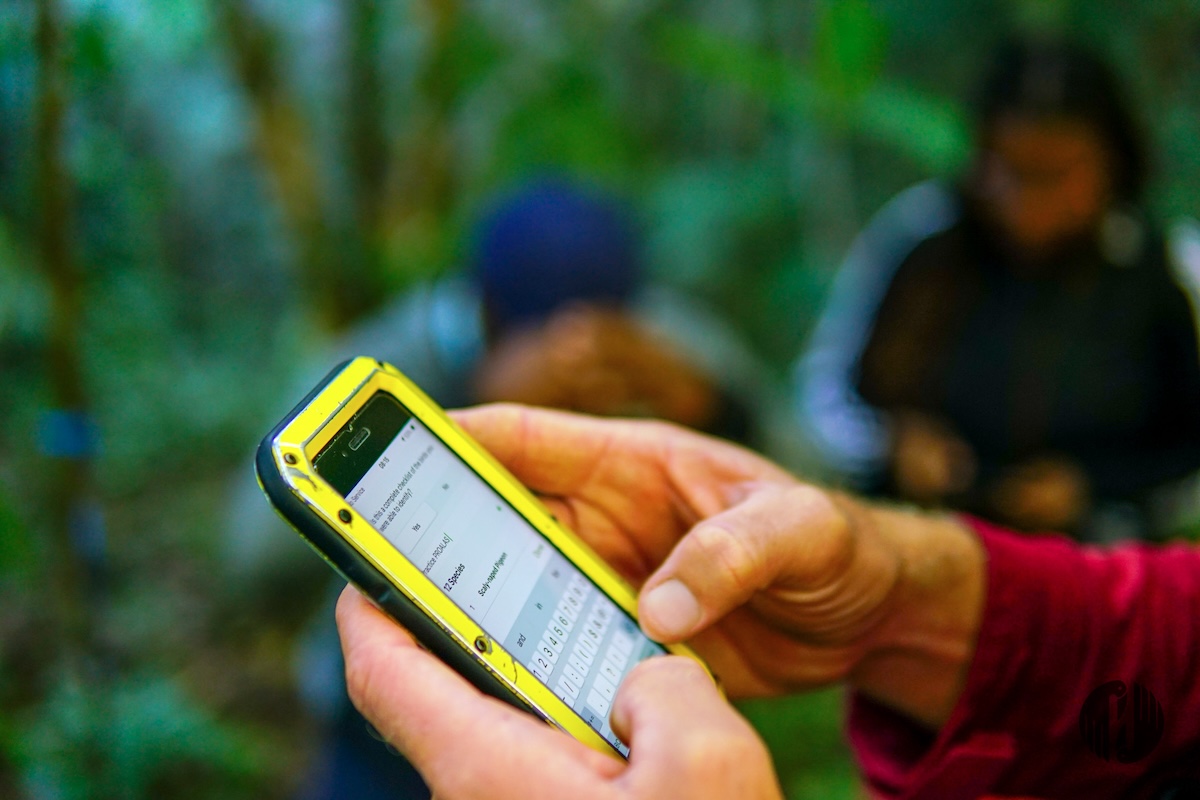
While professional biologists work tirelessly to study and protect our birds, they cannot be everywhere at once. That is where you come in. Citizen science is a powerful collaboration where everyday people all around the world collect data, by watching and recording birds mostly on phones via eBird checklists—this data helps scientists solve real-world problems. In the Caribbean, many of our endemic birds live on just a single island, making them incredibly vulnerable to habitat loss, pollution, illegal trapping/killing, and climate change. To protect them, we first need to know exactly where they are and how their populations are changing. Your observations tell scientists if a species is declining or expanding its range and provide the “hard data” needed to advocate for the protection of critical forests, wetlands, and even green spaces within cities.
Entering data into eBird. (Photo by Holly Garrod)
To our fabulous island coordinators, this year is an invitation to mentor a new generation of citizen scientists, sharing your deep knowledge and passion to help the movement grow. To our new participants—welcome! This is your invitation to join your community in protecting and promoting your incredible natural heritage. If you’re new to citizen science you’ll want to read this beginner’s guide. There is an immense sense of pride in knowing that your backyard is part of a global treasure, and by participating, you are ensuring it stays that way. You don’t need expensive gear to make a difference; you just need a pair of binoculars or a keen eye. If you don’t own a pair of binoculars yet, don’t let that stop you! Your local coordinators and environmental organizations will have binoculars available for use at their CEBF events. They will teach you how to use the binoculars to get a crystal-clear look at our endemic icons, identify them, and make sure they count toward your checklist.
A lot more on community connection…
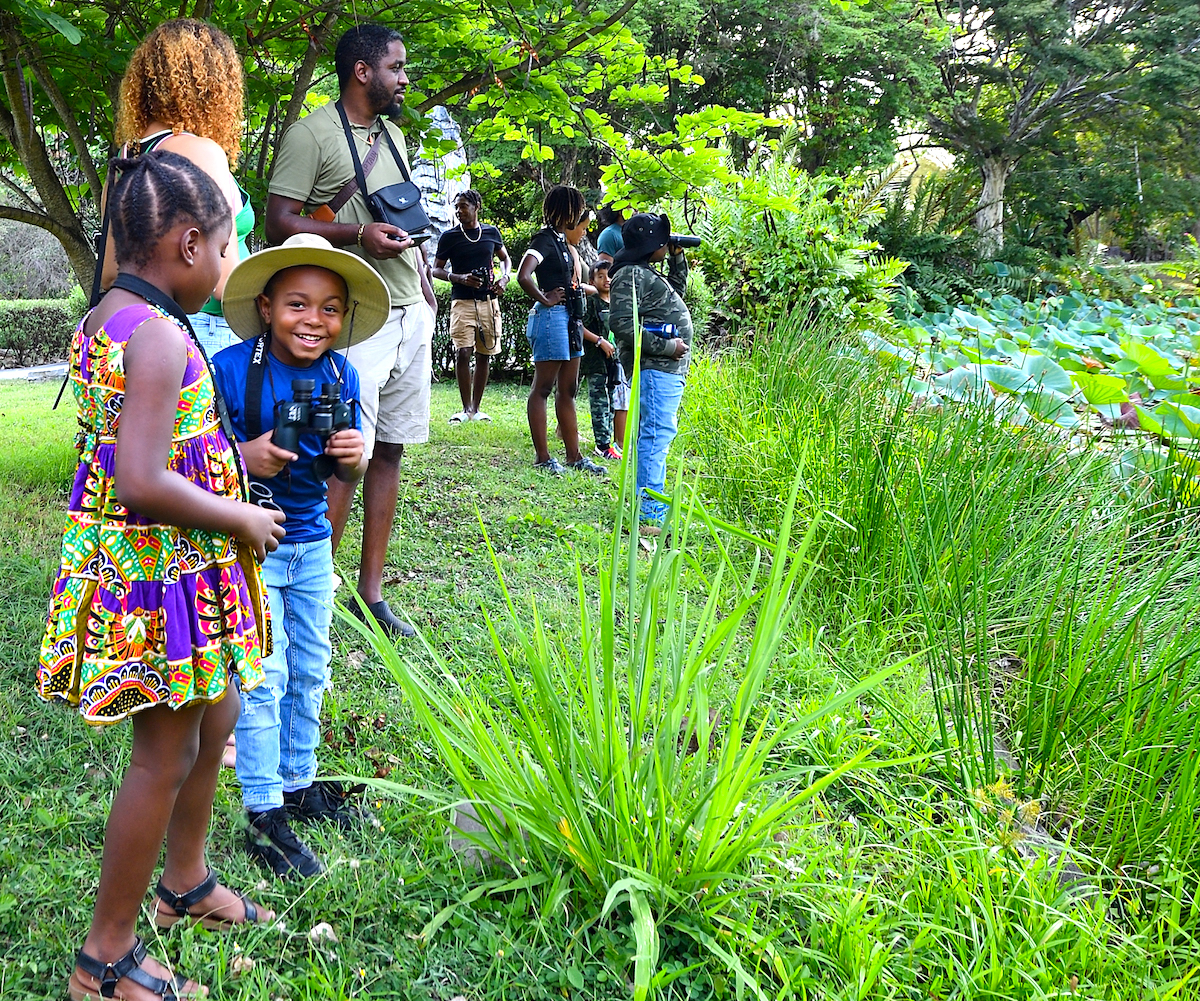
If you are looking for more than birdwatching and checklists, you have come to the right place. Our enthusiastic island coordinators and educators infuse the festival with a vibrant mix of in-person and online events that turn learning about birds into an unforgettable experience. It’s about reconnecting with nature, discovering hidden talents, strengthening our collective power to improve our communities, and taking pride in the vibrant biodiversity that defines our islands.It’s about exploring together, pulling up those boots and venturing into mangroves, dry forests, and wetlands that we often pass by every day without realizing the biodiversity they hold.
Hey! Are you taking a photo of us? Adults and children birdwatch by the pond at Hope Gardens, Jamaica.(Photo by Stuart Reeves)
Most importantly, it’s about belonging. By joining an event, you become part of a massive movement dedicated to ensuring that bird conservation becomes a seamless part of our daily lives. We want every Caribbean citizen to stand ready and knowledgeable, equipped with the facts, to speak up for our birds and the places they call home. Whether it’s advocating for the protection of a local wetland from unsustainable development, discouraging the illegal trapping and persecution of our endemic birds or simply sharing why a healthy forest matters for both birds and people, your voice is a powerful tool. When joined with a chorus of like-minded nature lovers, that voice becomes an unstoppable force for the Caribbean’s wildlife.
So what else can you expect at a CEBF event?
These events are usually held where life happens: on school grounds, in lush Botanical Gardens in cities, or at visitor centers bringing together students and teachers, local community groups, religious organizations, and service clubs like Rotary. Last year, the Environmental Awareness Group in Antigua even hosted a special birding tour for the Antigua and Barbuda Defence Force! Everyone is encouraged to come as they are: to think, to question, to challenge, and to exchange stories through:
Guided Birding Walks: Explore local hotspots with knowledgeable guides who help you spot birds and master your binoculars.
Shanna and students birdwatching at the Princess Margaret School. (Photo by Sherrel Charles)
Birds are everywhere, even at your university campus — and certainly at the University of Puerto Rico Rio Piedras campus. (Photo by Alondra Norat)
Creative Workshops: From bird-themed “Sip & Paint” sessions to photography classes and youth art contests.
Mask painting and bird identification station at the TTBO bird festival. (Photo by TTBO)
Young artists at work on bird-themed bags at Les Fruits de Mer’s Migratory Bird Festival in St. Martin. (photo by Mark Yokoyama).
Children display their completed Bee Hummingbird habitat with flowers for the bird to feed on and a water source. (Photo by TTBO)
A young girl decorating her pouch using bird stencils during the Endemic Animal Festival. (Photo by Mark Yokoyama)
Habitat Restoration: Roll up your sleeves for mangrove plantings and beach clean-ups to give our birds a cleaner, safer home.
Volunteers receive instructions before the start of the clean-up. (photo by Conservation Opportunity)
A volunteer ensures no trash is left behind. (Photo by Conservation Opportunity)
Approximately 150 pounds of trash were collected. (photo by Conservation Opportunity)
River in Charco Dos Bocas Ciales after spectacular cleanup effort by volunteers. (photo by Conservation Opportunity)
Games & Interactive Science: Get hands-on with fun experiments and games that reveal how different beaks work, to discovering all the amazing ways birds survive.
Youth learning how birds eat and build their nests through sensory play. (Photo by Amigos de El Yunque)
We did it! Students display the results of their BirdSleuth Caribbean Scavenger Hunt in Salt River, Jamaica. (photo by Emma Lewis)
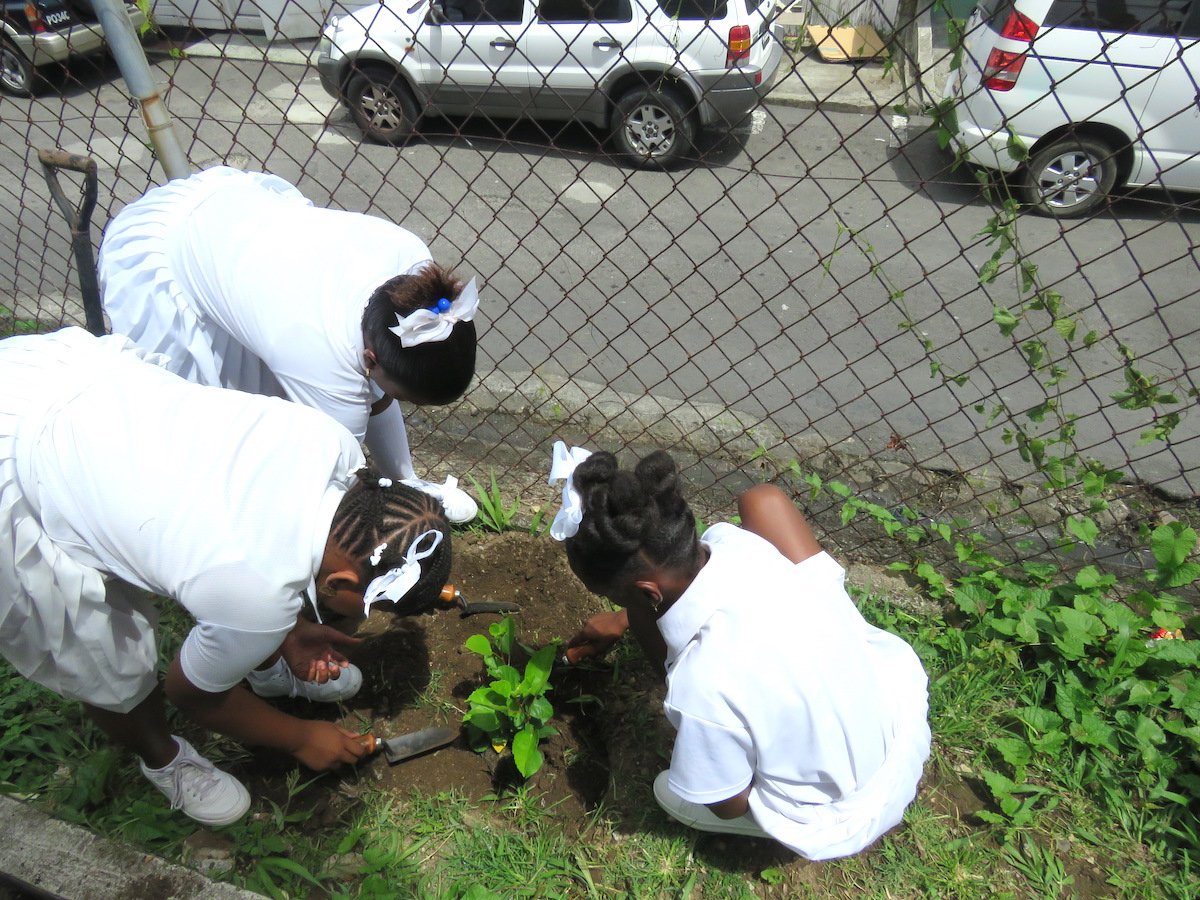
“Birdscaping” Your Backyard: Learn which native plants turn your garden into the neighborhood hotspot where all the birds want to be.
Students from St. Martin Primary School in Dominica planted native plants for CEBF 2018.
Virtual Festivals: Can’t make it in person? Join webinars and social media posts that connect bird lovers across the entire Caribbean.
Here are a few members of our powerhouse alliance of local NGOs and educators across the region.
Jamaica: BirdLife Jamaica, the Natural History Museum of Jamaica (NHMJ), Caribbean Coastal Area Management
Cuba: Empresa Flora y Fauna Matanzas, Grupo Ecologia de Aves, Empresa Flora y Fauna Santiago de Cuba, Museo de Historia Natural “Tomas Romay Chacón”, BIOECO, Parque Nacional Alejandro de Humboldt, Museo de Historia Natural Joaquin Fernandez de la Vara Pi Gibara
Dominican Republic: SOH Conservacion, Grupo Jaragua
Puerto Rico: Estuario de la Bahia de San Juan, Con Ciencia Ciudadana PR Inc
Antigua & Barbuda: Environmental Awareness Group (EAG) Antigua, BarbudanGO
St Eustatius: St. Eustatius National Parks Foundation
Dominica: WildDominique
Trinidad & Tobago: Trinidad and Tobago Bird Observatory and Research and Research Centre, ECONETICS
Don’t see your island listed? Use our CEBF Coordinators Directory to connect with local conservation organizations and find out what’s going on near you!
Got a serious case of FOMOOTCEBF (fear of missing out on the CEBF)? Sign up for our mailing list HERE to ensure that you get the latest CEBF event news, and find out first about the fantastic celebrations happening on your island.
Good for our islands, great for your legacy.
Your support for the CEBF keeps nature education accessible to all, providing the tools and workshops needed to protect our shared natural heritage. From “birdscaping” backyards to youth art contests, every dollar helps us provide these resources at no cost to our communities. Join us in making a lasting impact—donate securely HERE* and help every bird count. *Under ‘Designate your gift’ please select Caribbean Endemic Bird Festival.
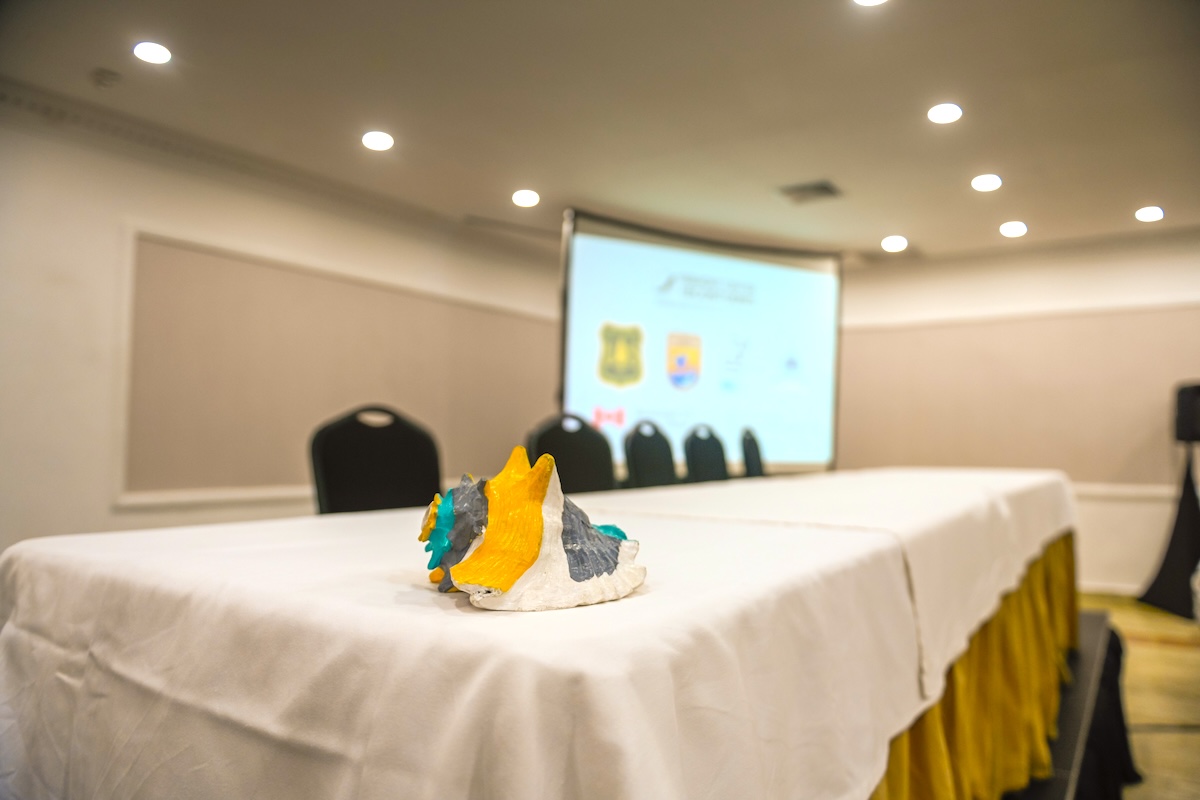
Jennifer Wheeler weaves through the buzzing crowd at the Dominican Fiesta Hotel’s Convention Centre, raises the BC conch shell to her lips, and blows with all her might. The booming sound of the conch fills the air, instantly silencing conversations and commanding everyone’s attention. This spirited signal marks the official start of the BirdsCaribbean 24th International Conference—five exhilarating days of non-stop science, birding, and forging lasting conservation connections! Here we dive into the standout moments that made the conference truly unforgettable.
The BirdsCaribbean conch shell. (Photo by Martin Rodriguez)
Conservation thrives on the strength of community. This belief in the power of community is why every two years, BirdsCaribbean joins forces with our partners to host our International Conference—a transformative event where collaboration and learning drive real, impactful change. Conservationists from all walks of life come together on a beautiful Caribbean island, united by a shared passion: protecting the incredible birds that define our region.
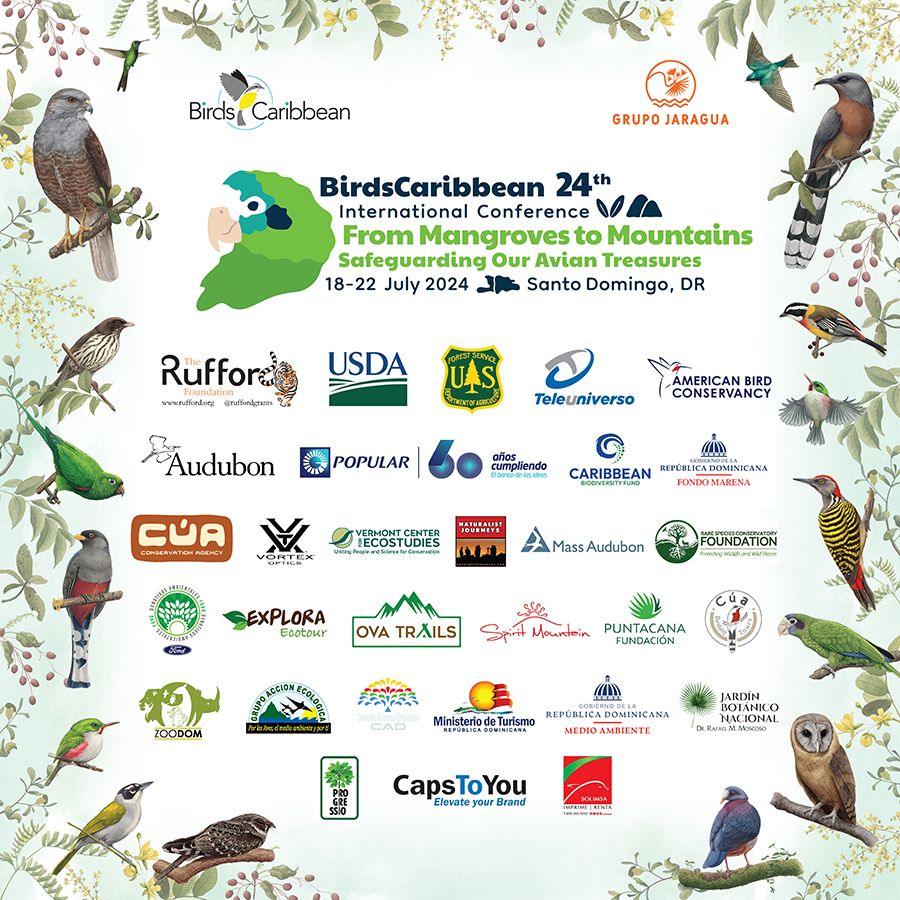
This year’s conference, held at the Dominican Fiesta Hotel in Santo Domingo, Dominican Republic, in partnership with local NGO Grupo Jaragua, invigorated this mission. Centered on the theme “From Mangroves to Mountains: Safeguarding Our Avian Treasures,” the conference brought together a diverse group of conservationists—including representatives from international and regional higher education institutions, research centers, government agencies, NGOs, the ecotourism industry, and the media. The event provided the platform for delegates to share their knowledge, ideas, science, and resources—strengthening the conservation community and re-energizing the fight to save our precious Caribbean birds.
Spanning five exciting days, the conference featured expert-led presentations, roundtable discussions, training sessions, networking opportunities, fundraising initiatives, and birding trips to observe Hispaniola’s diverse bird species, including its unique endemics.
United for Birds: A Community-Driven Mission
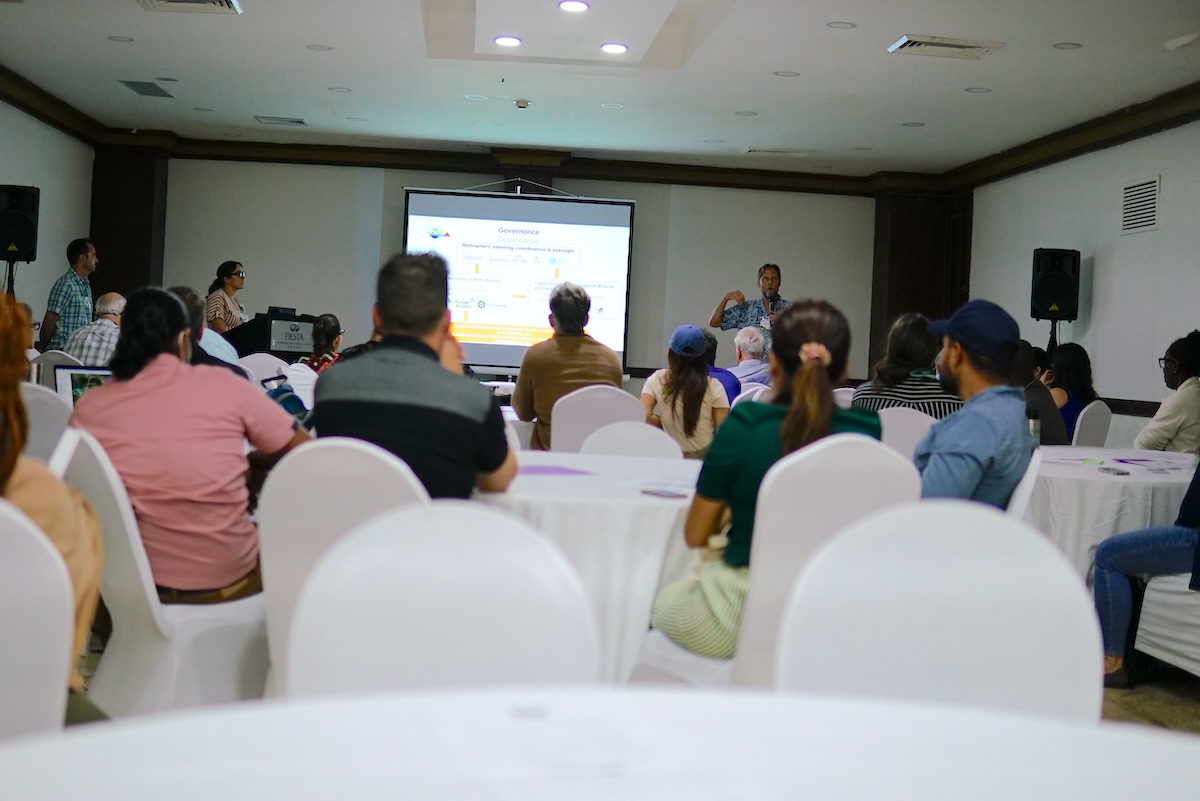
The conference began on July 18th with opening remarks by Sixto J. Incháustegui, President of Grupo Jaragua, who emphasized the importance of collaborative efforts to protect nature and wildlife. “Participation must come from all sectors of society to conserve biodiversity,” he stated.Frederico Franco, Vice Minister of Protected Areas at the Ministry of Environment and Natural Resources, echoed this sentiment, stressing the need to work together to ensure a sustainable environment for our birds. He highlighted the significance of conferences like the BirdsCaribbean, noting that “they play a crucial role in sharing scientific knowledge and promoting sustainability as a national culture.”
Sixto J. Incháustegui, President of Grupo Jaragua. (Photo by Martin Rodriguez)
Frederico Franco, Vice Minister of Protected Areas at the Ministry of Environment and Natural Resources
BirdsCaribbean President Adrianne Tossas and Executive Director Lisa Sorenson warmly welcomed the record-breaking 338 delegates from 32 countries and islands. “I am elated to see so many young people here,” Sorenson remarked, “Your interest in birds and environmental stewardship bodes well for the long-term conservation of our biodiversity, which is vital to our health and well-being.”
Keynotes that Ignite: Wisdom, Vision, and Passion for Birds
Each morning, delegates gathered to hear phenomenal keynote speakersshowcase the diversity of thought, culture, knowledge, and work within our community. On the first day, Dr. Yolanda León, a Dominican biologist and immediate past president of Grupo Jaragua, emphasized the importance of effective conservation action for birds and habitats. She honored Simón Guerrero, a beloved member of BirdsCaribbean and Dominican conservation stalwart who passed away earlier this year, by posing the question he always asked: “Does the species know?” She underscored the significance of ensuring species know we are working to protect them and their habitats, as reflected in populations thriving in healthy ecosystems.
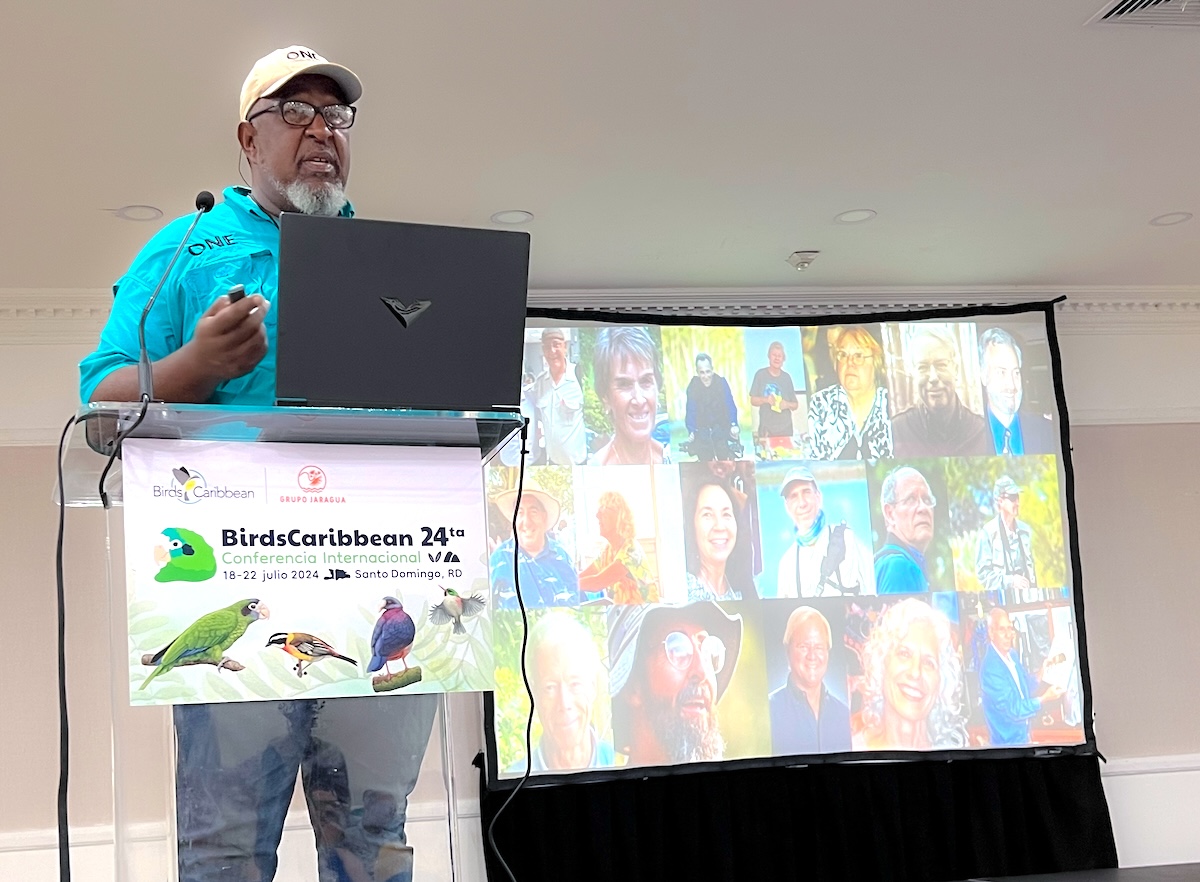
Dr. Yolanda León, a Dominican biologist and immediate past president of Grupo Jaragua, addresses the delegates during the opening ceremony.
Yolanda answers the question “Does the species know?” during her talk.
David Lindo, also known as The Urban Birder, captivated the audience with his keynote address “Conservation at Your Doorstep.” He inspired delegates with his passion for learning about birds in urban spaces and his dedication to encouraging city dwellers to connect with their environment. His speech was a captivating blend of humor, insight, and inspiration, leaving a lasting impression on all attendees.
David Lindo, also known as The Urban Birder.
Delegates listening to David’s inspirational talk.
Chris Rimmer shared insights from 30 years of research in his talk “Bicknell’s Thrush: Conserving a Vulnerable Songbird in the Caribbean and Across the Hemisphere”. He outlined the necessary conservation actions to safeguard this migratory songbird in the Dominican Republic and Greater Antilles. Dr Steve Latta, in his talk “The Synergies of Advancing Conservation: Using Field Research and Avian Monitoring to Build Capacity and Conservation Awareness” emphasized that conservation research should also facilitate field training and capacity building, raise awareness, and demonstrate the interdependence of healthy communities and healthy ecosystems.
Chris Rimmer, Emeritus Executive Director of Vermont Center for Ecostudies, speaks to delegates about conservation priorities for the Bicknell’s Thrush.
Dr Steve Latta speaks to the crowd of delegates about creating nurturing relationships, and advancing conservation through training opportunities and awareness raising campaigns.
Other keynote presentations reinforced delegates’ belief in their ability to achieve their own bird conservation goals and become successful conservation leaders. Award-winning Antiguan conservationist Shanna Challenger delivered an inspiring, instructive talk “From Passion to Purpose: The Journey of a Caribbean Wildlife Conservationist.” She shared how the knowledge and skills acquired from various projects, trainings, partnerships, and mentorships transformed her approach to conservation and helped her to achieve remarkable successes, including the restoration of Redonda through the Rewilding Redonda project.
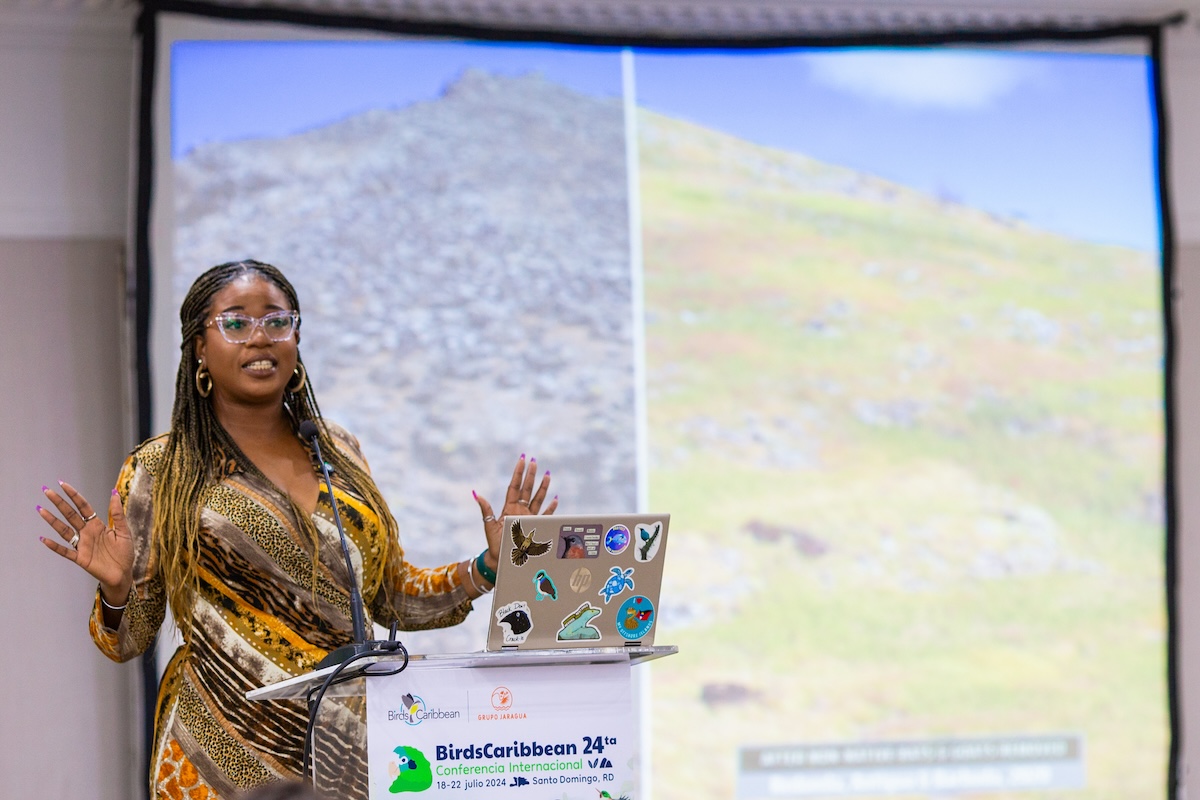
Shanna Challenger retelling the hard work it took for her team to restore Redonda Island.
Eric Carey reflected on his 20-year tenure as Executive Director of the Bahamas National Trust, during which he significantly expanded the organization from a 10-person staff to 90, and developed a 32-park system covering 2.2 million acres, a substantial increase from the initial handful of national parks. In his presentation, “20 Years Protecting Habitat and Species through the Stewardship of Conservation Opportunities in The Bahamas—Success Stories and Lessons Learned,” Carey highlighted the challenges and triumphs of conservation in The Bahamas, and how he and his team overcame obstacles to protect habitats and wildlife while gaining the support of local Bahamians.
Keynote speaker Eric Carey. (Photo by Lisa Sorenson)
Finally, Dr. Terry Root addressed the pressing issue of climate change in her presentation, “Climate Change Impacts in the Caribbean.”Shedetailed the sobering realities of the ecological consequences for birds and emphasized the role of science in developing effective mitigation policies. Dr. Root concluded with a hopeful message, urging attendees to come together, take action, and pressure governments to shift the societal approach to combating climate change, much like the successful campaigns to reduce smoking.
Dr Terry Root addresses climate change and discusses the social marketing approach needed to combat it.
A good conference day starts with birdwatching
Each day of the conference, many of our delegates were up before dawn, eager to connect with nature and discover the incredible birdlife at the Jardín Botánico Nacional (Dr. Rafael María Moscoso Botanic Garden). Guided walks through the 400-acre nature preserve were led by members of Grupo Jaragua and Grupo Acción Ecológica. The Garden, known for its extensive variety of native trees, palm species, over 300 types of orchids, and diverse bird species, provided an ideal setting for these early morning explorations.
Group of early morning birding delegates at the National Botanical Garden in Santo Domingo. (Photo by Stefan Gleissberg)
Birders in action! (Photo by Bryan Naqqi Manco)
During the 2-3 hour walks, delegates explored wooded areas, stream-side habitats, and open palm savannas, offering excellent birdwatching opportunities, including the chance to spot endemic species. Participants were thrilled to observe endemic “lifers” like the Vervain Hummingbird, Broad-billed Tody, Hispaniolan Woodpecker, Black-crowned Palm-Tanager, and Yellow-faced Grassquit, all commonly found in the garden. Some were also fortunate enough to spot elusive species like the Limpkin, as well as threatened birds such as the West Indian Whistling-Duck and Hispaniolan Parakeet. Observing these birds in the tranquil garden setting was a refreshing way to start the day before diving into the conference’s stimulating presentations and discussions!
Water lilies at the garden. (Photo by Aaliyah Cunningham)
West Indian Whistling-Duck. (Photo by Rondell Smith)
The national bird of the Dominican Republic, the Palmchat. (Photo by Rondel Smith).
Collaborative Learning and Dialogue for Conservation Success
338 delegates from 31 countries gathered for workshops, presentations, discussions and to connect with fellow Caribbean conservationists.
Workshops
This year’s conference featured a wide range of workshops tailored to the diverse bird conservation and research needs of our delegates. In the “Adaptive Project Management using Conservation Standards” workshop, participants enhanced their project management and implementation skills. The “Introduction to Data Analysis using R” workshop provided essential training on cleaning and analyzing data effectively for publications and reports. “Motus in the Caribbean” focused on the regional use of the Motus wildlife tracking system, offering critical guidance on designing, installing, and maintaining functional and robust Motus receiver stations, as well as planning collaborative projects. Additionally, “Navigating Diversity, Equity, Inclusion, and Accessibility in Ornithology” addressed the cultural differences across Caribbean islands and emphasized the importance of ensuring that all stakeholders feel respected, accepted, and recognized for their contributions to bird conservation.
Jody Daniel (Gaea Conservation Network) explains to participants how to code and analyse their data using R.
Participants discuss threats and solutions among themselves during the Adaptive Management breakout sessions.
Todd Alleger speaks about the utility of Motus tracking stations in the Caribbean.
Participants engaged in interactive learning activities led by Marta Curti and Gabriela Diaz, utilizing “Environmental Education Guide: Raptors of the Caribbean” from The Peregrine Fund. These activities aimed to deepen participants’ understanding of the vital role of raptors in their ecosystems while enhancing their ability to educate others about birds of prey using the guide’s materials and strategies. Mark Yokoyama and Jennifer Yerkes of Les Fruits de Mer led a creative workshop titled “Make Your Own Coloring Activity Book,” which received high praise from participants for its innovative approach to teaching children about the natural world.
Dominican delegates with their raptor made with recyclable materials.
Jennifer Yerkes (Les Fruits de Mer) shares how the workbook ‘Booktastic’ will be used as an ideation and planning tool during the workshop.
Damany Calder reads the guidelines given in the ‘Booktastic’ workbook.
Mark Yokoyama (Les Fruits de Mer) shares insightful tips for creating engaging educational materials.
The “Connecting Birds and People: Environmental Interpretation as a Key Tool in Bird Conservation and Appreciation,” workshop highlighted the importance of interpretation in fostering bird conservation awareness among the general public. In “How to Publish Your Research and Conservation Reports with the Journal of Caribbean Ornithology,” participants received valuable insights into effective publication practices.
The workshop “Protect Insects, Protect Birds: Educational Tools to Celebrate WMBD,” presented by Environment for the Americas, addressed the current threats facing migratory birds and insects and the actions needed to slow their decline. Participants also learned how to organize and execute a successful bird festival. Finally, “Conservation Photography for Biologists, Artists, and Stakeholders” presented by Jerry Bauer, USFS International Programs, equipped attendees with skills to enhance their visual communication and inspire conservation action.
During the conference, we took the opportunity to assess BirdsCaribbean’s capacity-building initiatives and identify future priorities. Participants were asked to provide feedback via an online survey on how resources, training, equipment, and grants from BirdsCaribbean have helped them achieve their conservation goals. The conference also featured a collaborative session where participants worked together to create a comprehensive theory of change, or results tree. This involved identifying necessary intermediate results, specific actions, and SMART indicators to measure the impact of those actions. The group then reviewed and validated the problem tree and engaged in a hands-on activity to further develop the results tree by identifying specific actions, indicators, and implementers.
Christel Mohammed, BirdsCaribbean Communications Manager, and workshop facilitator, Jim Goetz.
Participants break into groups for the problem identification exercise.
Jethro van’t Hul shares the problems he faces as a conservationist working in the Caribbean.
Shanna Challenger adds a problem to her group’s results tree.
Problem tree being analysed and turned into a results tree by participants.
Group of participants discussing capacity building opportunities in the Caribbean.
Symposia
As is customary at each BirdsCaribbean conference, local ornithological work was highlighted during the first symposium, ‘Hispaniola Day.’ Rosanna Guzmán-Pérez from the Ministerio de Medio Ambiente y Recursos Naturales shared findings from her study on plant-frugivore mutualism in the Casabito cloud forest at the Ebano Verde Scientific Reserve, identifying the Hispaniolan Spindalis as one of the main seed dispersers in the forest. Pedro Genero Rodríguez from the Asociación Dominicana Fotógrafos de la Naturaleza discussed the critical role of Reserva Privada el Zorzal as a refuge for both rare migratory birds with specific habitat requirements and common bird species.
Pedro Genero Rodriguez, Dominican photographer, speaks to delegates about the use of wildlife photography in conservation.
Male Hispaniolan Spindalis feeding on berries. (Photo by Jose Miguel Pantaleon)
Andrea Thomen answers a question from a delegate on the domestic parrot trade in the Dominican Republic, during the Hispaniola Day symposium.
Hispaniolan Parrot eating. (Photo by Dax Roman)
Anne-Isabelle Bonifassi, Executive Director of Haiti National Trust, speaks about ecosystem restoration in Haiti, during the Hispaniola Day symposium.
Jennifer Wheeler presented “Mountain Top Strongholds: The Story of Haiti’s Black-capped Petrel” on behalf of Haitian researchers who could not attend. Delegates were deeply moved by a short film, The Diablotin Festival, which tells the heartwarming story of how the community of Boukan Chat, alongside a team of conservationists, humanitarians, and storytellers, has united to protect the endangered Black-capped Petrel.
Other pivotal symposia addressed key issues in Caribbean bird conservation. “Conserving Caribbean Threatened and Endemic Birds” focused on the impacts of natural threats like hurricanes and the illegal bird trade on island endemics and discussed strategies for protecting the region’s unique avifauna. “Ecology of Migrants and Importance of Stopover Sites in the Caribbean” highlighted crucial research on migratory patterns of Near Threatened species like the Kirtland’s Warbler, and the role of stopover habitats which are often targeted for development on islands.
The “Waterbirds, Wetlands, and CWC” symposium examined the interconnections between waterbirds and wetland ecosystems, the severe threats they face, and the outreach, advocacy, and actions needed to protect these critical habitats. “On the Ground Bird and Habitat Conservation: New Approaches, Success Stories and Lessons Learned” shared practical conservation methods and outcomes aimed at strengthening the management of green spaces including protected areas and urban parks like botanical gardens in the Caribbean for birds and other wildlife.
Simon Busutill shares the triumphs and challenges of protecting a nature reserve in the Turks and Caicos Islands.
Grenada Dove. With fewer than 190 individuals left in the wild, we must act NOW to secure its survival. (Photo by Greg Homel)
Lourdes Mugica, co-author of the field guide “Birds of the National Botanical Garden of Cuba.”
Caribbean conservationists are also leading social transformation through art, social media, and environmental education to gain support for protecting our feathered friends. In the symposium “Outreach and Education: Raising Awareness and Engaging Diverse Audiences,” they shared what strategies have been successful (and what hasn’t) in involving local communities and stakeholders in bird conservation efforts.
Discussions on “Habitat Restoration and Best Management Practices” provided insights into effective restoration techniques, while talks from “Landbird and Endemic Monitoring– Challenges, Solutions, Needs, and Results” addressed various monitoring methods, results from current projects, and the emerging issues and challenges encountered at different stages of a monitoring project.
Miguel Landestoy shares the findings from his study on the distribution of the Bay-breasted Cuckoo in the Dominican Republic.
Bay-breasted Cuckoo. (Photo by Carlos Pedro, Macaulay Library- ML393609811)
Dr Mark Hulme, reports on the behaviour of the range restricted Trinidad Piping-Guan and pressures affecting the population.
The large turkey-like Trinidad Piping-Guan is only found in Trinidad’s mountainous Northern Range. (Photo by Wendell SJ Reyes (ML66246621))
Demonica Brown, of The Bahamas National Trust, explains how bird monitoring is carried out at the Lucayan National Park.
Mangroves at Lucayan National Park. (photo by Lisa Sorenson)
Claudia Mantilla shares the findings from her Oriente Warbler research in Cuba.
Oriente Warbler. (Photo by Ian Burgess, Macaulay Library- ML558957951)
Finally, the symposia “From Mountains to Mangroves…and the Sea: Challenges and Opportunities for Caribbean Seabird Conservation, Research, and Monitoring” and “Invasive Alien Species From Mangroves to Mountains” tackled the multifaceted challenges of seabird conservation across the region, especially those faced by researchers and citizen scientists during the 2023-24 Caribbean Seabird Census, and the impact of invasive species on Caribbean bird populations and ecosystems.
The abstracts for the BirdsCaribbean 24th International Conference can be viewed by session here.
Roundtables
The Caribbean Motus Collaboration’s “Let’s Talk Motus!” roundtable brought together Motus leaders from across the Caribbean and beyond to discuss their experiences using and managing Motus as a whole, from building and maintaining receiver stations, to deploying transmitter tags on birds, all with the goal of advancing partners’ Motus efforts and facilitating potential collaborations.
Maya Wilson, BC’s Landbird Monitoring Program Manager, provides an update on new Motus stations in the Caribbean.
Motus audience listens attentiviely.
“Advancing Bird Conservation and the 30×30 Initiative through new Caribbean subnational Protected Areas” introduced the Conserva Aves initiative to the Caribbean bird conservation and ornithological communities. Delegates discussed the potential, opportunities, challenges, and geographic priorities for the implementation of a Caribbean-wide initiative that would preserve essential habitat for birds and biodiversity over the next 5-6 years by catalyzing local leadership in the creation and sustainable management of new local protected areas. Teams worked together to develop recommendations for the expansion of the Conserva Aves initiative to the unique context of the Caribbean.
Sebastion Herzog leads a discussion on advancing bird conservation and the 30×30 initiative through new subnational protected areas in the Caribbean.
The Caribbean Bird Banding Program’s roundtable discussion explored “Landbird Monitoring in the Caribbean”. Participants discussed ideas to continue developing the Caribbean Bird Banding Network by investigating the needs of bird banders in the Caribbean.
Working Group Meetings
Caribbean Parrots
The BirdsCaribbean Parrots Working Group meeting was attended by 10 members from the Dominican Republic, St. Vincent and the Grenadines, Dominica, Cuba, Puerto Rico, and Trinidad and Tobago. Andrea Thomen chaired the meeting. Members reached a consensus that more effort should be directed towards fostering collaboration and sharing information among parrot biologists in the region. Additionally, members requested the creation of an online library for parrot research papers, technical reports, articles, and books.
Bird Educators Working Group
Caribbean Endemic Bird Festival Coordinators Aliya Hosein and Eduardo Llegus, along with World Migratory Bird Coordinators Laura Baboolal and Miguel Matta, presented our bird educators with a fantastic set of CEBF and WMBD branded materials for their bird conservation outreach activities. The materials included t-shirts, bookmarks, buttons, bird masks, bird bands, and stickers. The stickers feature the artwork of Arnaldo Toledo and Anna Rose, showcasing a variety of Caribbean birds, including endemics, residents, waterbirds, shorebirds, migrants, and the seven selected migratory species for WMBD 2024.
Miguel, Aliya, Laura, and Eduardo with CEBF and WMBD materials for Caribbean coordinators and educators.
Organizations and educators were honored for their exceptional efforts in celebrating CEBF and WMBD over the past two years, consistently organizing creative and enjoyable activities for youth and local communities, and submitting their reports and photos.
We asked our delegates to Sing Like A Bird!
Our delegates have dedicated countless hours to studying our beloved Caribbean birds. They’ve uncovered critical nesting and feeding sites, as well as behaviors that enable these incredible birds to survive and thrive in the wild. But wait, can they sing like a bird? Hit play on the videos below to find out! It’s going to be amazing!
Exquisite artwork, rare first-edition books signed by the authors, heirloom-quality jewelry, premium Caribbean chocolates and rum, apparel that allows you to wear your love for nature and birds, and so much more, the Silent Auction always draws in a lively crowd at our conferences. Mix these irresistible auction items with highly competitive personalities and you’ve got a recipe for fundraising success!
Ancilleno explaining the rules of the auction.
A delegate places her bid during the coffee break.
Auctioneers Ancilleno and Andrew stirred the crowd into a bidding frenzy!
Caribbean ornithological books for auction.
A massive thank you to our generous delegates who donated handmade auction items from their home countries, and to our enthusiastic bidders who helped us raise US$4,700 for Caribbean bird conservation.
“It’s about this big.” Delegates browse the selection of items for auction.
“Hmm, how do I out-bid my competition?”
Stunning bird inspired jewelry were hotly contested at the aution!
Delegates try to decide which items they should place bids for.
A huge round of applause goes to Jennifer Wheeler, Linda Fuller and Natasha Atkins, for organizing the auction and all the volunteers who worked tirelessly to collect, categorize, and display the items, as well as our auctioneers Andrew Dobson and Dr Ancilleno Davis for keeping up the excitement and energy. Their hard work made this event a huge success, and we couldn’t be more grateful!
In search of Hispaniola’s beautiful birds
From mangroves to mountains, birding adventures were not in short supply in the Dominican Republic. Delegates explored vast mountain landscapes, enchanted forests, calm rivers, lagoons, and even rolling sand dunes, all in search of the country’s phenomenal endemic birds. Conference field trips to Sierra de Bahoruco, Reserva Privada Zorzal, Los Haitises and Cotubanamá, Ebano Verde Scientific Reserve, Cayo Arena, Punta Cana and Cordillera Central were led by local tour companies: Explora Ecotours, La Cua Birding Tours, Ova Trails, and independent guide Holly Garrod.
Ebano Verde Scientific Reserve.
Delegates birding at Ebano Verde.
A Hispaniolan Trogon perched quietly at Ebano Verde.
Andrew Dobson takes a photo of the Hispaniolan Trogon.
Some of our delegates are eagerly working on blogs about their incredible conference field trips. Stay tuned for their firsthand experiences!
Acknowledgements
We extend our sincerest gratitude to everyone who contributed to the overwhelming success of this conference! Working alongside our co-host and local partner, Grupo Jaragua, was a true pleasure. We must express our deepest appreciation to all the conference sponsors and donors, including The Rufford Foundation, Audubon, US Forest Service, Teleuniverso, American Bird Conservancy, Banco Popular, Caribbean Biodiversity Fund, Fondo Nacional para el Medio Ambiente y Recursos Naturales (Fondo MARENA) Dominican Republic, Naturalist Journeys, Vermont Center for Ecostudies, Mass Audubon, Cúa Conservation Agency, Vortex Optics, Rare Species Conservatory Foundation, and the FUPAROCA Foundation. Your generous support was instrumental in making this conference a resounding success!
We are truly thankful to everyone who provided funding and donated to help us provide travel scholarships to 93 Caribbean wildlife professionals and students, including those who participated in and donated to our 2024 Global Big Day fundraising event in May.
The conference provided an invaluable platform for Caribbean conservationists to connect with and learn from a diverse array of international and regional professionals, thereby enhancing their professional visibility and honing their skills. The exchange of ideas and perspectives has equipped them with fresh insights and innovative strategies to drive bird conservation efforts in the Caribbean.
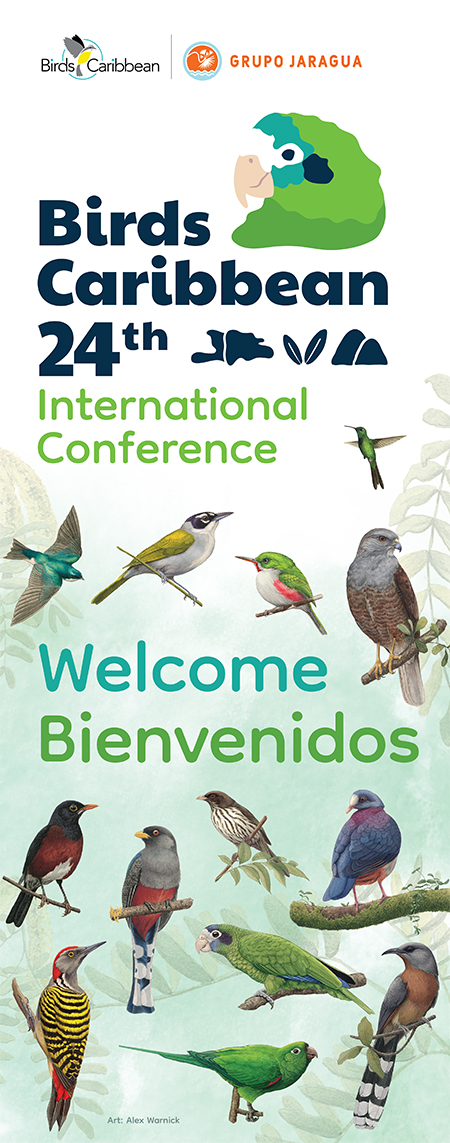
We also thank American naturalist and painter Alex Warnick for making her stunning artwork available for us to use for the conference. Her gorgeous work adorned our conference t-shirt and buff, and was used across our merch and promotional material.
Special shoutout to our delegates who volunteered with conference related activities like taking photos, assisting with sales at the merch table, and being rapporteurs. A special thank you goes to Egido Sanz, Juan Carlos (JC) Hernández Ordoñez and Mario Merrero. We appreciate your willingness to give your time and talents!
Mario takes a break from conference tasks to have his photo taken in front of the wingspan banner.
JC helps a delegate from St Vincent and the Grenadines with registration at the conference.
Egido helped with many conference tasks, and here she is helping delegates register for the conference.
We are incredibly proud of what we have achieved in collaboration with our sponsors, donors, and delegates and eagerly anticipate the next conference!
Relive the fun moments through the #BirdsCaribDR24 Photo Gallery
This year, we went paperless for the conference program and used the Whova app!
It wouldn’t be a BirdsCaribbean Conference without dancing!
Howard gave us his best smile, while Ellie an Stefan continue chatting.
Alondra next to her poster on the use of social media to raise bird conservation awareness.
Dominican dancers in traditional dress at the opening reception.
Arnaldo and Lillian at the BC Merch table.
Audience at the Caribbean Birding Trail symposium
The Diablotín Team. (Photo by Yolanda Leon)
Caribbean Birding Trail symposium speakers: Dave, Holly, David, Ivan, and Manny, with Lisa.
Chocolate and honey for sale at the conference.
JC at the BC Merch table.
Laughs over cocktails at the opening reception.
Chit chat during the coffee break.
Damany and Jeanelle with their Spirit Mountain coffee.
Daniela, Maya, Todd, and Saul at the poster session.
Daveka and Giselle selling t-shirts at the BC Merch table.
Ellie and Sue at the opening reception.
Traditional Dominican dancers at the opening reception.
Geronimo and Elvin at the poster session.
Hand-knitted Black-capped Petrel chick by Jennifer Wheeler.
Hispaniolan birds in a row.
More honey for sale at the conference.
Birdlife Jamaica representatives having fun with our selfie board and Hispaniolan Parrot prop.
Laura and Todd enjoying the local Dominican music at the opening reception.
Joshua and Steve at the opening reception.
Kah Kow chocolates on display at the conference.
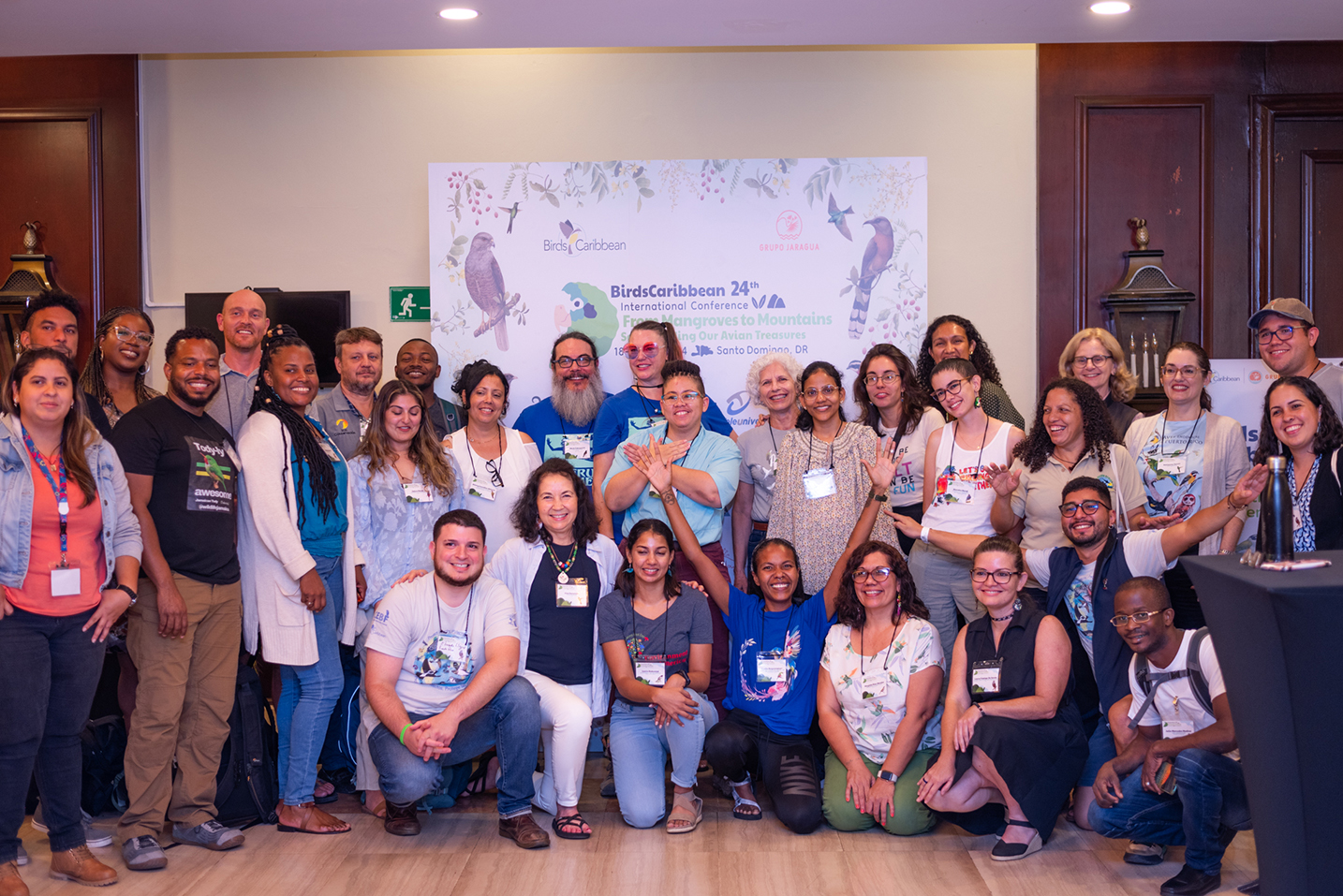
Lisa Sorenson with some of our Caribbean delegates.
Mark wins the bid! (Photo by Daniela Ventura)
Matthew at the poster session.
Puerto Rico en la casa! (Photo by Christina Rodriguez)
PROALAS Girls at the closing gala. (Photo by Gail Woon)
Shanna and Devon catching up during the coffee break.
First time BC Conference attendee Soraya proudly stands next to her poster.
A coffee lover’s dream come true!
St Martin and Anguilla delegates at the opening reception.
Representatives of the Trinidad and Tobago Bird Observatory at the poster session.
For more memorable moments captured at the conference, by our delegates, check out our photo album on Google Photos!

 Did you know that the simple act of noticing a bird in your backyard could be key to saving a species? From the misty peaks of the Blue Mountains in Jamaica to the sun-drenched mangroves of Bonaire, our 187 endemic bird species are a shared heritage found nowhere else on Earth—and it’s up to us to protect them. As we prepare for the 2026 Caribbean Endemic Bird Festival (CEBF), we are calling on everyone—tell your parents, your friends, even your Nan—to turn their eyes to the skies, the trees, and the ground (we can’t forget our beloved doves!). This year we are celebrating, counting, and conserving our birds together.