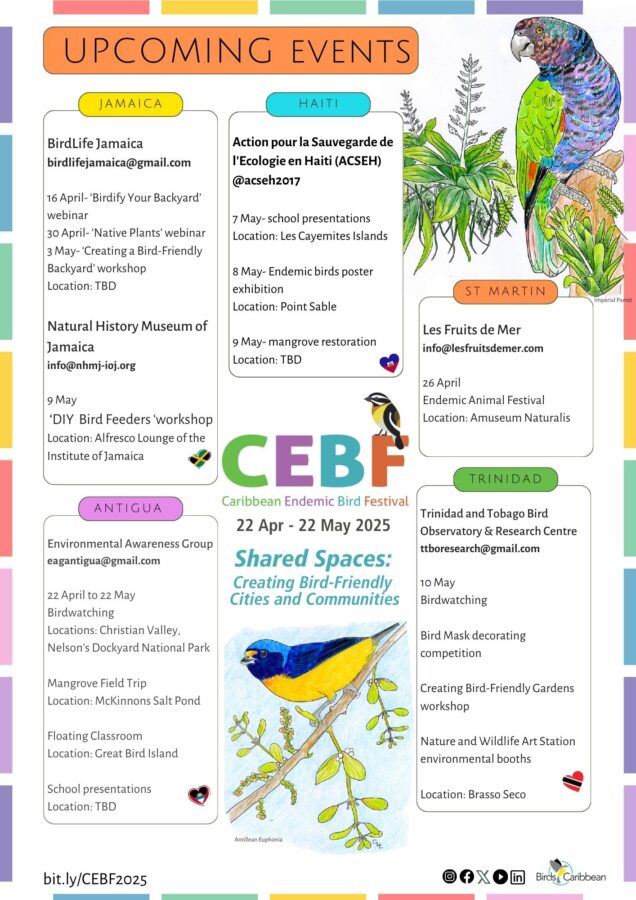
Did you know that the simple act of noticing a bird in your backyard could be key to saving a species? From the misty peaks of the Blue Mountains in Jamaica to the sun-drenched mangroves of Bonaire, our 187 endemic bird species are a shared heritage found nowhere else on Earth—and it’s up to us to protect them. As we prepare for the 2026 Caribbean Endemic Bird Festival (CEBF), we are calling on everyone—tell your parents, your friends, even your Nan—to turn their eyes to the skies, the trees, and the ground (we can’t forget our beloved doves!). This year we are celebrating, counting, and conserving our birds together.
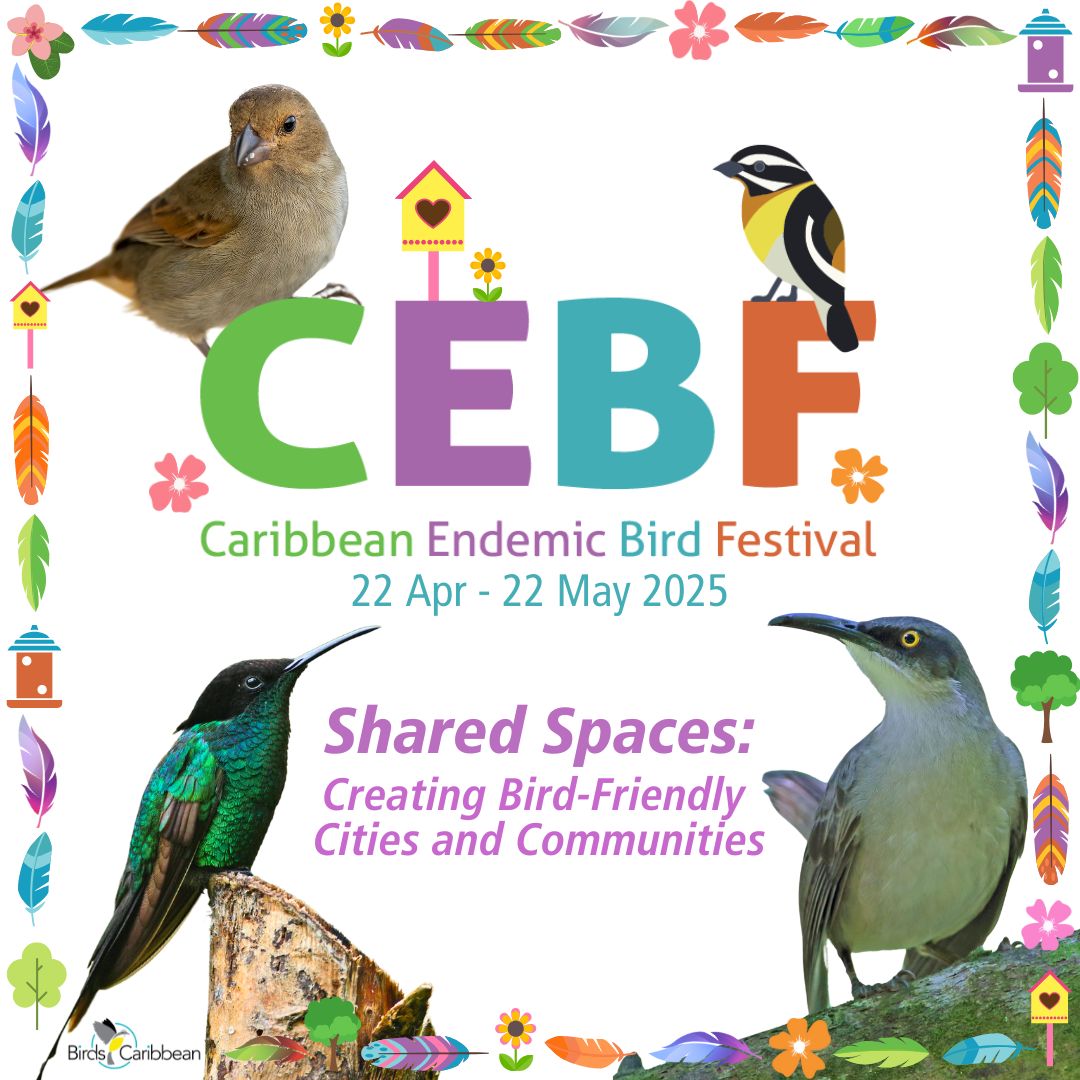
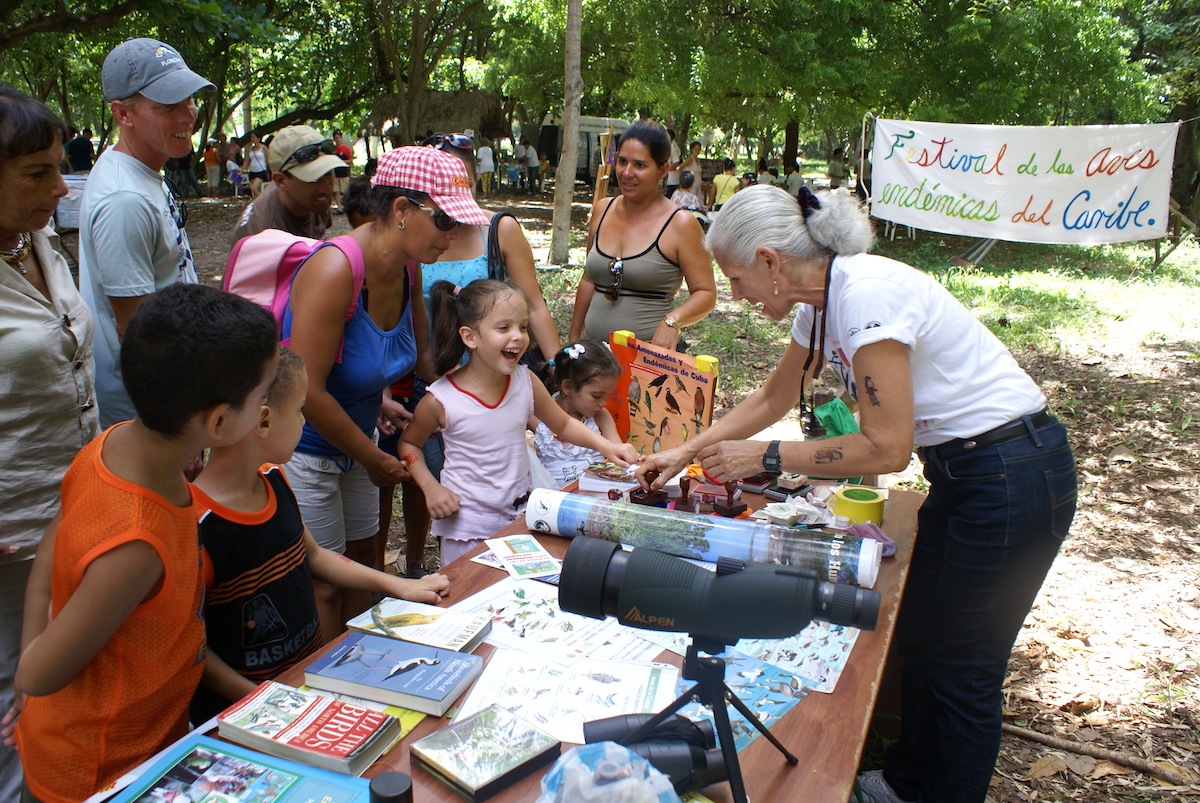
CEBF begins on April 22nd (Earth Day) and runs through May 22nd (International Biodiversity Day). This annual regional festival raises awareness of the amazing birds that live only in the Caribbean—their natural history, the threats to their survival, and how we can act to protect them and ensure that they thrive for generations to come.
This year’s theme “Every Bird Counts – Your Observations Matter” shines the spotlight on the power of citizen science, reminding us that you don’t need a lab coat or a PhD to contribute to science; you just need curiosity and a genuine love for nature and community. When we say “Every Bird Counts,”we mean it. Whether it is a tiny, iridescent Antillean Crested Hummingbird darting through your garden or the elusive Imperial Amazon (Sisserou) high up in the canopy in the rainforest, every single sighting you record provides a vital data point. These observations help us build a regional map showing us exactly where our endemic species are thriving and where they might be in trouble.
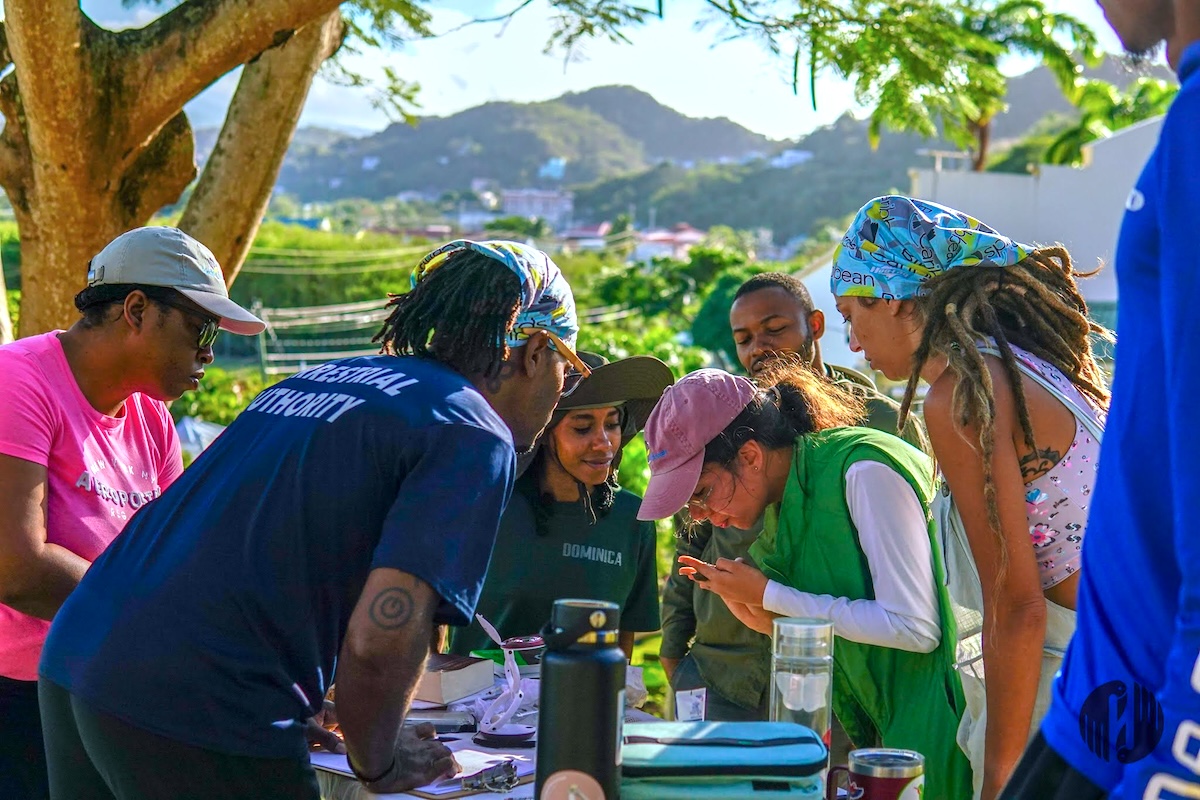
Dominica’s Imperial Seekers seeking out the magnificent Imperial Amazon for Global Big Day 2024. (Photo by Garry Auguiste)
The Sisserou is endangered and endemic to Dominica. (Photo by Paul Reillo)
This community-collected data is the backbone of informed conservation action because we cannot protect what we do not know. By involving everyone, from curious school children to seasoned experts, we create a massive, islands-wide “neighborhood watch” for our birds. By involving the whole community, we move people beyond casual observation and into the role of proud environmental stewards. Cool, right?
Your contributions help scientists identify which habitats need urgent protection and provide real-time results through platforms like eBird. This allows us to see population trends as they happen, giving us the power to respond faster to environmental changes and ensure our endemic birds are around for years to come.
A little more on citizen science…
While professional biologists work tirelessly to study and protect our birds, they cannot be everywhere at once. That is where you come in. Citizen science is a powerful collaboration where everyday people all around the world collect data, by watching and recording birds mostly on phones via eBird checklists—this data helps scientists solve real-world problems. In the Caribbean, many of our endemic birds live on just a single island, making them incredibly vulnerable to habitat loss, pollution, illegal trapping/killing, and climate change. To protect them, we first need to know exactly where they are and how their populations are changing. Your observations tell scientists if a species is declining or expanding its range and provide the “hard data” needed to advocate for the protection of critical forests, wetlands, and even green spaces within cities.
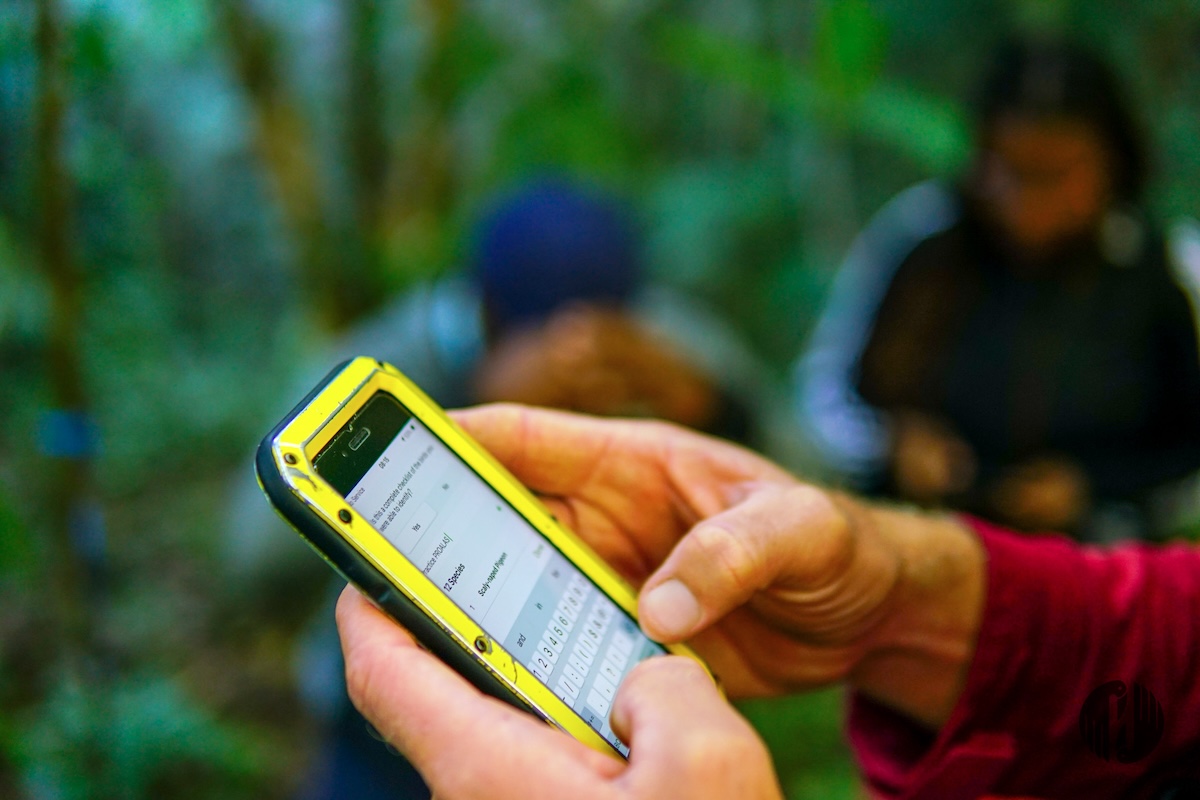
Entering data into eBird. (Photo by Holly Garrod)
To our fabulous island coordinators, this year is an invitation to mentor a new generation of citizen scientists, sharing your deep knowledge and passion to help the movement grow. To our new participants—welcome! This is your invitation to join your community in protecting and promoting your incredible natural heritage. If you’re new to citizen science you’ll want to read this beginner’s guide. There is an immense sense of pride in knowing that your backyard is part of a global treasure, and by participating, you are ensuring it stays that way. You don’t need expensive gear to make a difference; you just need a pair of binoculars or a keen eye. If you don’t own a pair of binoculars yet, don’t let that stop you! Your local coordinators and environmental organizations will have binoculars available for use at their CEBF events. They will teach you how to use the binoculars to get a crystal-clear look at our endemic icons, identify them, and make sure they count toward your checklist.
A lot more on community connection…
If you are looking for more than birdwatching and checklists, you have come to the right place. Our enthusiastic island coordinators and educators infuse the festival with a vibrant mix of in-person and online events that turn learning about birds into an unforgettable experience. It’s about reconnecting with nature, discovering hidden talents, strengthening our collective power to improve our communities, and taking pride in the vibrant biodiversity that defines our islands.It’s about exploring together, pulling up those boots and venturing into mangroves, dry forests, and wetlands that we often pass by every day without realizing the biodiversity they hold.
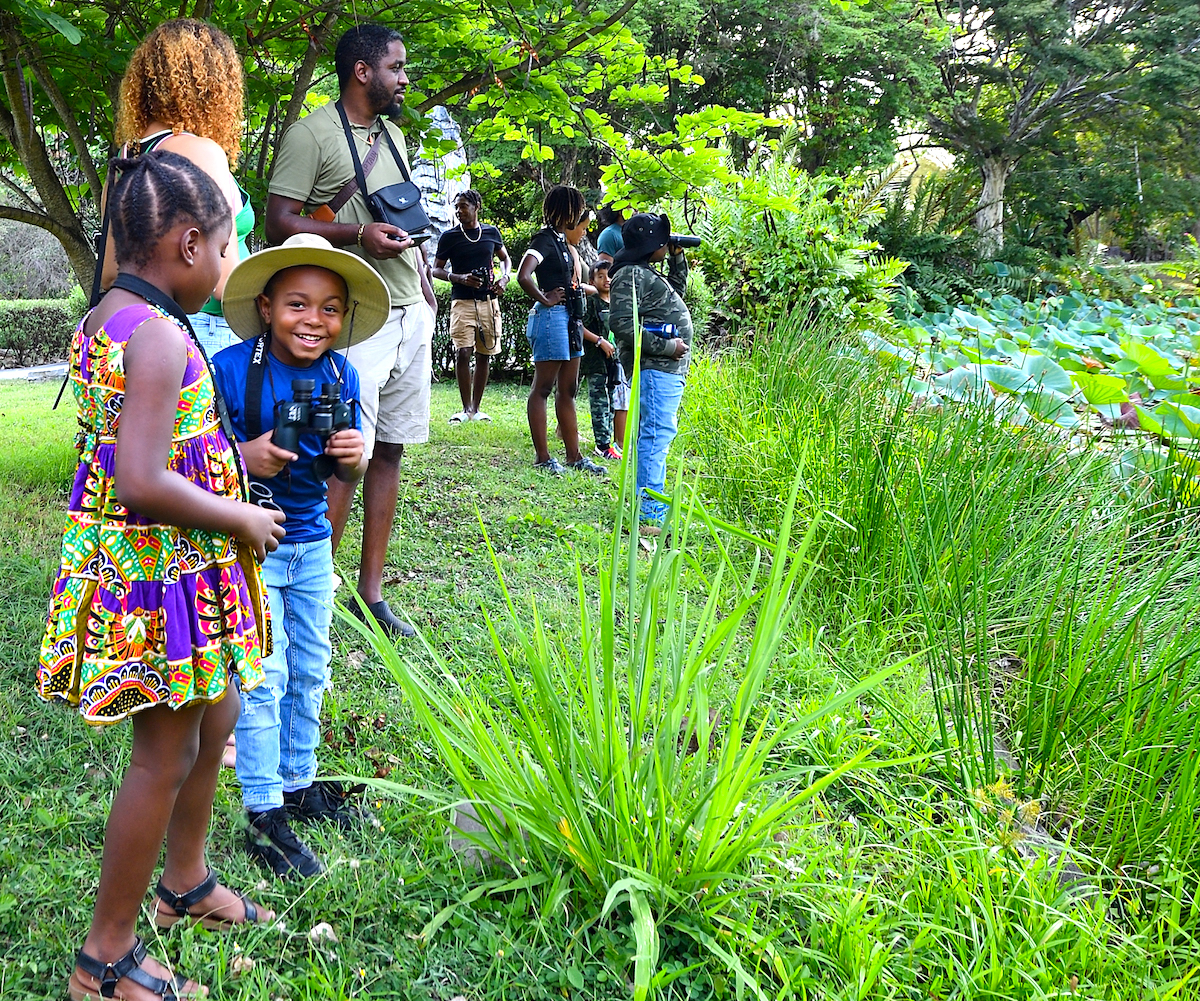
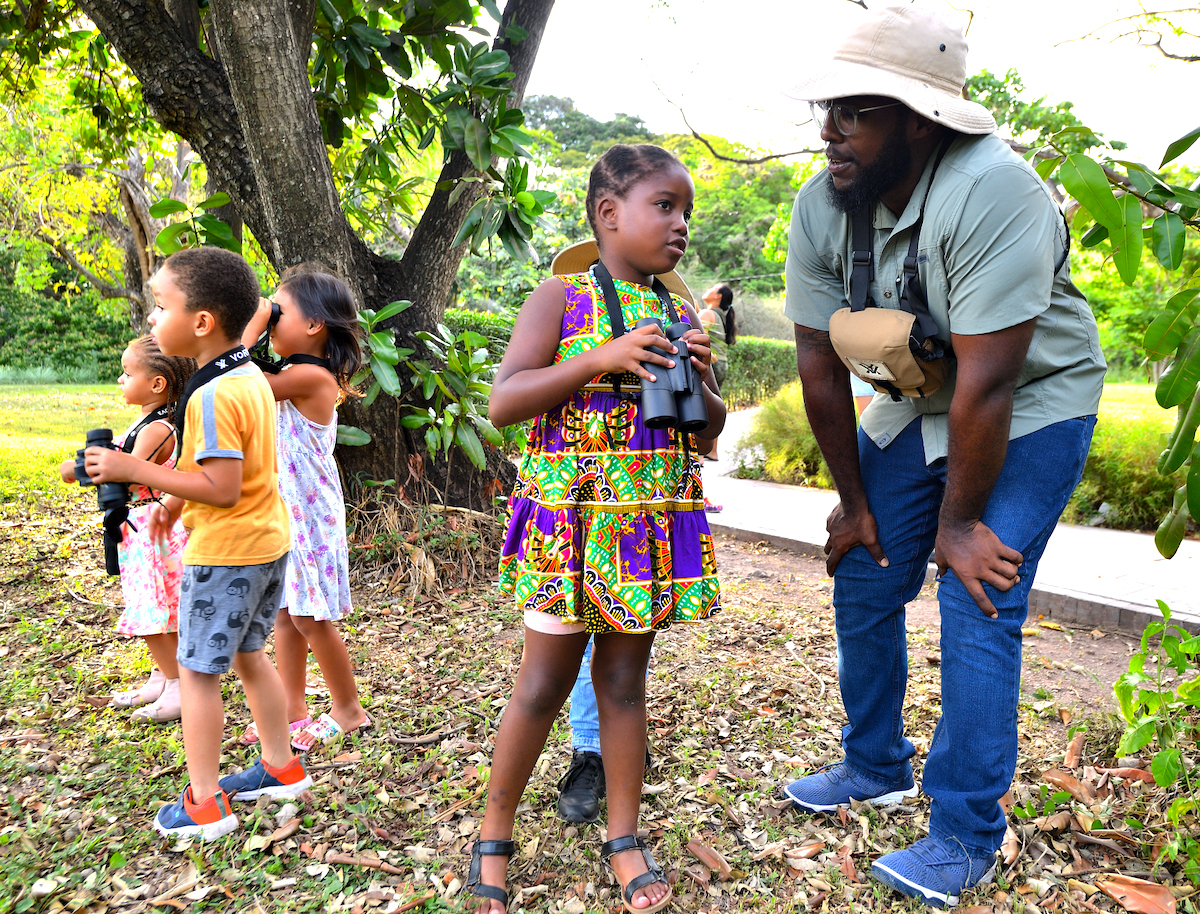
Hey! Are you taking a photo of us? Adults and children birdwatch by the pond at Hope Gardens, Jamaica.(Photo by Stuart Reeves)
Most importantly, it’s about belonging. By joining an event, you become part of a massive movement dedicated to ensuring that bird conservation becomes a seamless part of our daily lives. We want every Caribbean citizen to stand ready and knowledgeable, equipped with the facts, to speak up for our birds and the places they call home. Whether it’s advocating for the protection of a local wetland from unsustainable development, discouraging the illegal trapping and persecution of our endemic birds or simply sharing why a healthy forest matters for both birds and people, your voice is a powerful tool. When joined with a chorus of like-minded nature lovers, that voice becomes an unstoppable force for the Caribbean’s wildlife.
So what else can you expect at a CEBF event?
These events are usually held where life happens: on school grounds, in lush Botanical Gardens in cities, or at visitor centers bringing together students and teachers, local community groups, religious organizations, and service clubs like Rotary. Last year, the Environmental Awareness Group in Antigua even hosted a special birding tour for the Antigua and Barbuda Defence Force! Everyone is encouraged to come as they are: to think, to question, to challenge, and to exchange stories through:
Guided Birding Walks: Explore local hotspots with knowledgeable guides who help you spot birds and master your binoculars.
Shanna and students birdwatching at the Princess Margaret School. (Photo by Sherrel Charles)
Birds are everywhere, even at your university campus — and certainly at the University of Puerto Rico Rio Piedras campus. (Photo by Alondra Norat)
Creative Workshops: From bird-themed “Sip & Paint” sessions to photography classes and youth art contests.
Mask painting and bird identification station at the TTBO bird festival. (Photo by TTBO)
Young artists at work on bird-themed bags at Les Fruits de Mer’s Migratory Bird Festival in St. Martin. (photo by Mark Yokoyama).
Children display their completed Bee Hummingbird habitat with flowers for the bird to feed on and a water source. (Photo by TTBO)
A young girl decorating her pouch using bird stencils during the Endemic Animal Festival. (Photo by Mark Yokoyama)
Habitat Restoration: Roll up your sleeves for mangrove plantings and beach clean-ups to give our birds a cleaner, safer home.
Volunteers receive instructions before the start of the clean-up. (photo by Conservation Opportunity)
A volunteer ensures no trash is left behind. (Photo by Conservation Opportunity)
Approximately 150 pounds of trash were collected. (photo by Conservation Opportunity)
River in Charco Dos Bocas Ciales after spectacular cleanup effort by volunteers. (photo by Conservation Opportunity)
Games & Interactive Science: Get hands-on with fun experiments and games that reveal how different beaks work, to discovering all the amazing ways birds survive.
Youth learning how birds eat and build their nests through sensory play. (Photo by Amigos de El Yunque)
We did it! Students display the results of their BirdSleuth Caribbean Scavenger Hunt in Salt River, Jamaica. (photo by Emma Lewis)
“Birdscaping” Your Backyard: Learn which native plants turn your garden into the neighborhood hotspot where all the birds want to be.
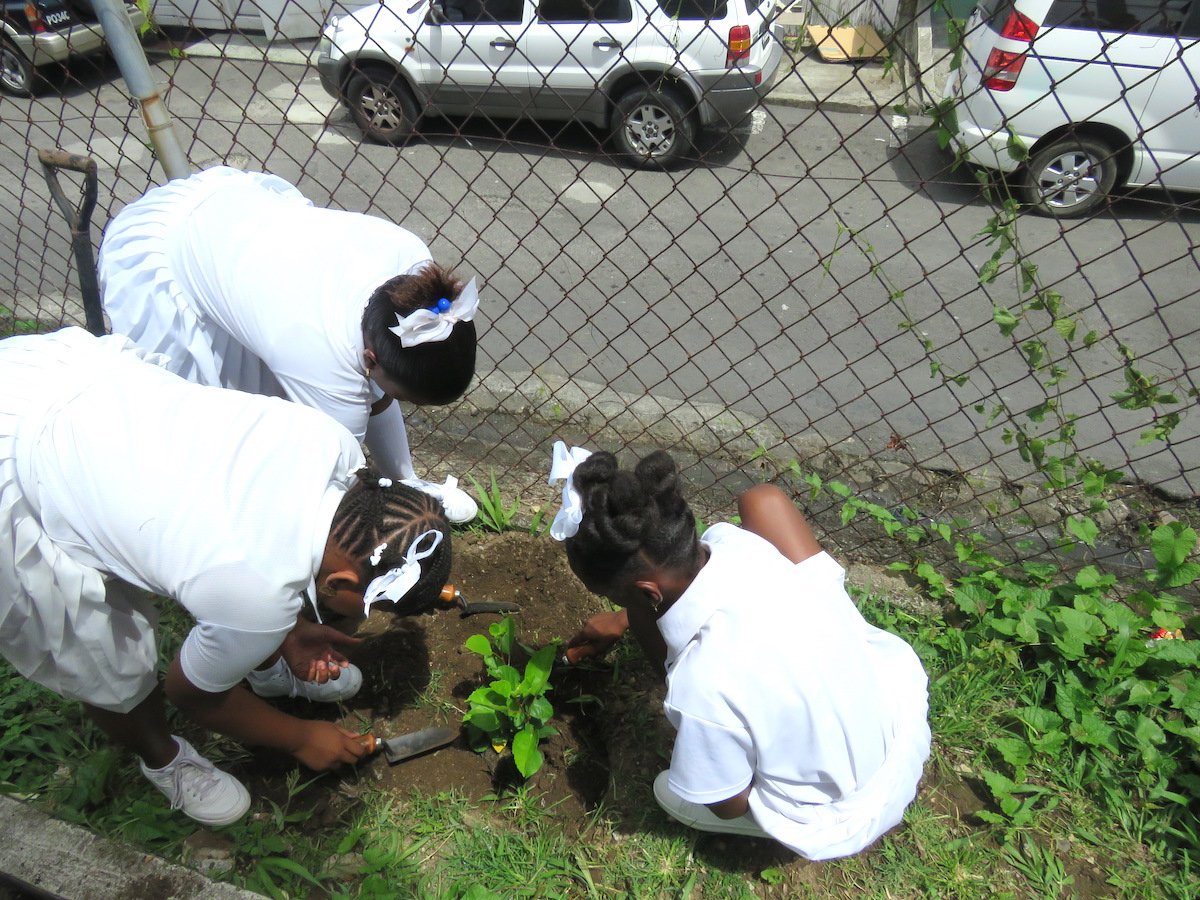
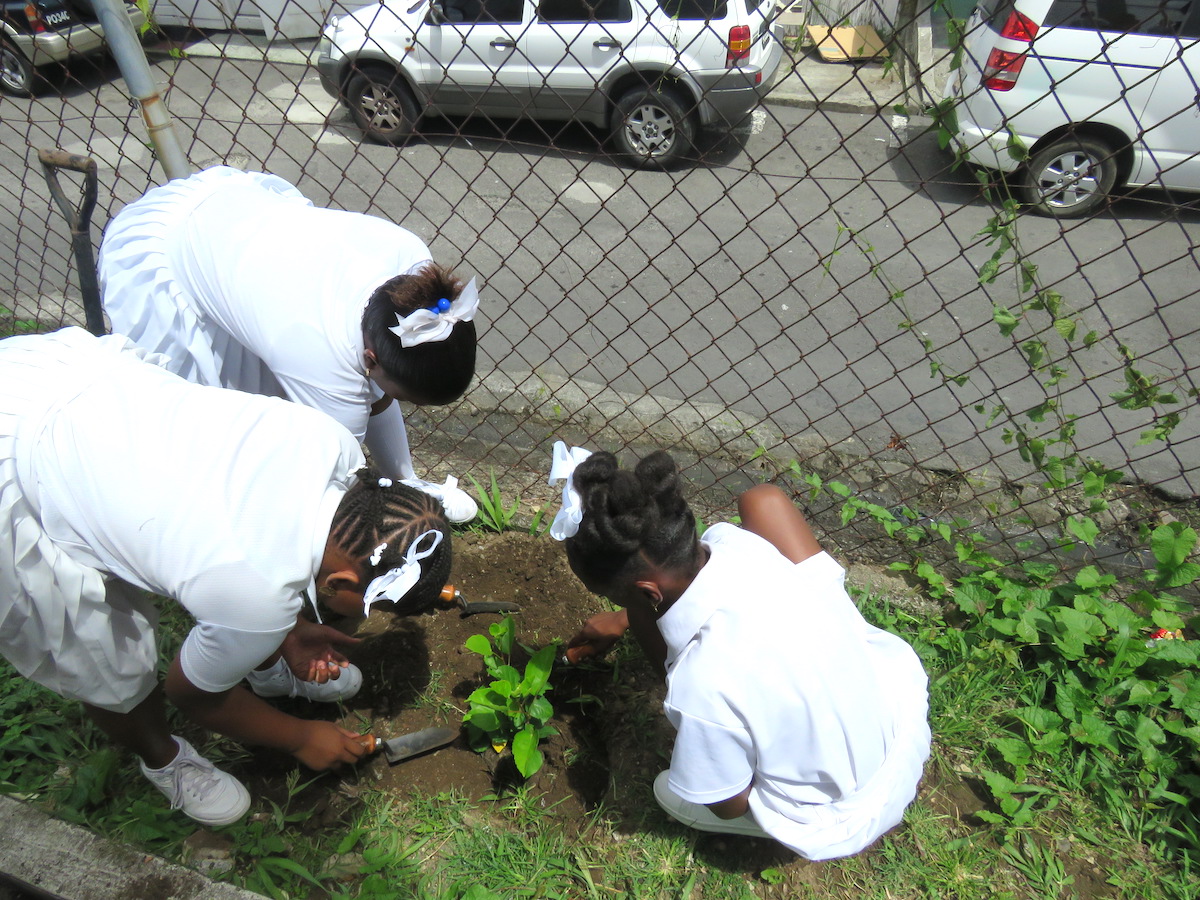
Students from St. Martin Primary School in Dominica planted native plants for CEBF 2018.
Virtual Festivals: Can’t make it in person? Join webinars and social media posts that connect bird lovers across the entire Caribbean.
Here are a few members of our powerhouse alliance of local NGOs and educators across the region.
Jamaica: BirdLife Jamaica, the Natural History Museum of Jamaica (NHMJ), Caribbean Coastal Area Management
Cuba: Empresa Flora y Fauna Matanzas, Grupo Ecologia de Aves, Empresa Flora y Fauna Santiago de Cuba, Museo de Historia Natural “Tomas Romay Chacón”, BIOECO, Parque Nacional Alejandro de Humboldt, Museo de Historia Natural Joaquin Fernandez de la Vara Pi Gibara
Dominican Republic: SOH Conservacion, Grupo Jaragua
Puerto Rico: Estuario de la Bahia de San Juan, Con Ciencia Ciudadana PR Inc
Antigua & Barbuda: Environmental Awareness Group (EAG) Antigua, BarbudanGO
St Eustatius: St. Eustatius National Parks Foundation
Dominica: WildDominique
Trinidad & Tobago: Trinidad and Tobago Bird Observatory and Research and Research Centre, ECONETICS
Don’t see your island listed? Use our CEBF Coordinators Directory to connect with local conservation organizations and find out what’s going on near you!
Got a serious case of FOMOOTCEBF (fear of missing out on the CEBF)? Sign up for our mailing list HERE to ensure that you get the latest CEBF event news, and find out first about the fantastic celebrations happening on your island.
Good for our islands, great for your legacy.
Your support for the CEBF keeps nature education accessible to all, providing the tools and workshops needed to protect our shared natural heritage. From “birdscaping” backyards to youth art contests, every dollar helps us provide these resources at no cost to our communities. Join us in making a lasting impact—donate securely HERE* and help every bird count. *Under ‘Designate your gift’ please select Caribbean Endemic Bird Festival.
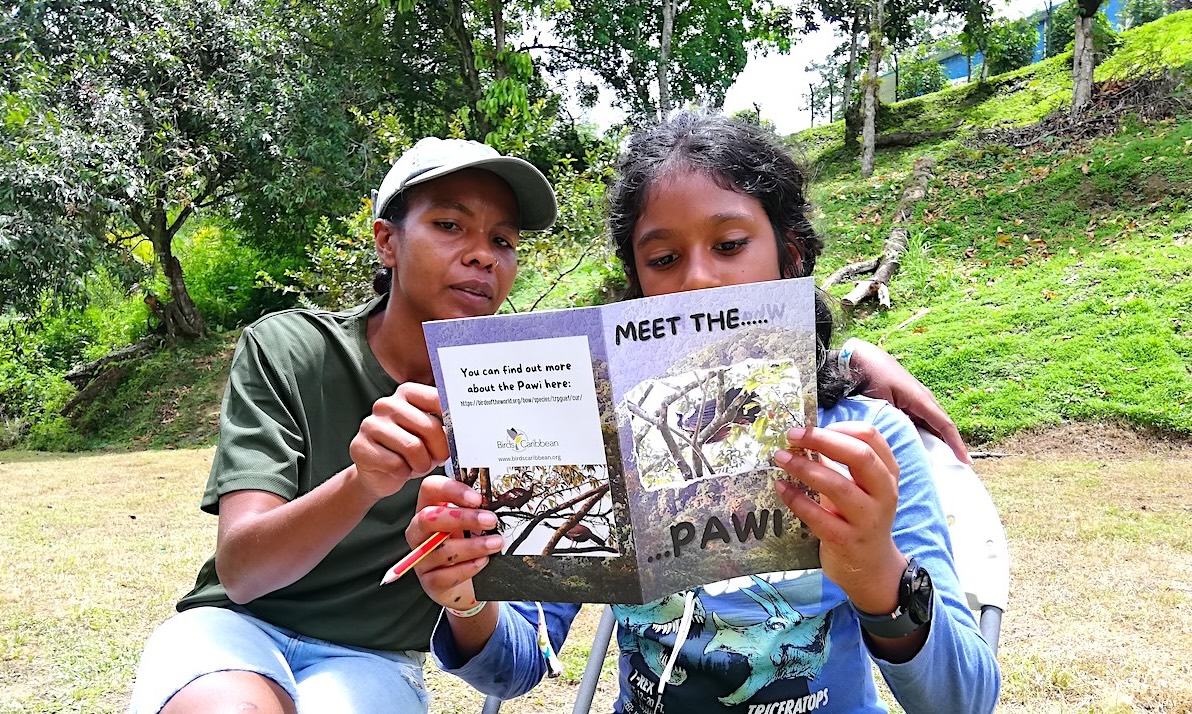
Giselle Ragoonanan, co-founder of the Trinidad and Tobago Bird Observatory and Research Centre, and Rafael Partap learn about the endemic Trinidad Piping-guan, locally called Pawi.
For one month, from April to May, environmental and community organizations across the Caribbean unite to celebrate the region’s 185 endemic birds and transform our islands into havens for them. Many of these unique birds are found on single islands! Relive the fantastic celebrations of our iconic Caribbean birds with us and learn how—through workshops, reforestation, habitat cleanups, field trips and even art—we’re actively building bird-friendly cities and communities throughout the Caribbean. From island to island, we’re creating shared spaces where both people and birds thrive!
This year, the Caribbean Endemic Bird Festival (CEBF) celebrated the theme “Shared Spaces: Creating Bird-Friendly Cities and Communities.” Rapid urbanization across the globe has changed natural landscapes and reduced the availability of food, water, and shelter for wildlife. The call to share spaces underscores the urgency of taking action to counteract these deleterious impacts and make urban areas more hospitable especially for birds.
Green spaces with healthy native plant populations—think well-planned community gardens and urban parks, and preserved woodlands—can provide birds with essential food. Similarly, clean blue spaces, like ponds, canals, and rivers, can attract birds seeking shelter or places to nest and raise their chicks. Both types of spaces also offer pleasant places for people to socialize, interact with birds and nature, and simply escape the hustle and bustle of daily life.
Bird-centered festivities took flight from April to May, with some organizations hosting multiple events throughout the entire month! Across the Caribbean, our dedicated CEBF coordinators rallied their communities, igniting pride for endemic birds and empowering people to take tangible action. From planting native trees to installing bird baths and so much more, communities embraced the call to make their local environments more welcoming to birds.
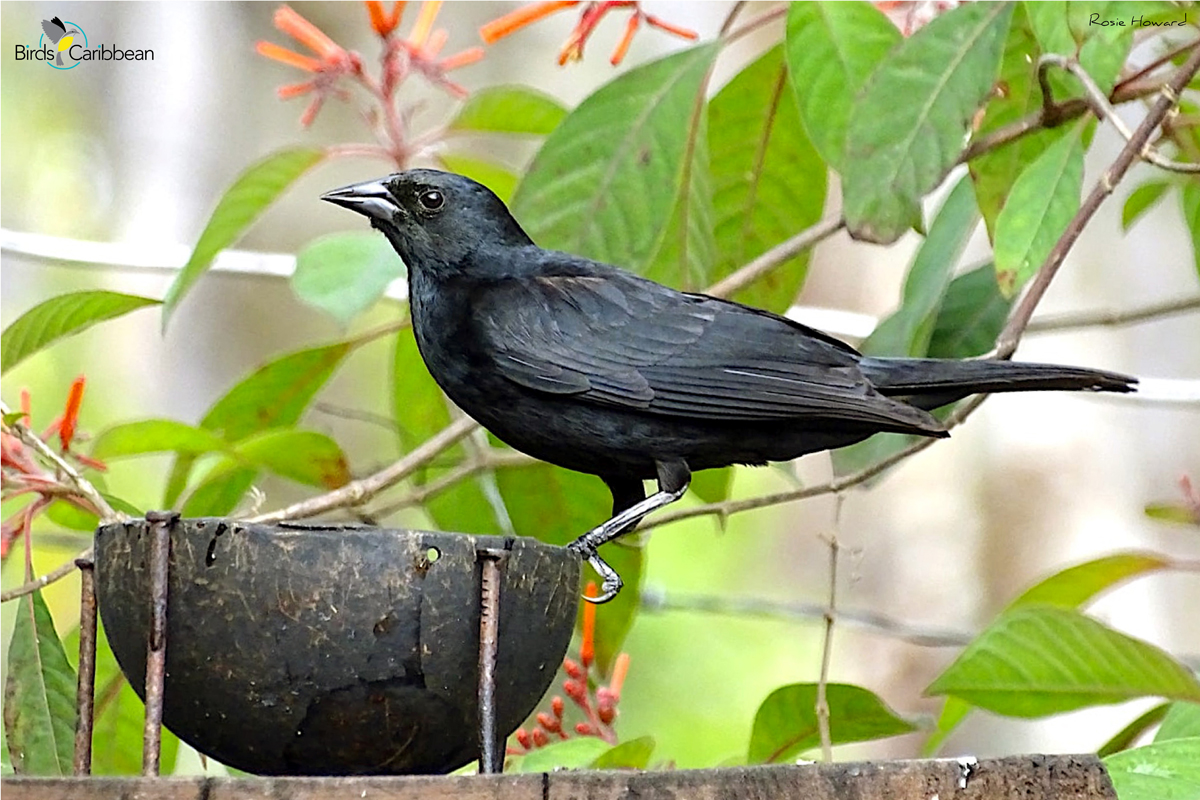
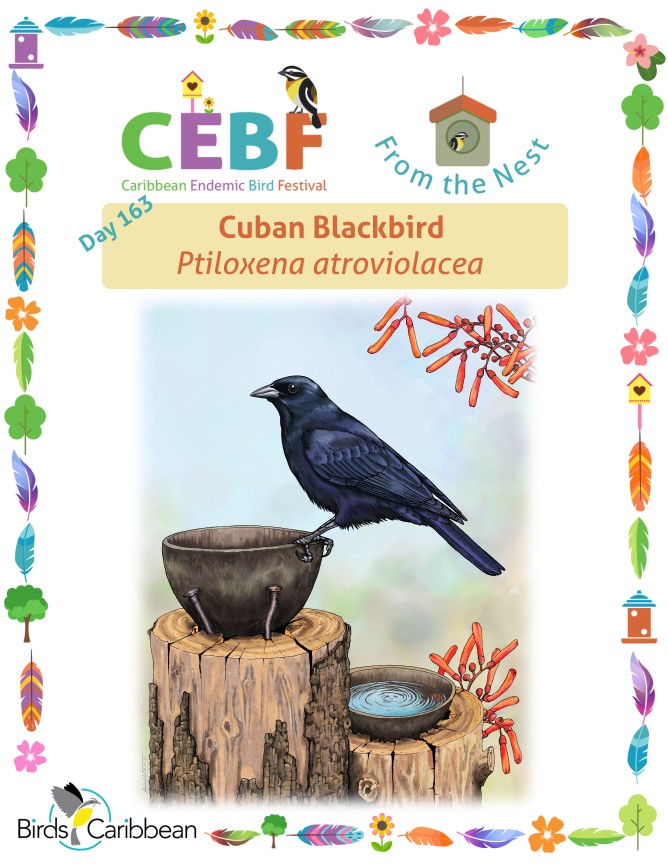
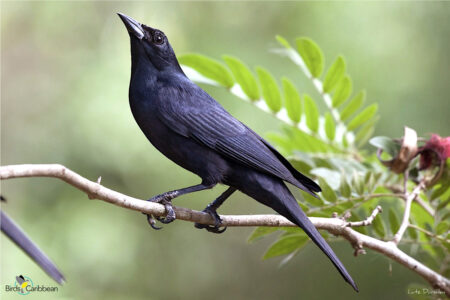
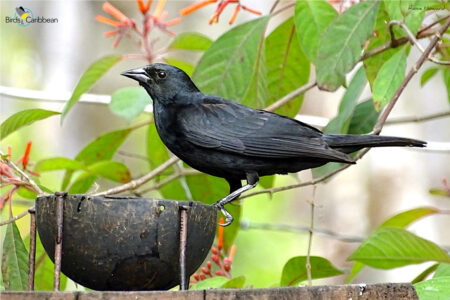
A Cuban Blackbird enjoys a feeder. (Photo by Rosie Howard, Macaulay Library-ML172657491)
This collective effort is exactly what BirdsCaribbean strives to cultivate with each CEBF, by strengthening capability to understand and value the interconnections within our environment and facilitating collaboration to create healthy, vibrant habitats for birds and people.
Honoring Simón Guerrero’s legacy
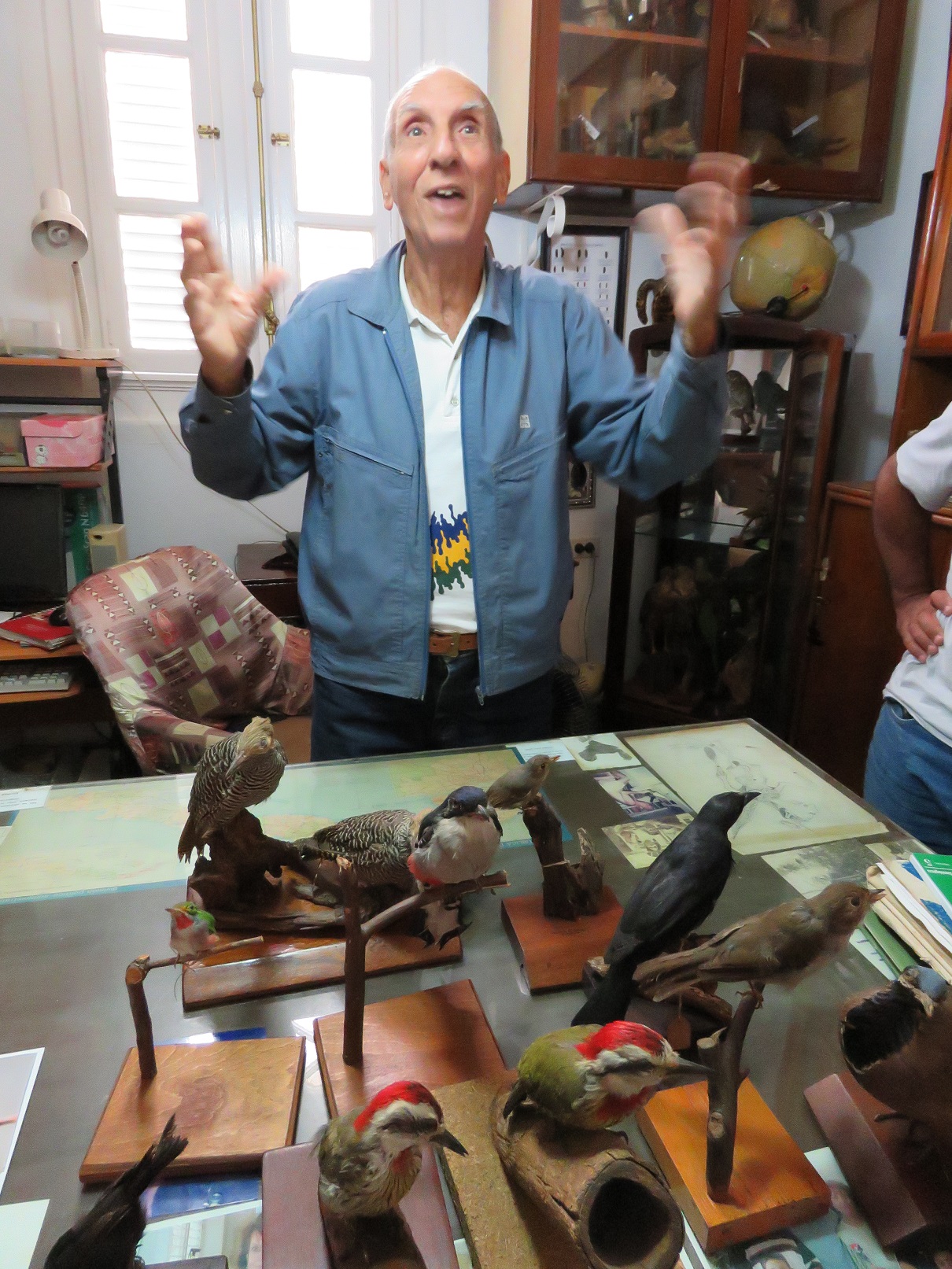
Last year our community mourned the loss of a Dominican conservation champion. Simón Guerrero was an outspoken and extraordinary environmental educator whose research on urban ecology focused on making cities more habitable for wildlife, including birds. He ensured that his bird conservation education and outreach always included the planting of native trees around schools he visited and the university he worked at. Simón explained, “I always plant some trees to be sure birds will know we are doing something real for them, not just talking.”
Students plant the Hamelia patens shrub, AKA ‘firebush’ in their school’s garden. (Photo by Simón Guerrero)
Firebush is a native plant that’s good for birds. These Dominican highschoolers, organized by Simón Guerrero, planted the shrub in their school garden.
The Academy in the Dominican Republic has also planted firebush as part of CEBF activities. This native is especially good for hummingbirds! (Photo courtesy of Simón Guerrero)
We wholeheartedly agree with this approach! In his honor, we made it a requirement for anyone wishing to join this year’s CEBF celebrations to do “something real for the birds.” Whether it was planting a native tree, installing a feeding platform or bird feeder, or adding a bird bath to school yards and backyards, these actions gave life to our theme of “Shared Spaces”. As always, our phenomenal crew of CEBF coordinators enthusiastically responded!
Making cities and communities bird-friendly across the region
Grenada
This year’s festival was especially significant for Grenadians, who celebrated the official recognition of a new endemic bird species—the Grenada Wren! Our partners at the Belmont Estate, Gaea Conservation Network, and the Grenada Fund for Conservation collaborated to host a suite of events for bird and nature lovers, students, families and members of the tourism community. Highlights included a live reading of the children’s story “Wrennie Takes Flight: A Grenadian House Bird on A Big Adventure” by the author Kimberley Wetten, an opportunity to meet and chat with local conservationists, and educational activities and games about the Grenada Wren.
3D models of four wren species, from left to right Grenada Wren, St. Vincent Wren, Southern House Wren, and Northern House Wren. (Photo by Grenada Fund for Conservation)
Primary School students learn about bird nests at Grenada’s Bird Festival. (Photo by Grenada Fund for Conservation)
Amonie Holas answers questions from Primary school students about the Grenada Wren. (Photo by Grenada Fund for Conservation)
Kingston is becoming more bird-friendly, thanks to the incredible efforts of the Natural History Museum of Jamaica (NHMJ). The NHMJ’s CEBF events aligned perfectly with our theme and brought bird conservation right into the heart of Jamaica’s bustling capital!
The museum came alive with the energy of 38 participants—students from Higholborn Street Basic and Kingston Technical High, members of the public, and Birdlife Jamaica representatives—all eager to learn how to be a better neighbour to the birds. Dr. Suzanne Davis of NHMJ kicked things off with a captivating presentation on bird feeders, covering everything from their importance and types, to care instructions and common challenges. The star of the agenda was a DIY bird feeder workshop, led by NHMJ’s Teona Rattigan. Twenty handcrafted seed and nectar feeders now hang in the museum garden, schools, and homes—ready to provide a scrumptious buffet for Kingston’s birds!
Ms. Michelle Roberts from Birdlife Jamaica then led an immersive bird tour through the museum’s newly renovated Exhibition Gallery. Participants explored dioramas of Jamaican environments while learning about the unique endemic and native birds that inhabit them.
The day ended with a bird-themed ‘Make & Take’ art session, led by NHMJ’s Eartha Cole, where 10 students and two teachers from Higholborn Street Basic School crafted delightful bird-shaped necklaces and decorated bird masks.
BirdLife Jamaica (BLJ) broadcasted the “Shared Spaces” call to action through a series of webinars. “An Introduction to CEBF” set the stage, diving into the history and theme of the Caribbean Endemic Bird Festival and highlighting the exciting lineup of upcoming activities, while the second webinar “Sip and Share—Connecting with Protected Areas” offered a unique opportunity to explore nature beyond backyards. Jamaican naturalists and photographers shared their personal, inspiring experiences from the Palisadoes Port Royal Protected Area deepening participants’ connection with this protected area by emphasizing its importance as a habitat for a variety of birds including beloved Vervain Hummingbird, Greater Antillean Grackle and Loggerhead Kingbird.
Loggerhead Kingbird. (Photo by Dave Curtis)
Returning for CEBF 2025 was BLJ’s popular “Bring-a-child birding” event, an outdoor event that connects city dwellers with nature. Kids and adults alike enjoyed an interactive bird walk, followed by a captivating reading session with local author Amina Blackwood-Meeks of “Don’t Hurt That Bird.” The day wrapped with a delightful arts-and-crafts session led by Michelle Roberts, where children transformed toilet paper rolls into their own quirky bird creations!
Kids birdwatching at Hope Gardens, Kingston. (Photo by Stuart Reeves)
Even toddlers are intrigued by Jamaica’s birds. (Photo by Stuart Reeves)
Amina Blackwood-Meeks reads her book ‘Don’t Hurt That Bird’ for kids and their parents at the Bring A Child Birding event. (Photo by Stuart Reeves)
Another successful Bring A Child Birding event! (Photo by Stuart Reeves)
Kids creating their own birds from toilet paper rolls. (Photo by Michelle Roberts)
Intent on making gardens prime real estate for birds, the BLJ team hosted a “Birdify Your Backyard” workshop for the general public. The workshop started with an eye-opening discussion on how built areas are also home to birds and how gardens and backyards can not only look beautiful—but also support the birds, insects, reptiles, and other wildlife that provide essential ecosystem services like pollination and pest control.
Participants then got their hands dirty in a practical plant propagation session where they learned to generate new plants from cuttings and safely separate compound plants with multiple shoots. They also received step-by-step instructions to safely transfer and repot plants—giving them the skills to start their own bird sanctuaries at home!
The Bahamas
Every bird-friendly area needs a good water source for birds to rehydrate, keep cool on hot days and, to keep their feathers clean and in top shape. In recognition of CEBF 2025, Grand Bahama Island Birders presented bird baths to two schools on the island: Walter Parker Primary School and Bishop Michael Eldon School.
Students and teachers of Bishop Michael Eldon School were thrilled to receive the bird bath. From l eft to right: (back row) Lucianna Gomez, Primary Eco-school Coordinator, Jill Cooper, Mrs Mira Lightbourne, Primary school Vice-principal, Delores Kellman, Sylvie Carey, Bridget Davis and Gail Woon. Front row: Laiyarose Jones, Mrs. Cheng Beee Selim-Dela Pena, High School Eco-school Coordinator, Adrianna Gabrielle Selim-Dela Pena and Mila Davies. (Photo by Grand Bahama Island Birders Club)
The bird bath is the latest bird-friendly addition to the Walker Parker Primary School. From left to right: (back row) Sylvie Carey, Jill Cooper, Delores Kellman, Principal, Mrs. Remelda Been, Eco Club Advisor, Mrs. Lashawnda Jones and Bridget Davis. Front and middle row: students of the Eco Club. (Photo by Grand Bahama Island Birders Club)
Just a quick pause before we continue with the CEBF highlights…
This year, we lost significant funding for our bird conservation education and outreach programs, which the CEBF falls under—and we need your support to help ensure that bird education remains accessible to all in the Caribbean.
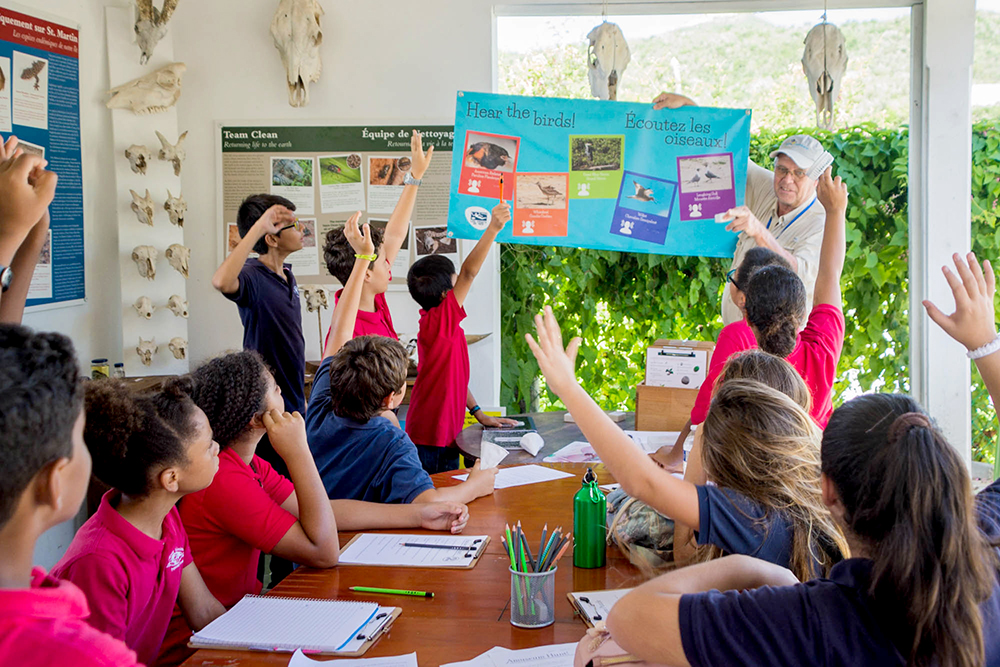
Binkie van Es leads an eager BirdSleuth group in the classroom on St. Maarten.
Your donation will be an invaluable investment in the future of Caribbean bird conservation and will help us provide materials and access to capacity-building programs to early-career Caribbean conservationists. These passionate individuals are committed to advancing bird conservation on their islands through engaging outreach events, like those listed in this blog, that inspire communities to embrace bird-friendly practices. Your support will help amplify their efforts, fostering a deeper connection between people and the incredible wildlife that surrounds them.
Their dedication ensured these events were both unforgettable and made a real difference for birds across Cuba. From kids to adults, everyone got in on the action! Participants dove into birdwatching, games, art contests, discussions with Cuban ornithologists and conservationists, and of course rolled up their sleeves to make their communities more bird-friendly. There were habitat clean-ups, tree planting, and workshops dedicated to building bird feeders and water baths. A particular highlight was the sheer joy of discovering birds right in their own neighborhoods, schoolyards, and lush nature reserves. We absolutely enjoyed seeing all of the social media posts and joining the live events whenever we could. You can relive the excitement and see the incredible impact by searching for #FAEC2025 on Facebook and Instagram!
St. Martin
Every year Les Fruits de Mer hosts the Endemic Animal Festival and every year attendees show up despite the hot dry season weather which—let’s be honest—makes you want to stay sat in front of a fan! The festival drew over 80 people looking for challenging and fun scavenger hunts, bird bingo, art and craft activities, and free cool nature and wildlife books. These activity and coloring books, written and edited by the dynamic duo of Les Fruits de Mer—Mark and Jenn—feature the incredible plants, insects, mammals, fishes, reptiles, and birds of St. Martin. This year they added another brand new coloring and activity book, “St. Martin Unique Nature,” available for free download here from their growing library of publications.
Endemic Animal Festival announced in the local press.
Front cover of the bilingual coloring and activity book ‘St. Martin Unique Nature.’
Attendees were invited to decorate their own canvas pouches with endemic animal designs during the festival. (Photo by Mark Yokoyama)
Haiti
On the Les Cayemites Islands where Hispaniolan Parrot chicks are snatched from nests for the pet trade, the Critically Endangered Ridgway’s Hawk is persecuted as a pest, and birds in general are hunted for sport by adults and children; Anderson Jean of Action pour la Sauvegarde de l’Ecologie en Haiti leveraged the CEBF to educate communities about the devastating impact of these harmful practices.
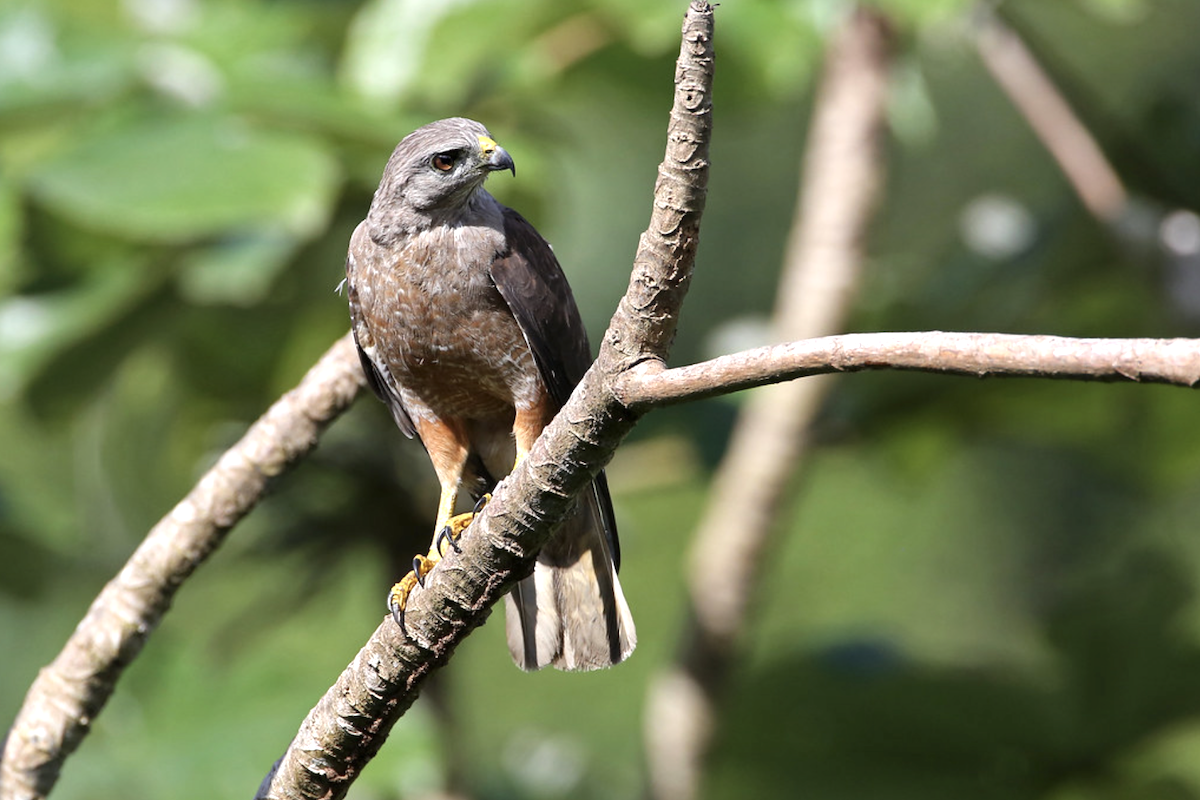
The Ridgway’s Hawk is one of the most critically endangered raptors in the world and is endemic to Hispaniola. (Photo by Dax Román)
Anderson and his team introduced 200 primary school students to the wonderful world of birds through a riveting presentation. The team spoke about the importance of wild birds to the environment and people, and the endemic birds of Haiti—covering their calls, behaviours, habitat needs, and threats. They also took the opportunity to bust harmful myths about birds, such as the belief that a Ridgway’s Hawk nesting on a farm extends the dry season.
After the presentation, it was time to power up the students’ observation skills with a school yard birdwatching session—an absolute hit with the students!. Anderson shared that, “the students really enjoyed watching and trying to identify the birds…some even complained that the time spent birdwatching was too short!”
Trinidad and Tobago
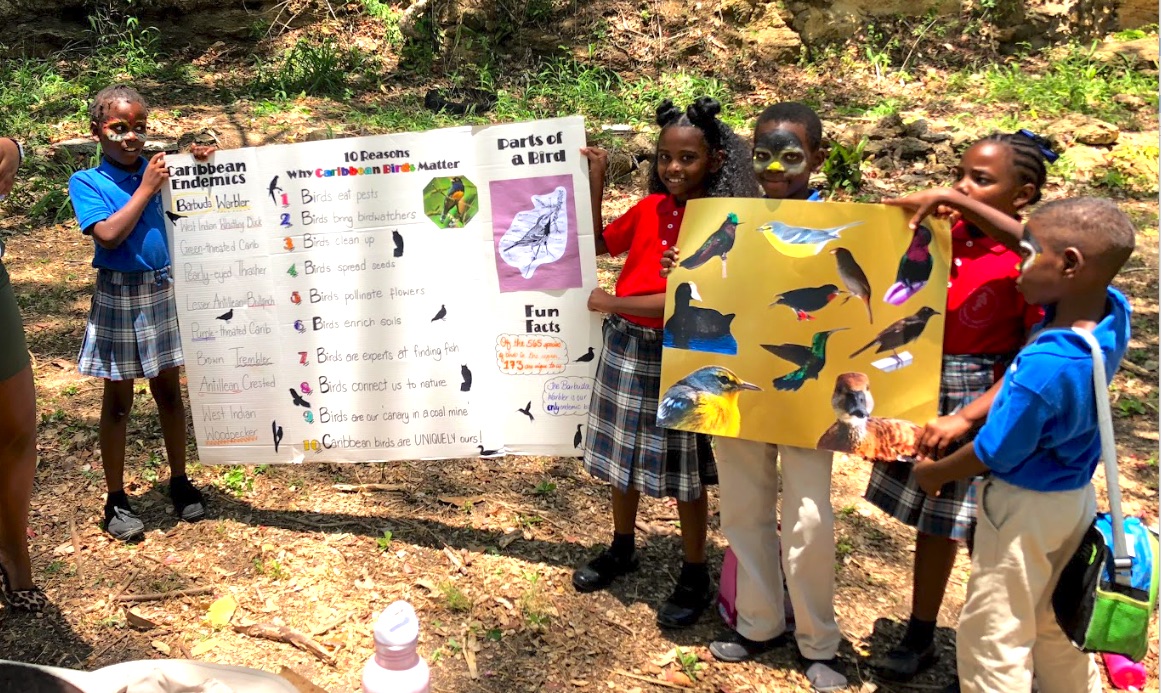
The third annual Brasso Seco Bird Festival, organized by the Trinidad and Tobago Bird Observatory and Research Centre TTBO, was designed to teach children about their local environment. Through hands-on activities, art, and community involvement, the festival made nature exploration a multi-sensory experience for all in attendance! Children were grouped into three teams—each named after a native bird species and led by an adult team leader—team Bay-headed Tanager, the Turquoise Tanagers, and the Purple Honeycreepers. Each team then visited four educational stations: biodiversity exploration, poetry, habitat modeling and mask painting, and bird species identification.
At the biodiversity table children got hands-on, exploring local plants and animals using real items like feathers, nests, pods, and dried leaves. They were encouraged to ask questions, identify specimens, compare them, and think about how different species interact with each other. The poetry station built on this sensory exploration, giving children the space to write cinquain and haiku poems, incorporating what they saw and felt at the biodiversity table. The session ended with an open-mic spoken word activity, where they shared their experiences through guided poetic expression.
Dan Jaggernauth teaches children about the different plants birds feed upon in the forest at the biodiversity station. (Photo by TTBO)
A young boy proudly shares his bird poems after visiting the poetry station at the TTBO’s bird festival. (Photo by TTBO)
The habitat modeling station was buzzing with excitement as children worked together to create miniature bird-friendly habitats for a variety of endemic birds. They often yelled out what needed to be added to their habitats to help the birds survive, shouting things like, “clean water!” and “lots of flowers!” for the Bee Hummingbird, or “parrots eat fruits so we need to add fruits!” for the Imperial Amazon, and of course, “trees to sleep in!” One of the participants, Rafael, shared with the TTBO how he made his garden bird-friendly for the birds in central Trinidad. Check out his amazing garden in the video below!
The mask-making and bird ID station offered a fun and educational activity. Participants chose a native bird, then learned about its ecological role, habitat, and a unique fact using a guided worksheet. Finally, they painted a wearable mask of their chosen bird, connecting art with biology and identity.
Mask painting and bird identification station at the TTBO bird festival. (Photo by TTBO)
Children display their completed Bee Hummingbird habitat with flowers for the bird to feed on and a water source. (Photo by TTBO)
Dominican Republic
Grupo Jaragua, a local environmental powerhouse, shared valuable information via social media on native plants that can be planted to make Dominican backyards more welcoming for birds. The team handpicked species for their outstanding ability to provide food for birds.
Beyond plants, Grupo Jaragua also shared the story “El ladrón de cotorras” (The parrot thief) of a pet Hispaniolan Parrot as part of their “Mangrove Stories” social media series. The Hispaniolan Parrot is an endemic parrot to Hispaniola (Dominican Republic and Haiti) that is illegally captured and sold as a pet. The graphic story, with illustrations created by Cua Conservacion, explains how pet parrots are caught and why this is problematic, calling on Dominicans to leave parrots in the wild.
Margarita Island
The Laguna La Restinga National Park, a designated Ramsar site, holds a unique position on Isla Margarita. It sits squarely between the bustling eastern half and the relatively deserted Macanao Peninsula to the west. Despite its location and Ramsar designation, the park rangers initially had very little knowledge of just how important this area is to its many resident, endemic, and migratory birds.
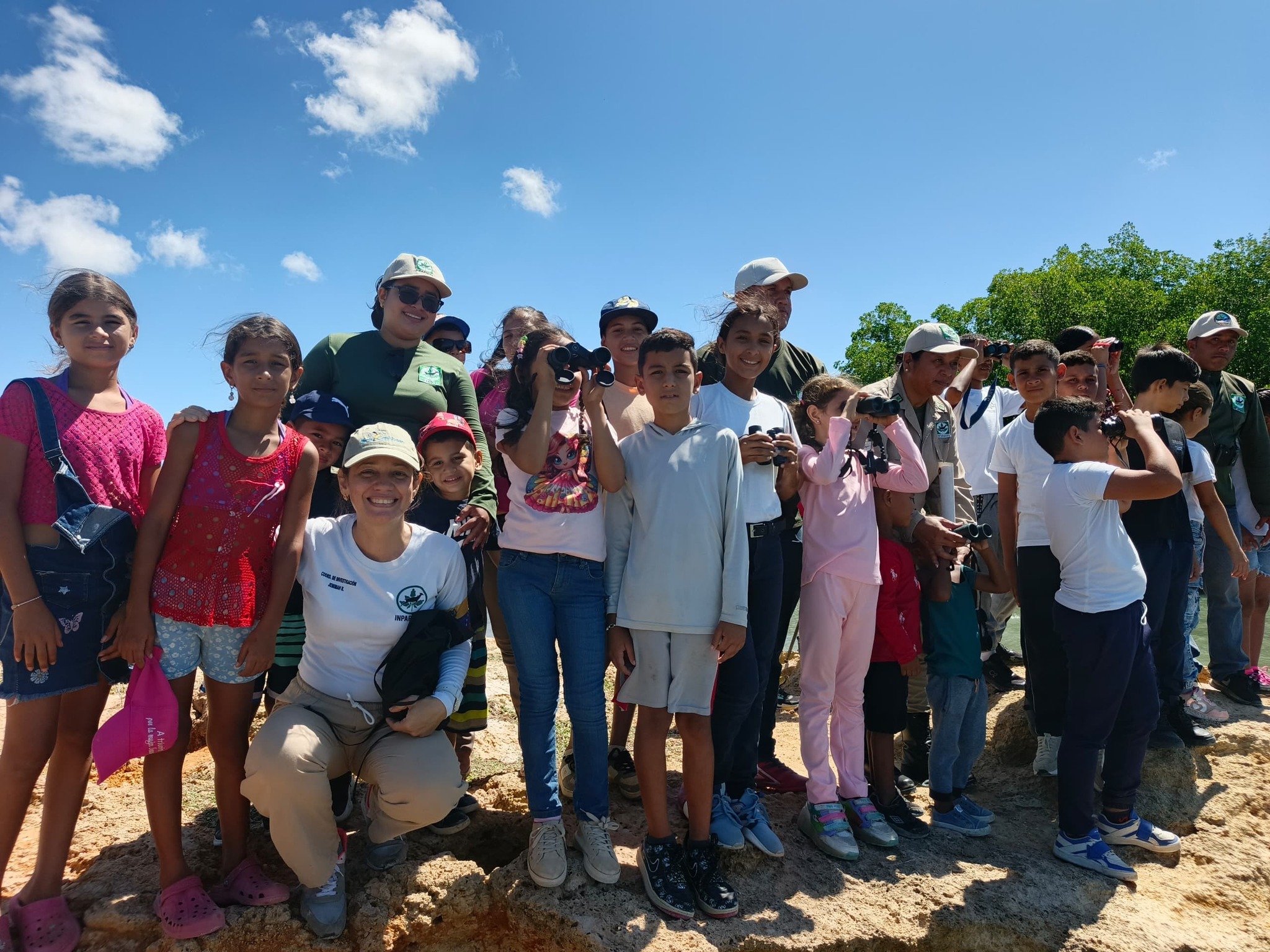
That changed when Jemimah Rivera, founder of the local NGO Bio Zoe and CEBF Coordinator for Margarita Island, stepped in. She led two workshops designed to educate the rangers about the park’s incredible bird diversity. The training also provided them with basic field skills in birdwatching, bird identification, and locating nesting and feeding areas within the park.
Jemimah speaks to park rangers about birds and how to identify them during the workshop. (Photo by BioZoe)
Time to practice. Park rangers practice using binoculars to watch and identify birds in Laguna La Restinga National Park, Margarita Island. (Photo by BioZoe)
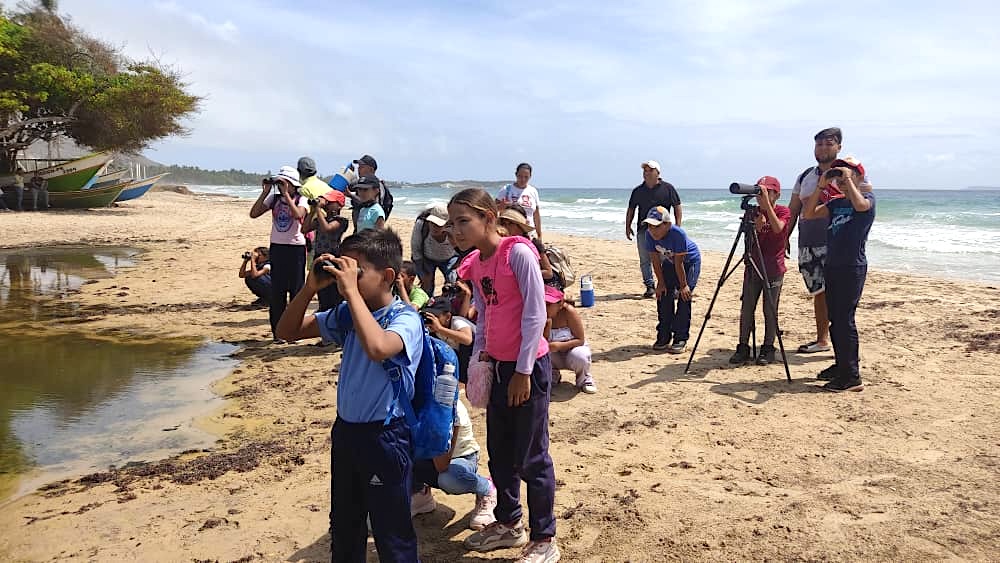
Birdwatching wasn’t just for the adults; Jemimah also headed to the fishing village of Tirano to educate and connect kids to nature. Local conservationists joined her, sharing insights about the island’s birdlife before taking the group on an exciting birdwatching trip. To further help, they also held a beach cleanup, making the area tidier for birds and other wildlife.
Children from El Tirano village in Margarita Island enjoy trying birdwatching. (Photo by BioZoe)
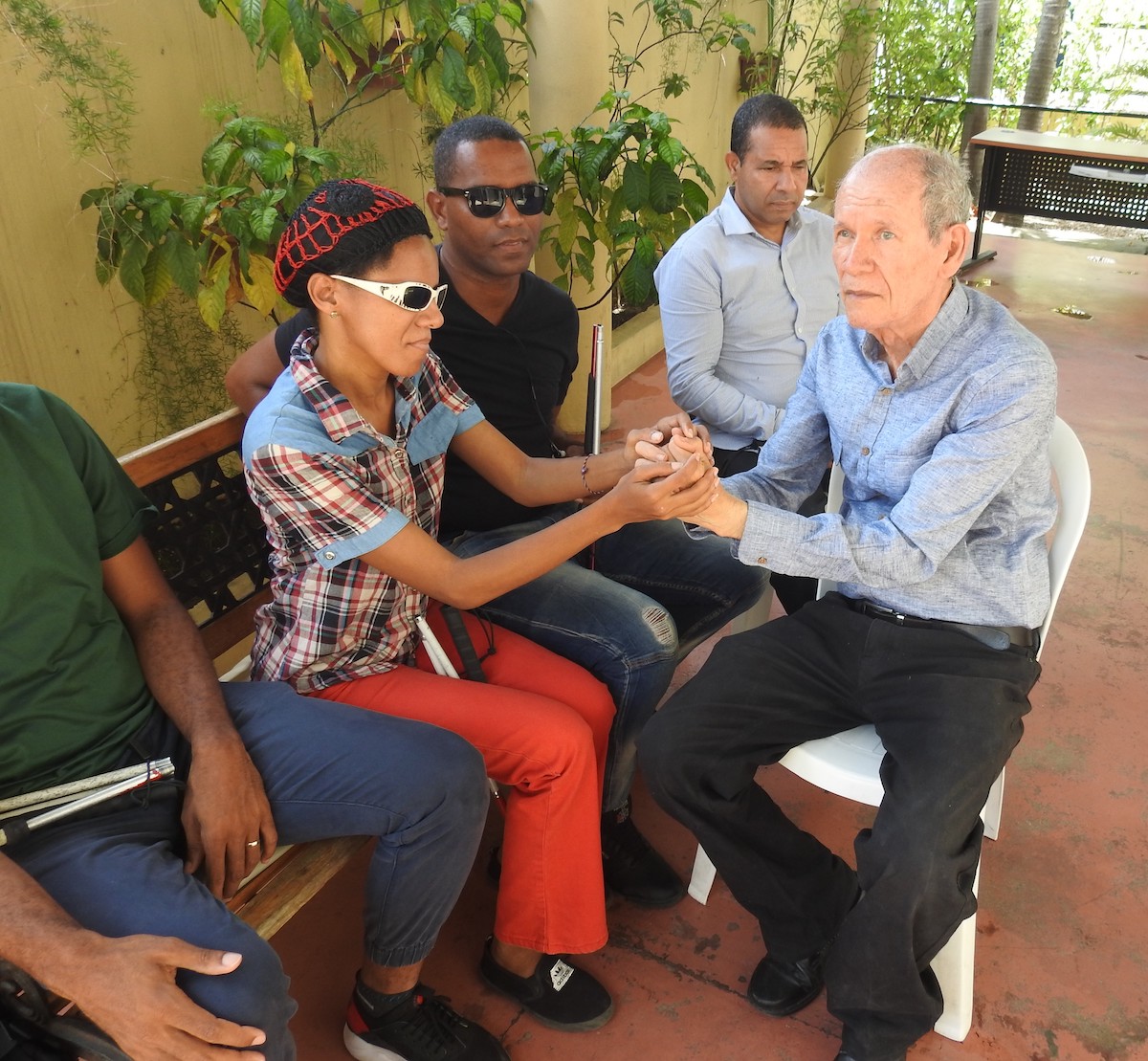
We’re incredibly proud to share that Jemimah made her CEBF events inclusive, welcoming differently abled children. She found it challenging but highly rewarding helping them learn about the fascinating lives of birds and working with them to complete various art and craft activities. Look out for an upcoming blog post where we’ll share more about this heartwarming event. If you’re interested, be sure to sign up for our newsletter here!
Jemimah with her birdwatching crew at Laguna de Raya, Margarita Island. (Photo by BioZoe)
Antigua and Barbuda
The Environmental Awareness Group EAG and agricultural science students at the Princess Margaret School proved that formal institutions, not just backyards and gardens, can be bird-friendly too! What’s more, they also proved that achieving this does not require oodles of money. Together they designed and built five bird feeders and five bird baths using materials they already had on hand like water bottles, wooden spoons, chicken coop wire, and shallow bowls.
Sometimes all you need is a little creativity. A simple bird feeder made using a plastic bottle and wooden spoons. (Photo by Sherrel Charles)
Shanna and students birdwatching at the Princess Margaret School. (Photo by Sherrel Charles)
The students then enjoyed a guided birdwatching trip across the school grounds, a skill that will undoubtedly come in handy when identifying visitors to their new bird baths and feeders. The event garnered media attention and was covered by the Antigua and Barbuda Broadcasting Services (ABS). It was featured in a special International Biological Diversity Day segment during their morning TV show. For this segment, Shanna Challenger of the EAG and CEBF coordinator for Antigua, along with our Caribbean Bird Banding Program Manager Holly Garrod, were in studio sharing the importance of bird conservation work on the island and wider region.
Shanna and Holly at the Antigua Broadcasting Services studio.
On Global Big Day, the EAG, Wadadli Warblers Bird Club, and Antigua and Barbuda Defence Force joined forces to observe and record as many bird species as possible in Christian Valley, an Important Bird Area. For many, it was their first time birdwatching, and they were absolutely thrilled! Check out their video below.
Bird conservation education and outreach continued throughout the month. Shanna and Sherrel Charles, the EAG’s Science Communications Officer, captivated members of the Antigua and Barbuda Ocean Trust and students at Jennings Primary School and Buckleys Primary School with their interactive presentations. These sessions weren’t just talks—they included brain-busting quizzes, fun games with fantastic prizes like CEBF-themed stickers and bookmarks up for grabs. To top it all off, every session wrapped up with a fun birdwatching adventure, sparking curiosity and fostering an appreciation for nature.
Puerto Rico
Alondra Norat of Pajareo Virtual took a small but dedicated group of undergraduates on a birdwatching trip across the University of Puerto Rico Río Piedras Campus. For several of the students, this was their first time being on a birding tour and using binoculars. Alondra is confident that the birds, clearer than ever before, sparked a thrill in them as they peered through the lenses. The group used their observations from this trip to put together an (unofficial) guide to the common plants and birds on the campus for other first-time student birdwatchers on campus! This practical resource was particularly valuable as it was their first foray into birdwatching and their initial experience with both the eBird app and field guides.
Birds are everywhere, even at your university campus — and certainly at the University of Puerto Rico Rio Piedras campus. (Photo by Alondra Norat)
Common birds and plants of Rio Piedras campus ID cards created by Alondra and Steve Maldonado Silvestrini. (Photo by Alondra Norat)
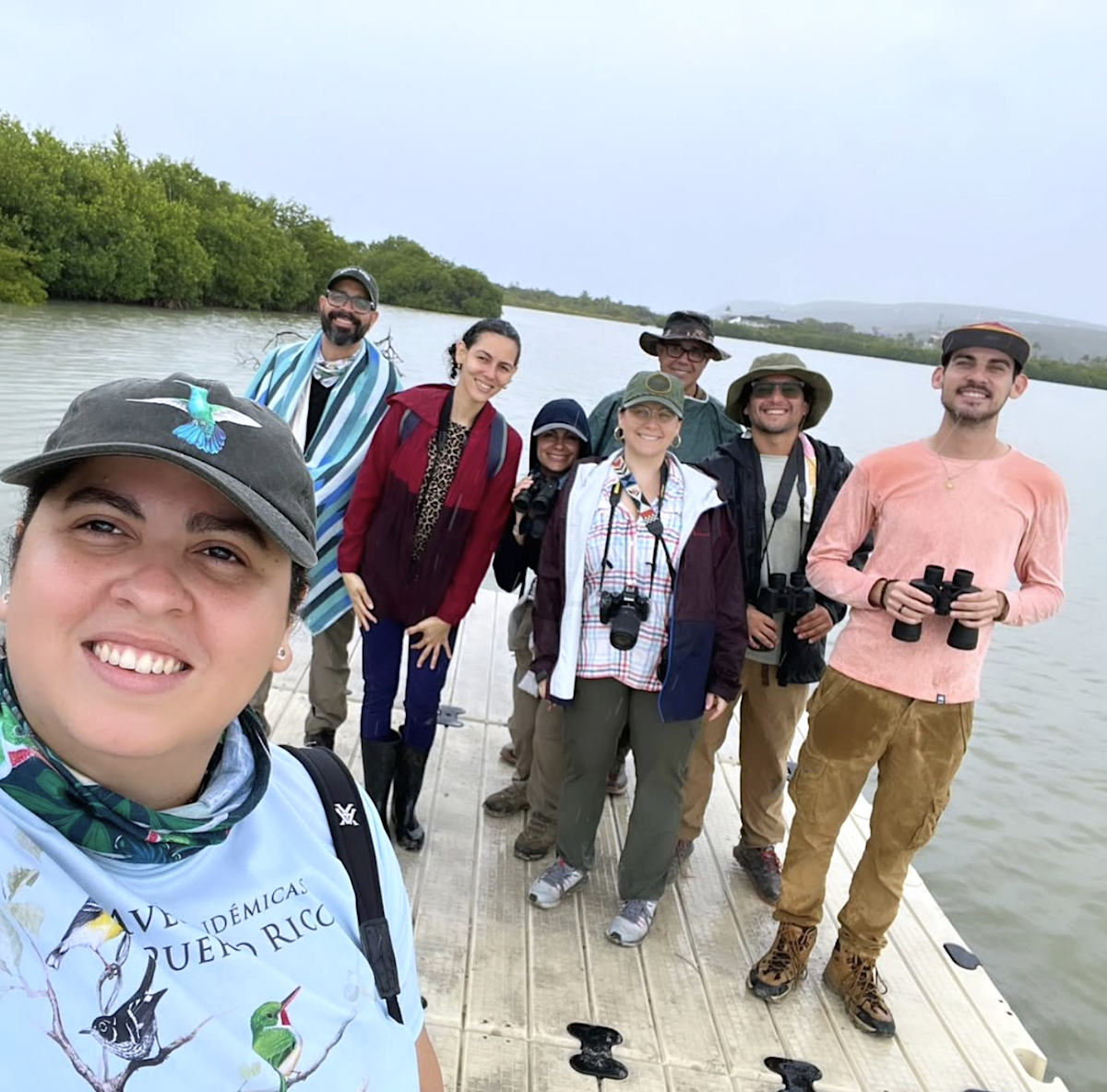
Roots and Shoots Puerto Rico, and our Operations Manager Alexia Morales, headed to Punta Cucharas Nature Reserve in Ponce for a bird count where they recorded 44 species, five of which were endemic birds!
Rainy weather couldn’t stop this enthusiastic birding crew at Punta Cucharas Nature Reserve.
Members of the Library Club at the Ramón Emeterio Betances School, Adult Education Program (Cayey), and Alfonso Díaz Lebron Middle School (Juncos) ditched the blackboards and desks and took the learning to a small forest near the school. Throughout the event, creativity and learning bloomed. Participants enjoyed reading the “Birds of Puerto Rico for Children” book, written by our President and founder of the CEBF Dr Adrianne Tossas, and other bird stories, sparking lively discussions filled with anecdotes, fables, songs, and local folklore about Puerto Rican birds.
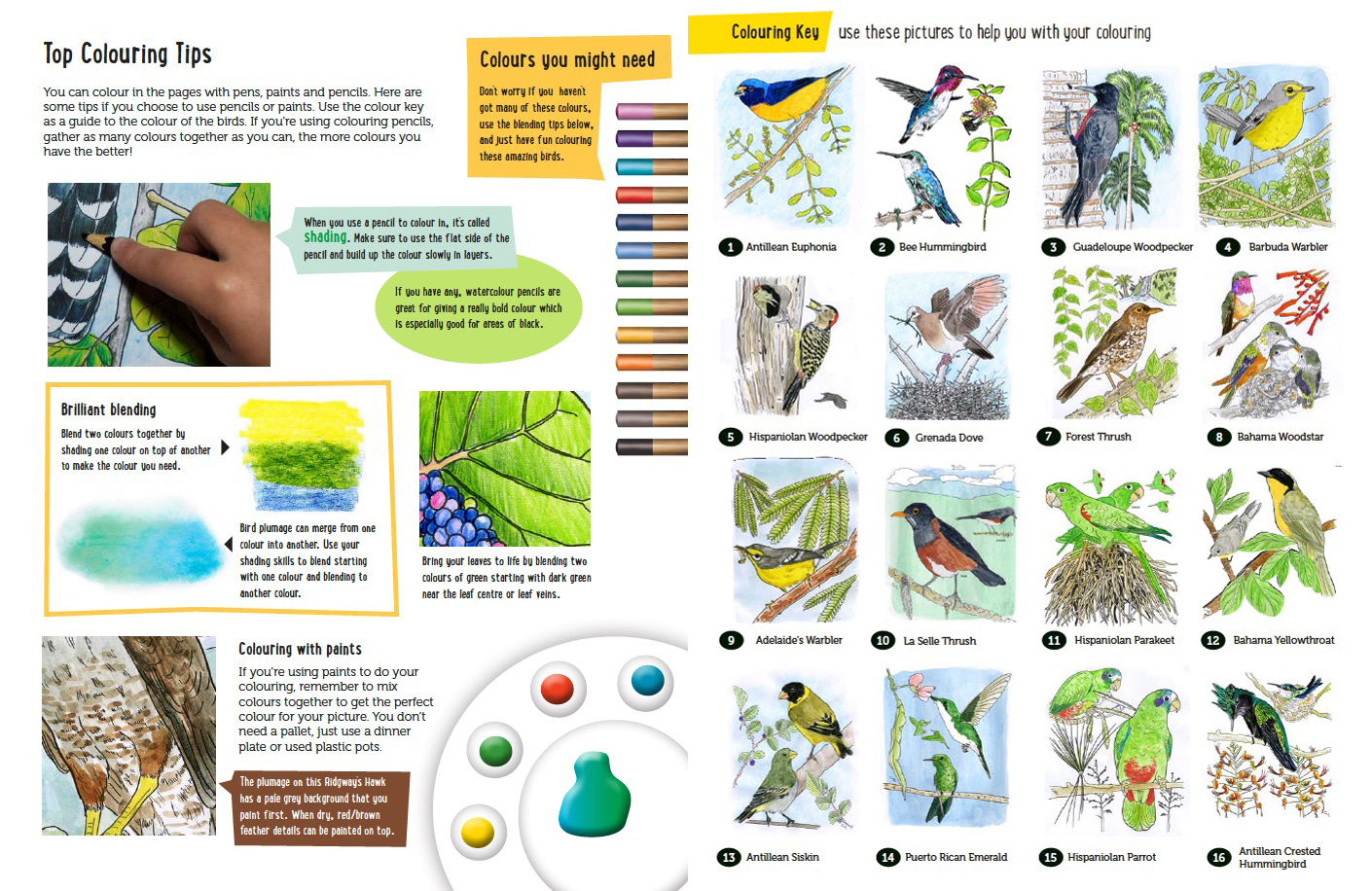
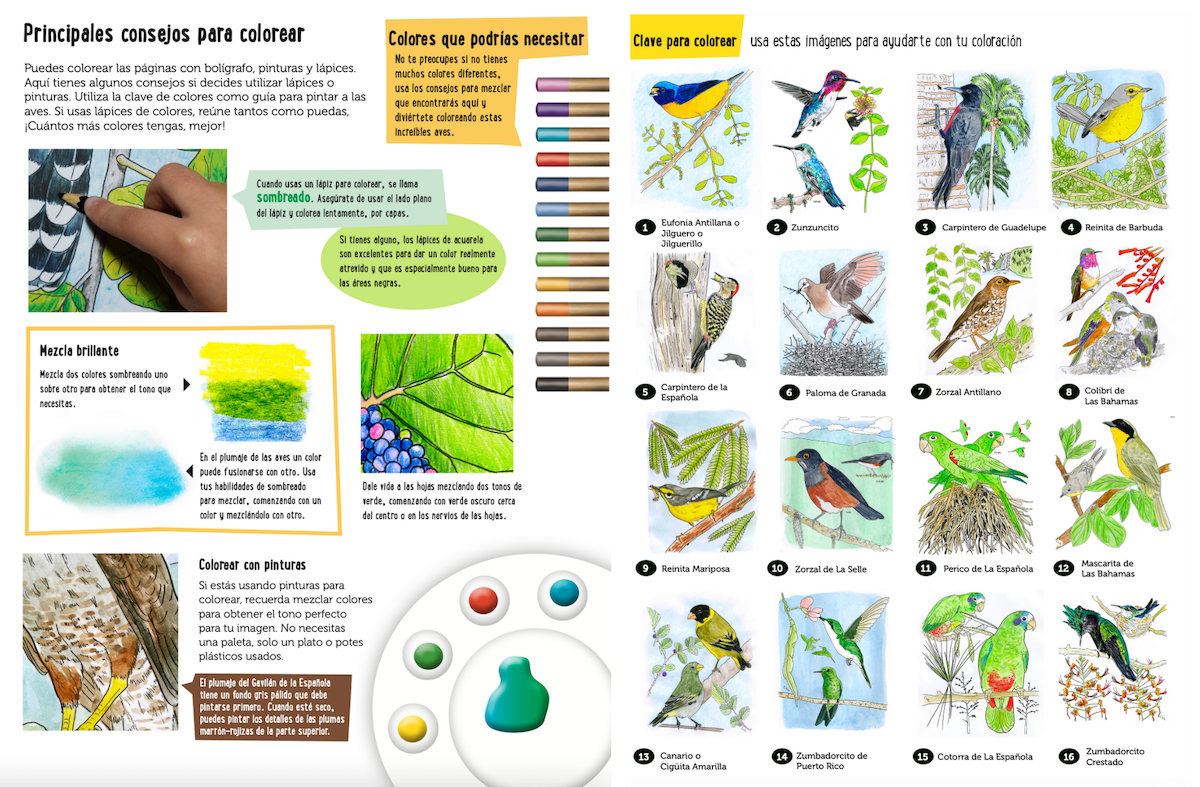
Everyone got hands-on, coloring endemic birds from the “Endemic Birds of the West Indies” coloring book that are abundant in their own communities, and even delved into research using their phones. There were important group discussions about the significance of birds to the environment , and a local farmer from Finca Los Pellos shared fascinating insights into pollinator gardens and their role in agriculture. Two beautiful Flor de Maga trees (Puerto Rico’s national flower) were planted, generously donated by the Department of Natural and Environmental Resources and the area dubbed, “The Green Library.” Students took home cilantro, chili pepper, and lettuce plants to cultivate their own kitchen gardens!
It’s story time in The Green Library. (Photo by Rosalina Alvarado)
The Puerto Rican Parrot joins the endemic birds coloring session. (Photo by Rosalina Alvarado)
Thanks to the Department of Natural Resources staff for donating the Flor de Maga plants. (Photo by Rosalina Alvarado)
CEBF event coordinator Rosalina wearing her fabulous hand made bird crown.
Junta Innovadora Comunal Villa del Carmen, Inc. seamlessly blended personal well-being with the joy of celebrating birds and being in nature. Participants prioritized their health checks with services from the MedCentro mobile unit and NUC students, alongside various informative health booths. Some were also treated to a birdwatching and identification trip led by our Co-Regional CEBF Coordinator Eduardo Llegus, while others joined a beginner’s fishing workshop. Native tree plants were also given to participants to help them make their backyards and gardens more bird-friendly!
Eduardo Llegus leads a birdwatching trip with participants. (Photo by Junta Innovadora Comunal Villa del Carmen, Inc.)
Native tree saplings were given to participants to help them make their backyards and gardens more bird-friendly. (Photo by Junta Innovadora Comunal Villa del Carmen, Inc.)
Beach cleanup in Villa del Carmen, Puerto Rico. (Photo by Junta Innovadora Comunal Villa del Carmen, Inc.)
It’s time for a check-up! Nurses stationed at the MedCentro mobile clinic. (Photo by Junta Innovadora Comunal Villa del Carmen, Inc.)
For the 2025 CEBF, Guaynabo Elementary School came alive with a birdwatching adventure right on the school’s compound! Students also enjoyed story time with Lourmarie García who read “El Arbol Solitario Y El Pajaro Carpintero” by Milagros Keppis, while Ingrid Flores enlightened them about Puerto Rico’s endemic birds and the importance of protecting our shared green spaces.
Ingrid explaining to kindergarteners how gardens can be bird-friendly. (Photo by Escuela Nueva Elemental Urbana de Guaynabo – Montessori)
Our Endemic Birds of the West Indies Coloring Book is still a hit among children. (Photo by Escuela Nueva Elemental Urbana de Guaynabo – Montessori)
Story time with Miss Garcia. (Photo by Escuela Nueva Elemental Urbana de Guaynabo – Montessori)
Feathery facts and free resources for classrooms and homes
Each day, we featured a new Endemic Bird of the Day on our website and across BirdsCaribbean’s socials, sharing 15 new species in 2025. The species were carefully selected to showcase the vast breadth of the endemic wonders of the Caribbean—highlighting truly unique birds, like the Hispaniolan Nightjar; clever species like the Cuban Palm-Crow; and endemic crooners, like the St. Vincent Wren. You can find the complete library of 173 endemic birds covered thus far here.
Each endemic bird profile was accompanied by a beautifully drawn image by award-winning Cuban artist Arnaldo Toledo, stunning high quality photos and videos, online puzzles tailored for different levels (between six and 1,024 pieces), and bird calls. Fun, free and engaging activities were also provided for both kids and adults, including downloadable coloring pages, experiments, up-cycle crafts, and more.
This year’s CEBF is over—but don’t worry, we still have plenty of bird content for you to enjoy! Make sure you are following us on Facebook, Instagram, Twitter, and LinkedIn, and have joined the BirdsCaribbean mailing list, to ensure you are kept up to date with our latest news via our monthly newsletter.
Acknowledgements: A massive THANK YOU to the island coordinators for your enthusiasm and dedication to making this another memorable CEBF! Each year we see a growing number of participants committed to increasing their knowledge of Caribbean birds and actively working to protect their habitats. We also extend our gratitude to our donors and members who help us provide the coordinators with the support and resources they need to educate and inspire future generations of bird and nature loving communities.
Celebrate the Caribbean Endemic Bird Festival (CEBF) with us! Our theme in 2025 is “Shared Spaces: Creating Bird-friendly Cities and Communities”—highlighting the crucial role bird-friendly cities and communities can have in addressing the decline in bird populations caused by threats like habitat loss, predation, and climate change. Have fun learning about a new endemic bird every day. We have colouring pages, puzzles, activities, and more. Download for free and enjoy learning about and celebrating nature!
Endemic Bird of the Day: St. Vincent Wren
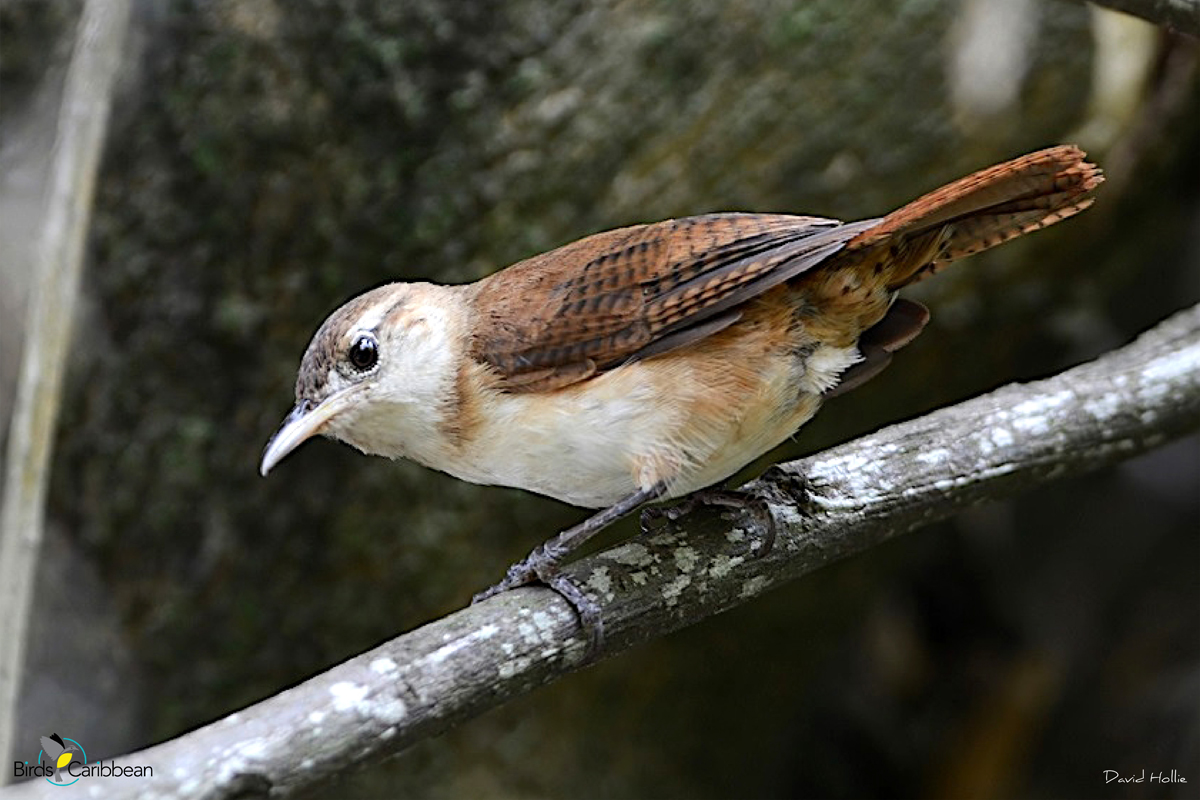
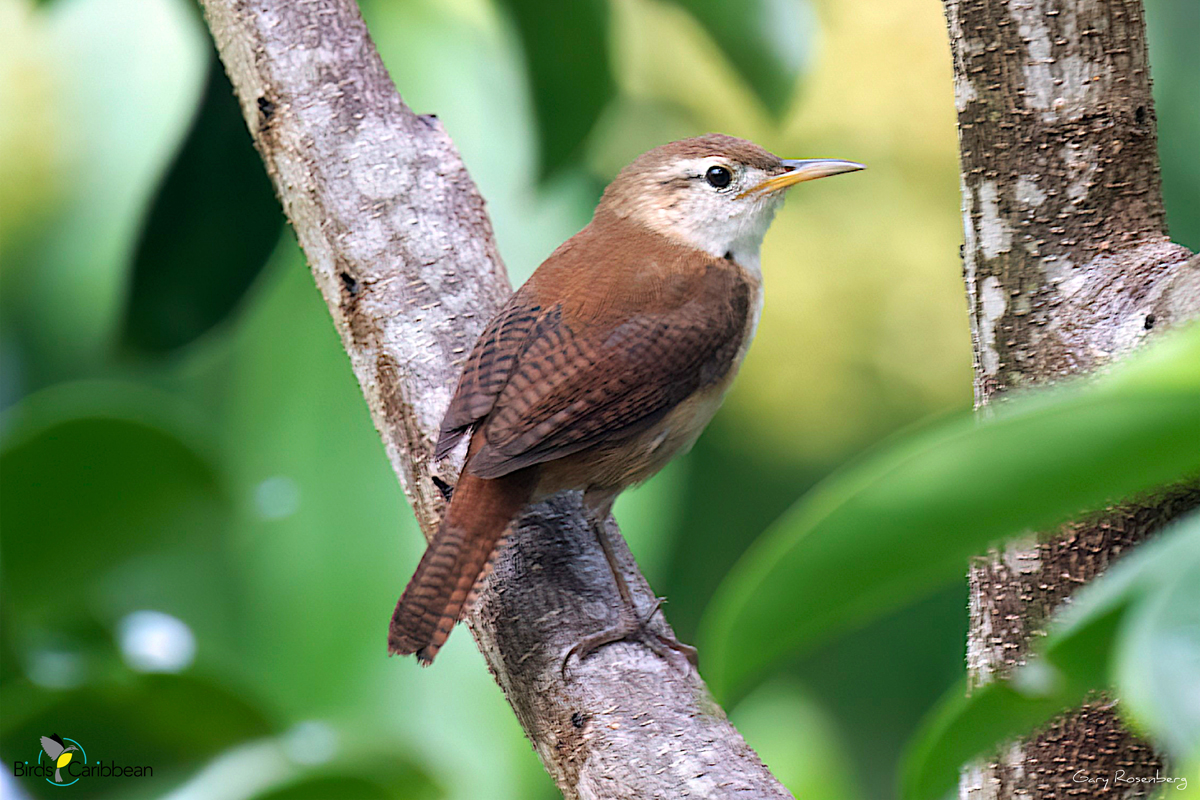
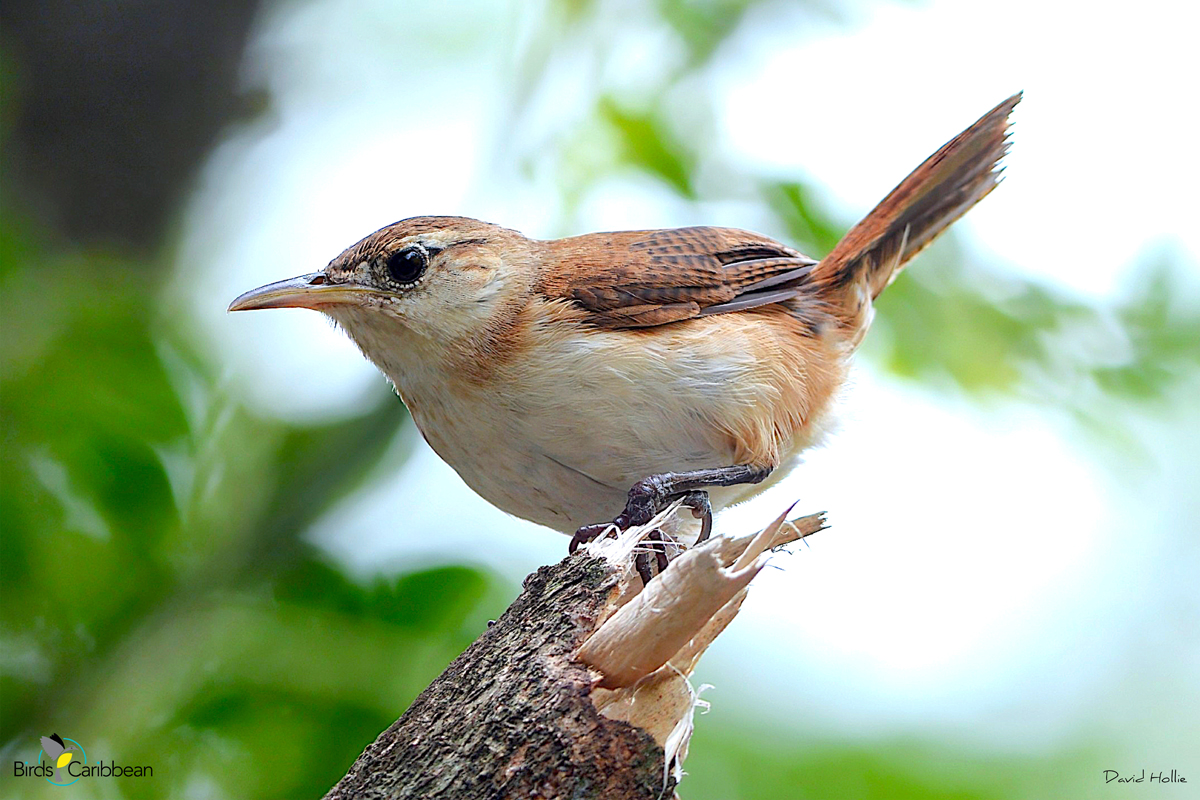
The melodic song of the St. Vincent Wren (Troglodytes musicus) echoes across the island of St. Vincent, the only place in the world where this extraordinary bird is found. Formerly considered a subspecies of the widespread House Wren (Troglodytes aedon), it was officially recognized as a distinct species in 2024—one of seven wrens split from the complex that year. Its new name proudly reflects its status as one of just three endemic bird species on the island.
This lively wren is recognized by its rufous-brown upperparts and whitish underparts, distinct dark barring on its wings and tail, a pale eyebrow stripe and face, and warm cinnamon hues on the breast, sides, and undertail—sometimes accented by small brown speckles. Its buzzy call “chih-chih-chih-chih” call and sweet, musical song “chih-chih-twee-twee-deedle-di-di-di” make it a beloved symbol of the island’s natural charm.
Highly adaptable, the St. Vincent Wren inhabits a range of environments—from montane evergreen forests and brushy woodlands to agricultural areas and even towns, where it often nests in the eaves of buildings. It plays an important ecological role by feasting on a variety of invertebrates such as spiders, cockroaches, and worms, helping to control insect populations.
The species is thought to lay two whitish-brown eggs per clutch, though little is known about its breeding habits. Rather than constructing elaborate nests, it uses dried grasses, straw, and even scraps of paper to line cavities in trees, caves, tunnels, or man-made structures—a testament to its resourcefulness and adaptability.
Despite its resilience, the St. Vincent Wren faces growing threats from habitat loss due to deforestation, urban expansion, and conversion of forest to pasture for agriculture. Climate change—including more intense storms and prolonged droughts—may also impact its survival and breeding success. Protecting this unique bird will require ongoing research to better understand its ecology and population status, along with community engagement. Simple actions like preserving roof nests and planting native vegetation can make a meaningful difference in ensuring the St. Vincent Wren continues to sing for generations to come.
Thanks to Jodelia Simmons for the text and Arnaldo Toledo for the lovely illustration.
Colour in the St. Vincent Wren
Download our West Indies Endemic Bird colouring page. Use the photos below as your guide, or you can look up pictures of the bird online or in a bird field guide if you have one. Share your coloured-in page with us by posting it online and tagging us @BirdsCaribbean #CEBFfromthenest
Listen to the song of the St. Vincent Wren
The song of the St. Vincent Wren is made up of clear trills and loud chatters.
Puzzle of the Day
Click on the images below to do the puzzles. You can make the puzzle as easy or as hard as you like – for example, 6, 8, or 12 pieces for young children, all the way up to 1,024 pieces for those that are up for a challenge!
St. Vincent Wren. (Photo by David Hollie, Macaulay Library-ML598496181)St. Vincent Wren. (Photo by Gary Rosenberg, Macaulay Library-ML631883463)St. Vincent Wren. (Photo by David Hollie, Macaulay Library-ML598496141)
Activity of the Day
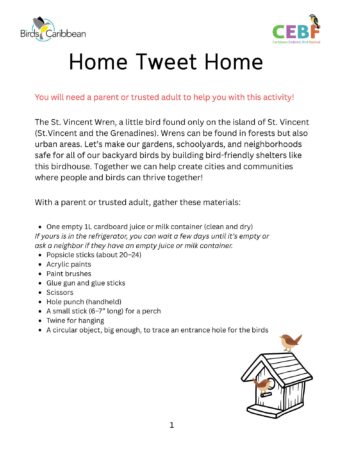
FOR KIDS :The St. Vincent Wrens can be found in forests but also urban areas. In fact this is true of many species of wrens in the Caribbean and beyond, meaning they are often common ‘backyard birds’. You can make your garden, or schoolyard safe for all of our backyard birds by building bird-friendly shelters like the birdhouse in our “Home Tweet Home” crafting activity. Together we can help create cities and communities where people and birds can thrive together!
For this activity you will need:
One empty 1L cardboard juice or milk container (clean and dry)
Popsicle sticks (about 20–24)
Acrylic paints
Paint brushes
Glue gun and glue sticks
Scissors
Hole punch (handheld)
A small stick (6–7” long) for a perch
Twine for hanging
A circular object, big enough, to trace an entrance hole for the birds
You can find full step-by-step instructions here. You will need a parent or trusted adult to help you with this activity.
FOR KIDS AND ADULTS : Enjoy this video of a St. Vincent Wren in the wild!
Celebrate the Caribbean Endemic Bird Festival (CEBF) with us! Our theme in 2025 is “Shared Spaces: Creating Bird-friendly Cities and Communities”—highlighting the crucial role bird-friendly cities and communities can have in addressing the decline in bird populations caused by threats like habitat loss, predation, and climate change. Have fun learning about a new endemic bird every day. We have colouring pages, puzzles, activities, and more. Download for free and enjoy learning about and celebrating nature!
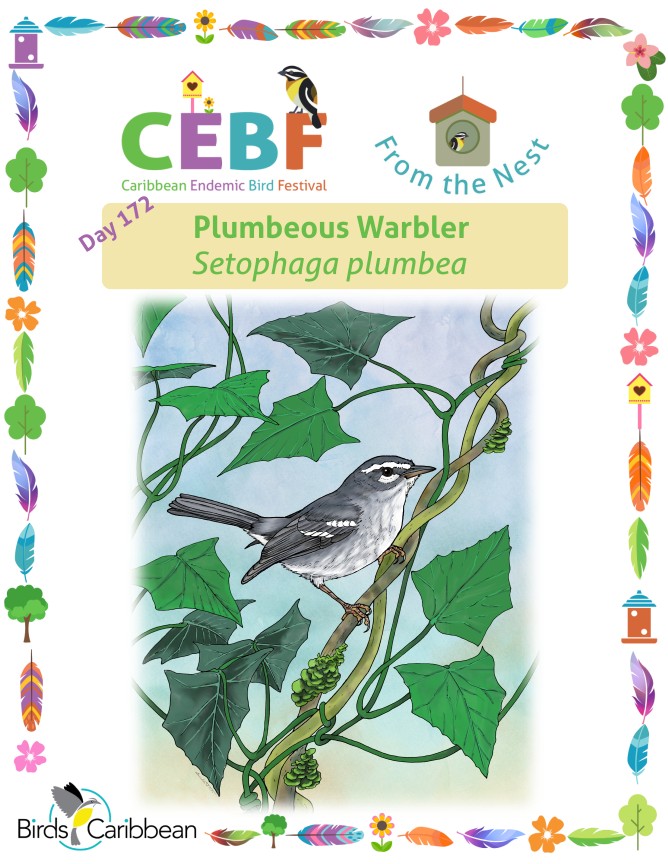
Endemic Bird of the Day: Plumbeous Warbler
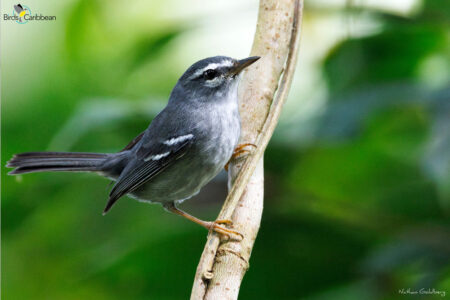
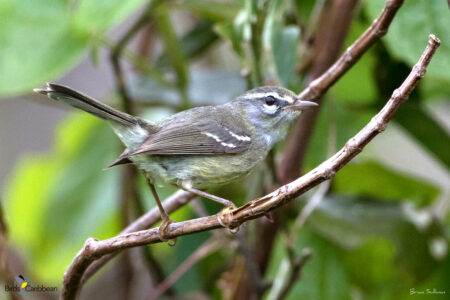
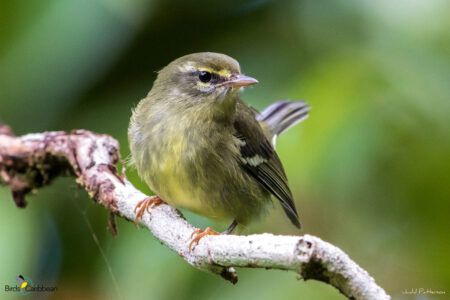
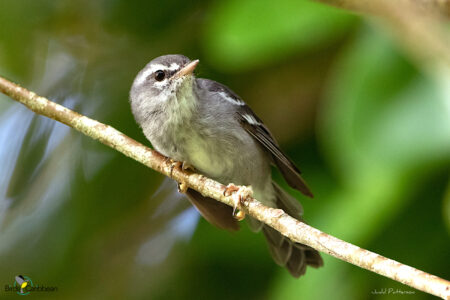
The Plumbeous Warbler is a magnificent little warbler, weighing in a just ten grams, about the weight of a ballpoint pen! Adults are dark gray above and lighter below, with two crisp wing bars, a white eyebrow, and a pale half-crescent beneath the eye. Juveniles are similar but show a greenish wash to the gray plumage and buffy to yellowish underparts, facial markings, and wingbars.
While its plumage may be modest, the Plumbeous Warbler more than makes up for it with its lovely and varied song. Throughout the day, you can hear their melodic “pa-pi-a” or “de-de-diu.” During the midday, it switches to a soft, whisper-like version of its song. When aggravated, it lets out a long, rolling rattle.
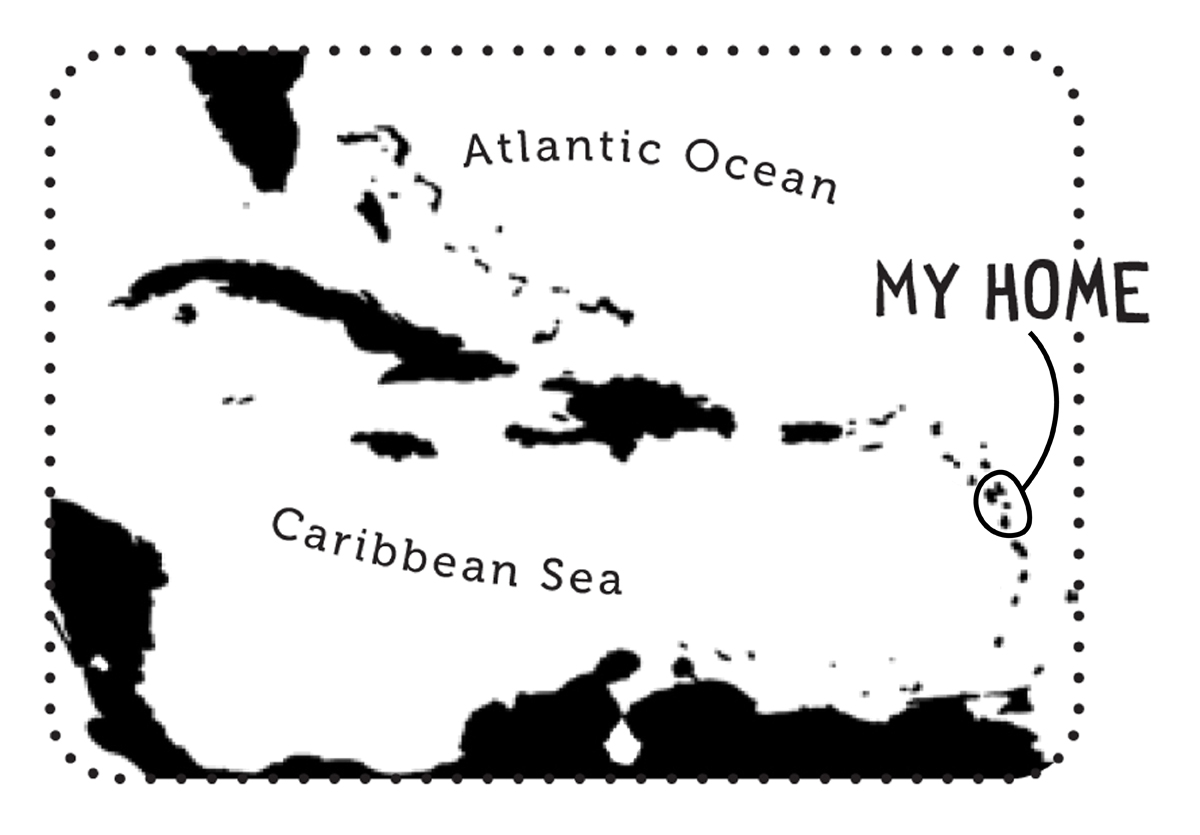
Endemic to Guadeloupe and Dominica, this warbler inhabits a wide variety of forest types—from sea level to elevations over 1,200m. In Guadeloupe, it is particularly abundant in swamp forests.
Within these habitats, the Plumbeous Warbler roams the undergrowth, searching for wriggly, crunchy, and sometimes gooey insects, and the occasional juicy berry. Its breeding season runs from March to August, with a peak in May. Nests are constructed in forked branches of shrubs or small trees using leaves and rootlets. A typical clutch contains 2–3 eggs.
Although it is still relatively common in the main islands of its range, the ecology and habits of this species remain poorly studied. A small population persists on Marie-Galante, a small island south of the “mainland” Guadeloupe, but the bird may have disappeared from Terre-de-Haut, an even smaller offshore island in the Les Saintes archipelago of Guadeloupe.
The Plumbeous Warbler is protected under Guadeloupe’s 1989 ministerial decree. Though classified as “Least Concern” by the IUCN at both regional and international levels, recent monitoring reveals a cause for concern: a 42% decline in population size between 2014 and 2024, as shown by our Breeding Bird Survey in Guadeloupe.
Confined to forested areas, the Plumbeous Warbler is mainly threatened by the destruction of its habitat from development and human activities. Better protection and restoration of forested areas—especially efforts to strengthen the ecological corridor (Green Network) between Basse-Terre and Grande-Terre——would go a long way in securing the future of this beautiful endemic warbler.Learn more about this species, including its range, photos, and calls here. Great news! If you’re in the Caribbean, thanks to BirdsCaribbean, you have free access to Birds of the World and you can find out even more in the full species account of this bird!
Thanks to Arnaldo Toledo for the illustration and Anthony Levesque for the text!
Colour in the Plumbeous Warbler
Download our West Indies Endemic Bird colouring page. Use the photos below as your guide, or you can look up pictures of the bird online or in a bird field guide if you have one. Share your coloured-in page with us by posting it online and tagging us @BirdsCaribbean #CEBFfromthenest
Listen to the song & call of the Plumbeous Warbler
The song of the Plumbeous Warbler is made up of whistles notes, the first three are given at the same pitch. They have a dry, rattling call.
Puzzle of the Day
Click on the images below to do the puzzles. You can make the puzzle as easy or as hard as you like – for example, 6, 8, or 12 pieces for young children, all the way up to 1,024 pieces for those that are up for a challenge!
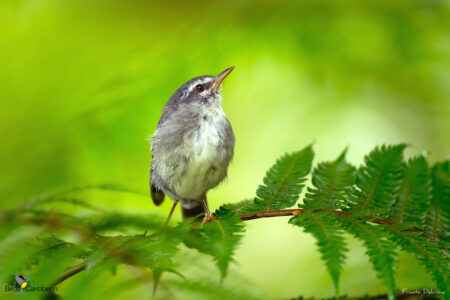
Plumbeous Warbler. (Photo by Nathan Goldberg, Macaulay Library- ML631686480)Plumbeous Warbler. (Photo by Brian Sullivan, Macaulay Library-ML89353671)Plumbeous Warbler. (Photo by Frantz Delcroix)Plumbeous Warbler. (Photo by Judd Patterson)Plumbeous Warbler. (Photo by Judd Patterson)
Activity of the Day
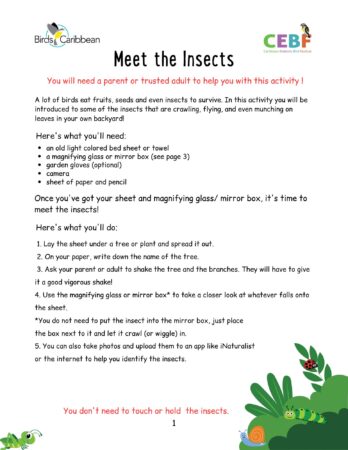
FOR KIDS : The Plumbeous Warbler loves to feed on insects! In fact insects are an important delicacy for many types of birds. For our dazzling hummingbirds, our captivating todies, swooping swifts and swallows, darting flycatchers, pewees and potoos, drilling woodpeckers, and of course, our warblers —insects are an essential protein source.
we’ve compiled our top six activities into an activity book for you to enjoy! Our theme is “Protect Insects, Protect Birds,” and these activities have been purposely created to help children learn about insects.
Our “Incredible Insects” activity book is available for download directly from Flipsnack in both English and Spanish or download the PDFs.
Celebrate the Caribbean Endemic Bird Festival (CEBF) with us! Our theme in 2025 is “Shared Spaces: Creating Bird-friendly Cities and Communities”—highlighting the crucial role bird-friendly cities and communities can have in addressing the decline in bird populations caused by threats like habitat loss, predation, and climate change. Have fun learning about a new endemic bird every day. We have colouring pages, puzzles, activities, and more. Download for free and enjoy learning about and celebrating nature!
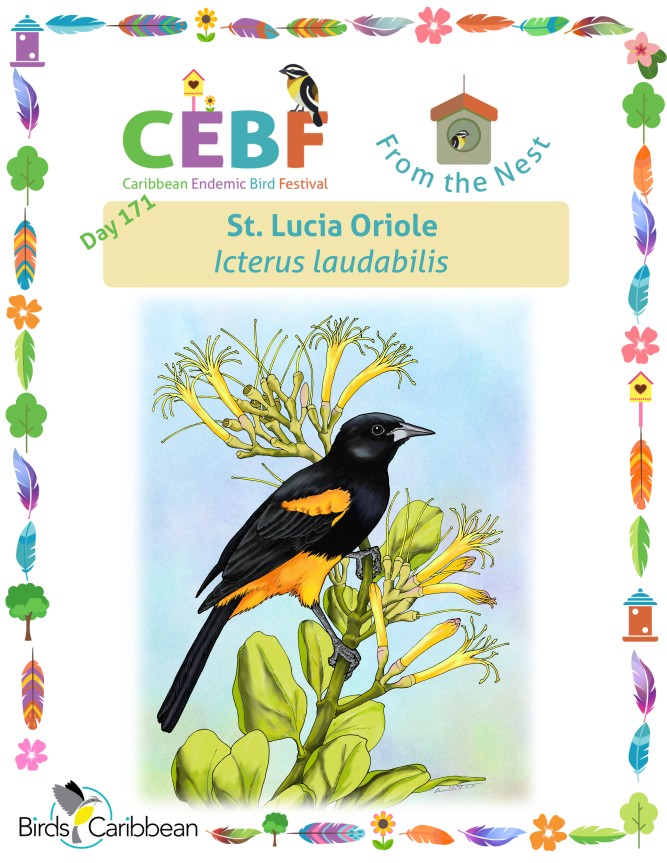
Endemic Bird of the Day: St. Lucia Oriole
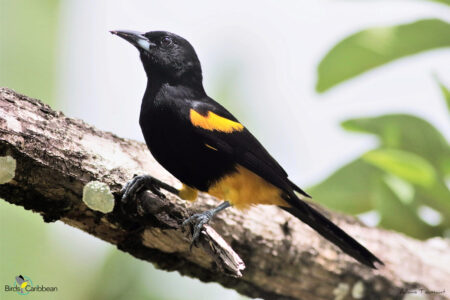
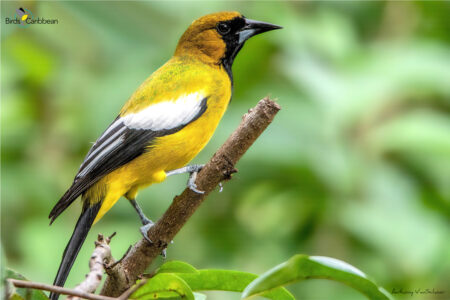
Locally known as Kawouge, the Saint Lucia Oriole is one of the island’s most striking endemic birds. The name Karwouge was likely derived from the French term “Carouge“, which is used as a name for New World blackbirds.
I remember seeing this oriole for the first time when I was about five years old, feeding on a ripe pawpaw near my family home. It was a sight to to behold! My grandmother told me its name: Kawouge. What she may not have known—and what I later discovered as an adult working with the Forestry Department—is that this bird lives only in Saint Lucia.
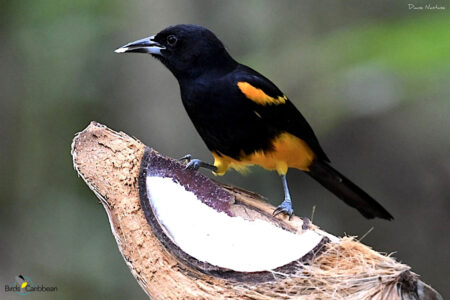
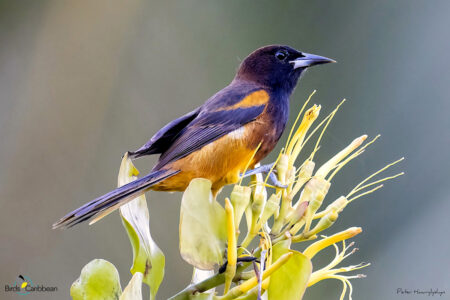
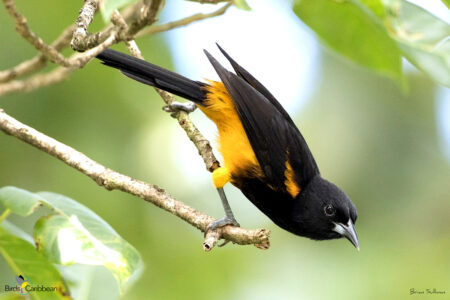
With bold shiny-black plumage and bright orange-yellow belly, shoulders, and rump, the male Saint Lucia Oriole is unmistakable. Females are similar but duller in color, and immatures sport a more muted yellow-green overall. The pointed dark bill, with a grayish-blue base, completes the bird’s distinctive look. There is simply no other bird like it on the island.
The Saint Lucia Oriole primarily inhabits rainforests, but can also be found in dry forests, coastal scrub, and even near towns—provided there are enough large trees. It has a varied diet, including insects, spiders, fruits, and nectar.
Breeding takes place from April to June. The female weaves a tidy hanging nest from grasses and plant fibers, often suspending it from large leaves such as banana, balizier, coconut, or palm. She lays up to three speckled eggs and incubates them herself. Like many songbirds, both parents work hard to feed and protect their young until they fledge.
Sadly, the Saint Lucia Oriole is under serious threat and is listed as Endangered by the IUCN. Several factors are suspected to contribute to its decline, though more research is needed. One major concern is brood parasitism by the Shiny Cowbird (Molothrus bonariensis), an invasive species that lays its eggs in other birds’ nests, tricking them into raising cowbird chicks. As cowbirds thrive in cleared, human-altered areas, their impact is expected to grow.
Another possible threat comes from the Bare-eyed Thrush (Turdus nudigenis), which may harass orioles, especially during nesting. There’s also concern that orioles living near banana plantations—where they often forage—may be exposed to pesticides through contaminated food or water. However, the actual effects of cowbirds, thrushes, or agrochemicals remain poorly understood due to a lack of detailed studies.
What is clear is that protecting forest habitats and maintaining healthy forest edges is essential. These buffer zones help limit contact between orioles and cowbirds by preserving ecological separation.
With continued habitat protection and research, there is hope that the Saint Lucia Oriole will remain a cherished part of the island’s unique natural heritage for generations to come.Learn more about this species, including its range, photos, and calls here. Great news! If you’re in the Caribbean, thanks to BirdsCaribbean, you have free access to Birds of the World and you can find out even more in the full species account of this bird!
Thanks to Arnaldo Toledo for the illustration and Adams Toussaint for the text!
Colour in the St. Lucia Oriole
Download our West Indies Endemic Bird colouring page. Use the photos below as your guide, or you can look up pictures of the bird online or in a bird field guide if you have one. Share your coloured-in page with us by posting it online and tagging us @BirdsCaribbean #CEBFfromthenest
Listen to the song of the St. Lucia Oriole
The song of the St. Lucia Oriole is a rapid jumble of whistles and squeaks
Puzzle of the Day
Click on the image below to do the puzzle. You can make the puzzle as easy or as hard as you like – for example, 6, 8, or 12 pieces for young children, all the way up to 1,024 pieces for those that are up for a challenge!
St. Lucia Oriole feeding on coconut. (Photo by Diane Nastase, Macaulay Library-ML613309393)Juvenile St. Lucia Oriole. (Photo by Peter Hawrylyshyn, Macaulay Library-ML614479814)St. Lucia Oriole. (Photo by Brian Sullivan, Macaulay Library-ML89373141)St. Lucia Oriole. (Photo by Adams Toussaint)
Activity of the Day
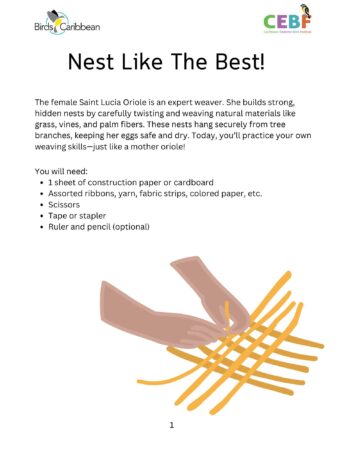
FOR KIDS :The female Saint Lucia Oriole is an expert weaver. She builds strong, hidden nests by carefully twisting and weaving natural materials like grass, vines, and palm fibers. These nests hang securely from tree branches, keeping her eggs safe and dry. Today, you’ll practice your own weaving skills—just like a mother oriole!
Celebrate the Caribbean Endemic Bird Festival (CEBF) with us! Our theme in 2025 is “Shared Spaces: Creating Bird-friendly Cities and Communities”—highlighting the crucial role bird-friendly cities and communities can have in addressing the decline in bird populations caused by threats like habitat loss, predation, and climate change. Have fun learning about a new endemic bird every day. We have colouring pages, puzzles, activities, and more. Download for free and enjoy learning about and celebrating nature!
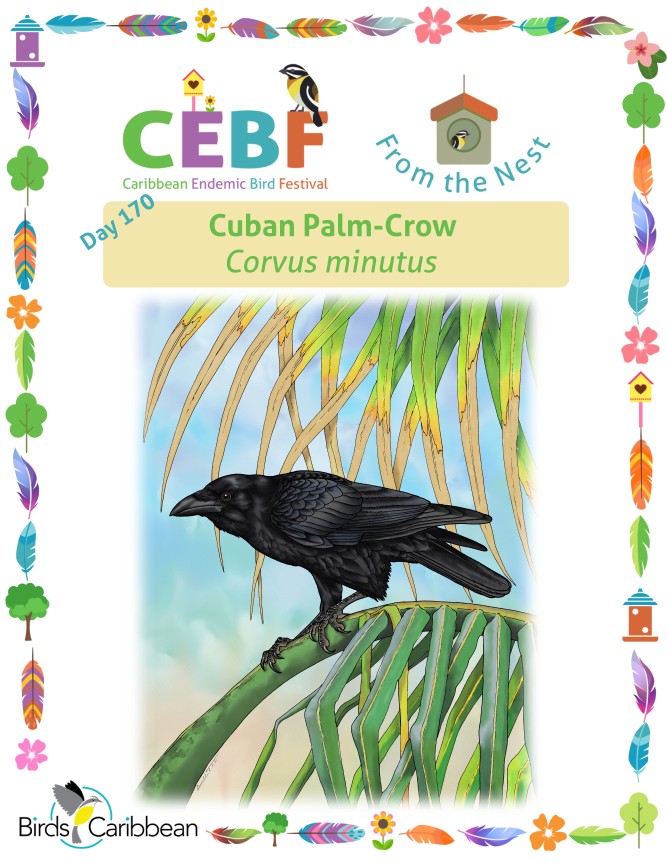
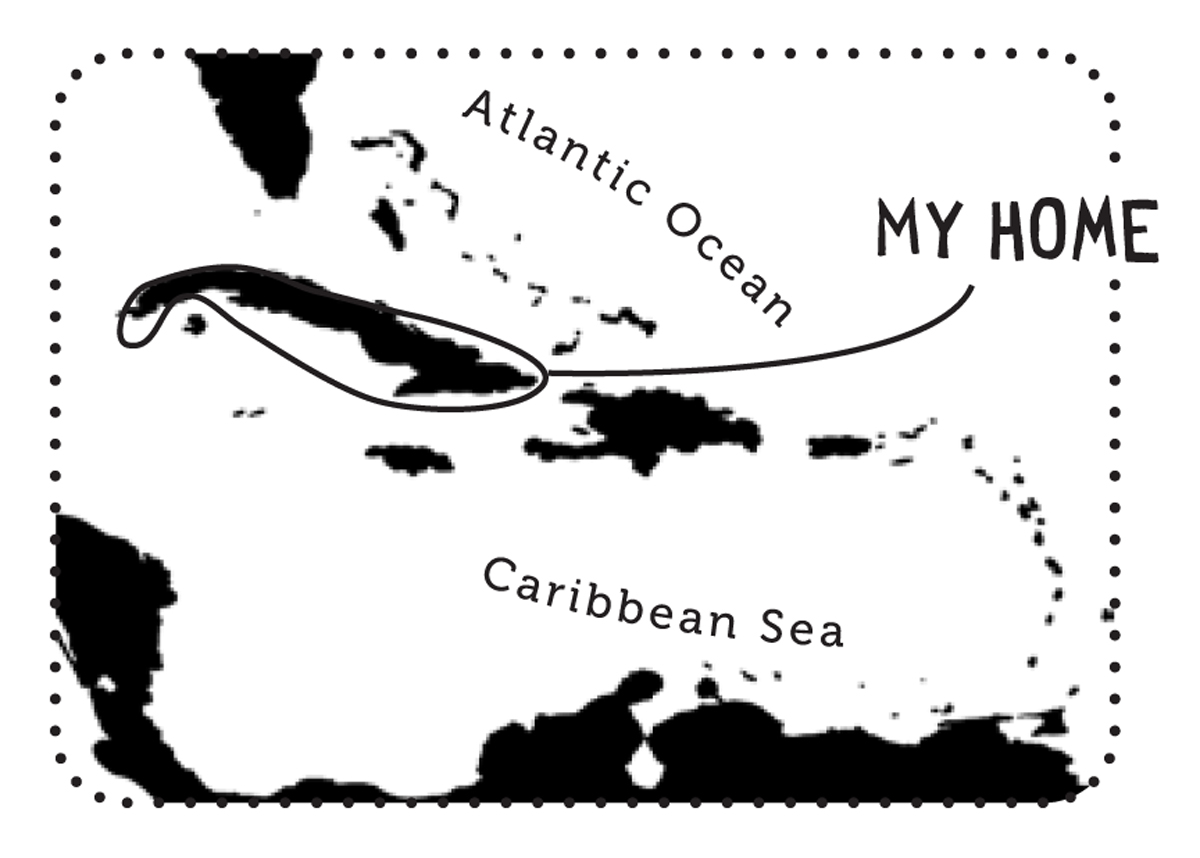
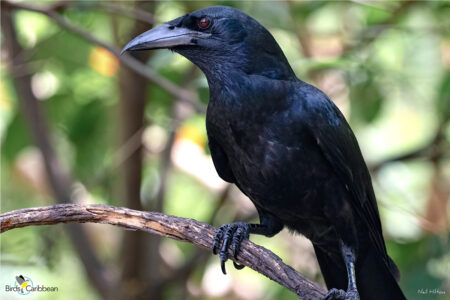
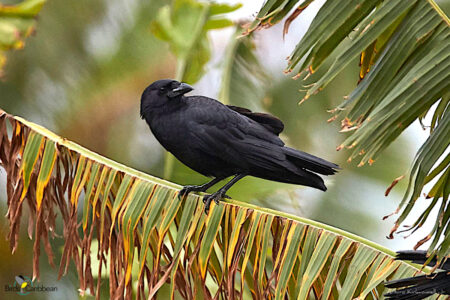
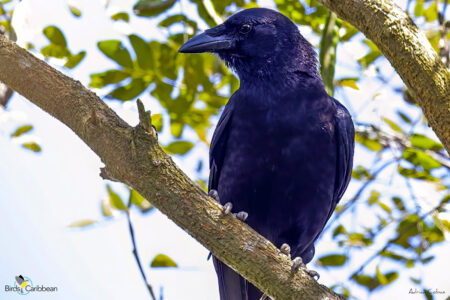
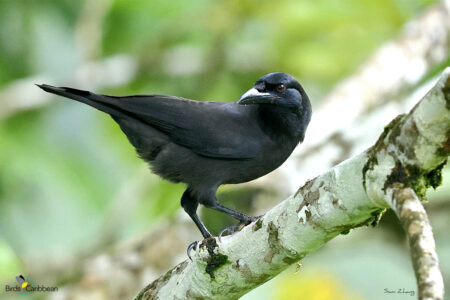
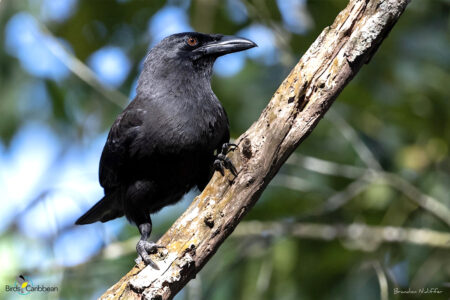
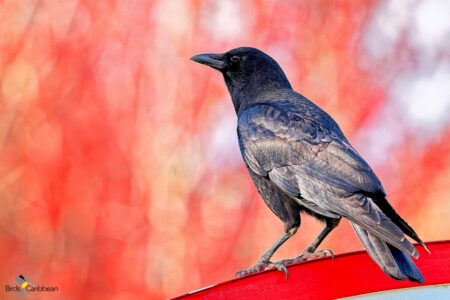
This crow sticks to lowland habitats—open areas dotted with palm groves and tall trees. Unlike its Hispaniolan cousin, it’s not found in pine forests. Sadly, it’s now very rare and only occurs in scattered pockets of western and central Cuba. With such a limited range and growing threats to its habitat, the Cuban Palm-Crow is listed as Endangered in Cuba’s national Red Data Book.
At a glance, it looks like your classic crow: glossy black plumage with a subtle purple-blue sheen. But here’s the kicker—it shares its home with another nearly identical species, the Cuban Crow, making field ID tricky even for seasoned birders. Fortunately, their calls are distinct: the Cuban Palm-Crow gives a nasal “craaa, craaa,” while the Cuban Crow sounds more like a parrot. Still want more clues? The Palm-Crow has longer nasal bristles that cover its nostrils, and its bill shape differs slightly too—the bill’s commissure (where upper and lower mandible meets) extends below the eye in the Cuban Crow, while in the Cuban Palm-Crow, it only reaches the front of the face. Sharp-eyed birders, take note!
Diet-wise, the Cuban Palm-Crow isn’t picky. With a short, sturdy bill, it feeds on fruits, insects, and other invertebrates, foraging both in trees and on the ground—sometimes even along roadsides. It’s often seen in pairs or small groups, but gatherings of up to 20 birds aren’t uncommon.
There’s still a lot we don’t know about its natural history, especially its breeding behavior. What we do know: it builds a typical crow nest—a stick platform lined with soft materials—usually in tree branches or nestled under palm fronds (yep, that’s where the name comes from!). Breeding takes place from March through July, with clutches of 3–4 pale green, speckled eggs. Though likely solitary nesters, small groups have been spotted mobbing predators to defend nests.
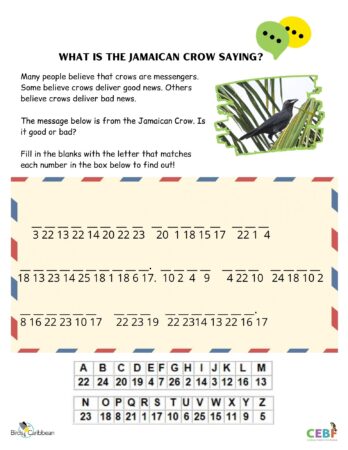
Crows have long been saddled with spooky reputations in Western culture, but it’s time to flip the script. In the Caribbean, crows like the Cuban Palm-Crow are not omens of bad luck, they’re indicators of healthy forests. And with half of our Caribbean crow species now threatened, protecting them is more urgent than ever. So next time you see a crow calling from a palm grove, take it as a good sign—you’ve found a patch of forest worth protecting.Learn more about this species, including its range, photos, and calls here. Great news! If you’re in the Caribbean, thanks to BirdsCaribbean, you have free access to Birds of the World and you can find out even more in the full species account of this bird!
Thanks to Arnaldo Toledo for the illustration and Daniela Ventura for the text!
Colour in the Cuban Palm-Crow
Download our West Indies Endemic Bird colouring page. Use the photos below as your guide, or you can look up pictures of the bird online or in a bird field guide if you have one. Share your coloured-in page with us by posting it online and tagging us @BirdsCaribbean #CEBFfromthenest
Listen to the calls of the Cuban Palm-Crow
The call of the Cuban Palm-Crow is nasal “raaah“.
Puzzle of the Day
Click on the image below to do the puzzle. You can make the puzzle as easy or as hard as you like – for example, 6, 8, or 12 pieces for young children, all the way up to 1,024 pieces for those that are up for a challenge!
Cuban Palm-Crow. (Photo by Neil Hilton)Cuban Palm-Crow. (Photo by Arturo Kirkconnell Jr. Macaulay Library-ML90721851)Cuban Palm-Crow. (Photo by Adrian Cobas, Macaulay Library-ML610215948)
Activity of the Day
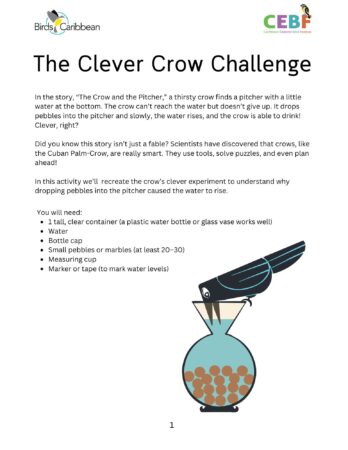
FOR KIDS : In the story, “The Crow and the Pitcher,” a thirsty crow finds a pitcher with a little water at the bottom. The crow can’t reach the water but doesn’t give up. It drops pebbles into the pitcher and slowly, the water rises, and the crow is able to drink! Clever, right?
Did you know this story isn’t just a fable? Scientists have discovered that crows, like the Cuban Palm-Crow, are really smart. They use tools, solve puzzles, and even plan ahead!
In The Clever Crow Challenge you willrecreate the crow’s clever experiment to understand why dropping pebbles into the pitcher caused the water to rise.
You will need:
1 tall, clear container (a plastic water bottle or glass vase works well)
Water
Bottle cap
Small pebbles or marbles (at least 20–30)
Measuring cup
Marker or tape (to mark water levels)
FOR KIDS AND ADULTS : Enjoy this video of a Cuban Palm-Crow in the wild!
Celebrate the Caribbean Endemic Bird Festival (CEBF) with us! Our theme in 2025 is “Shared Spaces: Creating Bird-friendly Cities and Communities”—highlighting the crucial role bird-friendly cities and communities can have in addressing the decline in bird populations caused by threats like habitat loss, predation, and climate change. Have fun learning about a new endemic bird every day. We have colouring pages, puzzles, activities, and more. Download for free and enjoy learning about and celebrating nature!
Endemic Bird of the Day: Jamaican Pewee
Pewuee! Pewuee! Pewuee! Wee-oh! Pee-wee!
What’s that plaintive sound echoing through the trees!? Those are the beautiful notes of the Jamaican Pewee—Jamaica’s very own flycatcher, affectionately known as simply the Pewee. While its song is sometimes described as sad or mournful, listen closely and you’ll hear soft, exhaled notes that speak more of peaceful rest than sorrow.
A plain-looking yet remarkable bird, the Jamaican Pewee is small and dark olive-brown with paler buffy-gray underparts, faint buff wing bars, and no eye-ring. Despite its understated appearance, it’s not easily confused with the other resident flycatchers on the island. The Pewee often perches alertly, with a slightly peaked head, flicking its wings and tail as it scans for its next meal.
This aerial hunter thrives in humid montane and lowland forests, especially in areas with plenty of shade and tall trees. Watch for it perched on an exposed mid-level branch, sitting motionless before darting out to snatch flying insects—beetles, moths, flies, and anything else that dares to buzz past—right out of the air. With sharp eyes and quick reflexes, it returns to its perch to repeat the ambush. How cool is that?
Jamaican Pewees breed from April to June and may nest twice per year. Their cup-shaped nests, built from woven plant fibers, grasses and Spanish moss, are typically placed in tree forks.
Though currently listed as a species of Least Concern, the Jamaican Pewee’s population is declining due to the ongoing habitat destruction in Jamaica. Protecting this species means preserving its forest home, supporting reforestation with native trees, and controlling invasive species. Reducing pesticide use and creating bird-friendly spaces by planting native trees—even in towns and urban parks—can also make a difference. Public education, research, and strong environmental policies that protect natural areas are key to ensuring this soulful songbird continues to thrive.
Thanks to Arnaldo Toledo for the illustration and Michelle Roberts for the text!
Colour in the Jamaican Pewee
Download our West Indies Endemic Bird colouring page. Use the photos below as your guide, or you can look up pictures of the bird online or in a bird field guide if you have one. Share your coloured-in page with us by posting it online and tagging us @BirdsCaribbean #CEBFfromthenest
Listen to the song of the Jamaican Pewee
The song of the Jamaican Pewee includes a plaintive “uh-weee-oo” with the ‘weee’ syllable being upslurred. An upslurred “wee-wee” call with the second note louded, and a slightly rough, whistled “weeah.”
Puzzle of the Day
Click on the image below to do the puzzle. You can make the puzzle as easy or as hard as you like – for example, 6, 8, or 12 pieces for young children, all the way up to 1,024 pieces for those that are up for a challenge!
Jamaican Pewee, Blue Mountains. (Photo by Daniel Fedorowicz, Macaulay Library-ML629361966)Jamaican Pewee. (Photo by David Chernack, Macaulay Library- ML616475521)Jamaican Pewee, Blue Mountains. (Photo by Matt Grube)
Activity of the Day
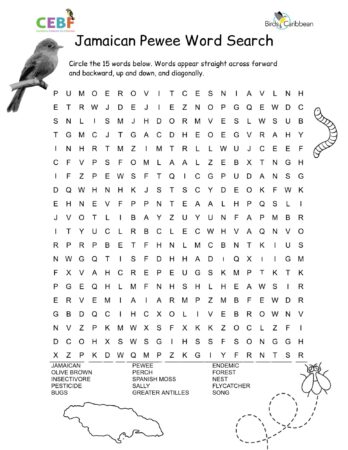
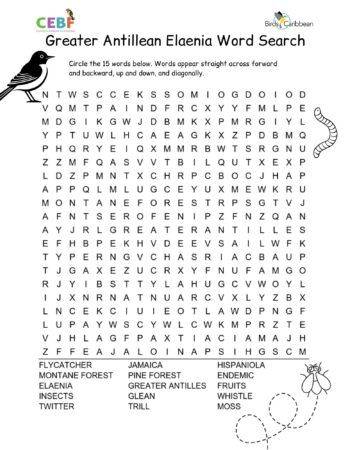
FOR KIDS : Can you find the words in our Jamaican Pewee word search? Read the text above all about this endemic bird to remind yourself of some of the interesting facts and information, as you look for all 15 hidden words!
Remember the words appear forwards and backwards, as are horizontal, vertical and diagonal! Need some help? Or want to check your answers? You can see where all the words were here.
FOR KIDS AND ADULTS : Enjoy this video of a Jamaican Pewee in the wild!
Celebrate the Caribbean Endemic Bird Festival (CEBF) with us! Our theme in 2025 is “Shared Spaces: Creating Bird-friendly Cities and Communities”—highlighting the crucial role bird-friendly cities and communities can have in addressing the decline in bird populations caused by threats like habitat loss, predation, and climate change. Have fun learning about a new endemic bird every day. We have colouring pages, puzzles, activities, and more. Download for free and enjoy learning about and celebrating nature!
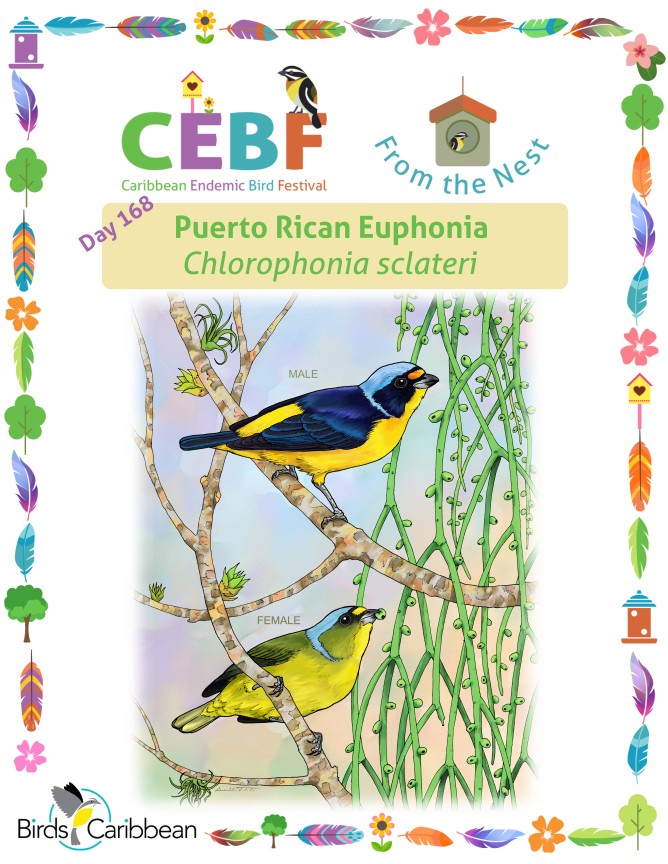
Endemic Bird of the Day: Puerto Rican Euphonia
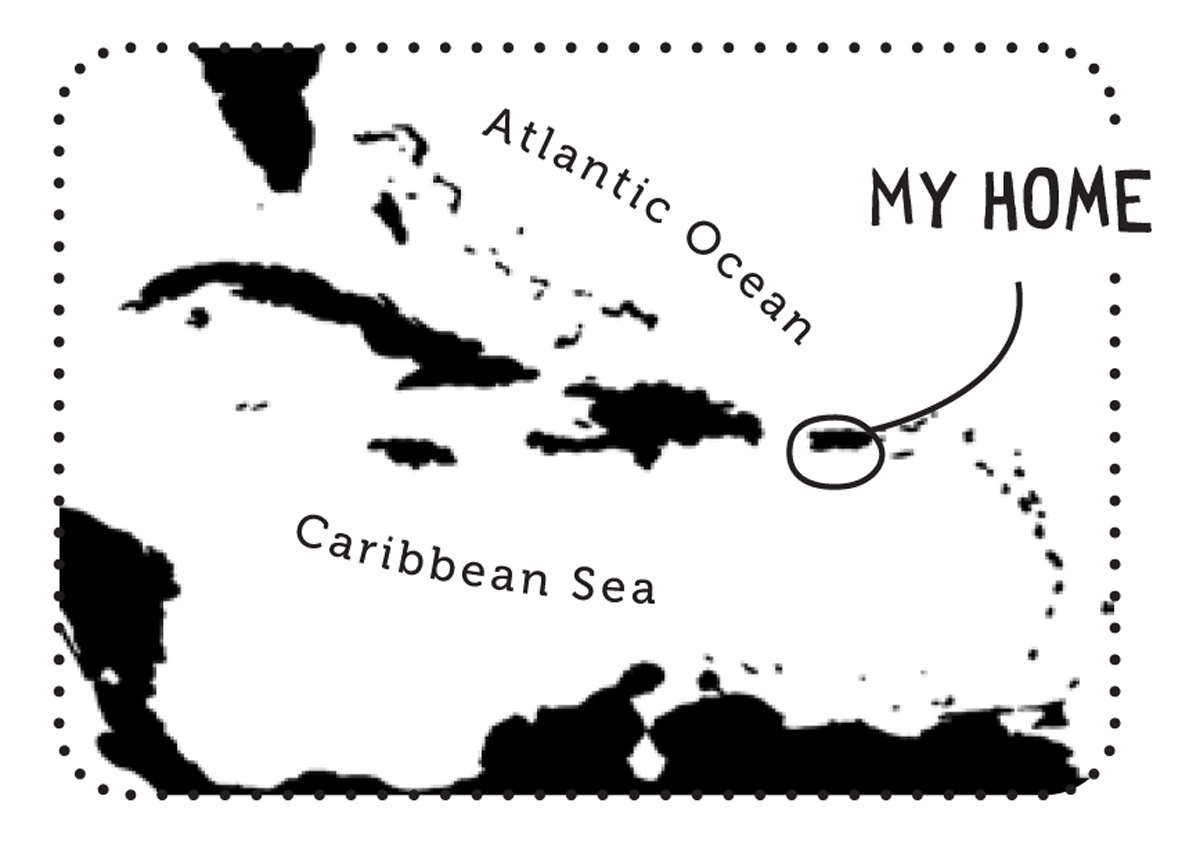
The Puerto Rican Euphonia is a triple threat: dazzling plumage, a melodious voice, and undeniable charm! Endemic to Puerto Rico, it’s affectionately known by locals as Canario del País or simply Eufonia. If you’re lucky, you might catch this lively little bird flitting through the canopy in places like El Yunque National Forest, Luquillo Experimental Forest, and the Carite, Maricao, and Guánica State Forests.
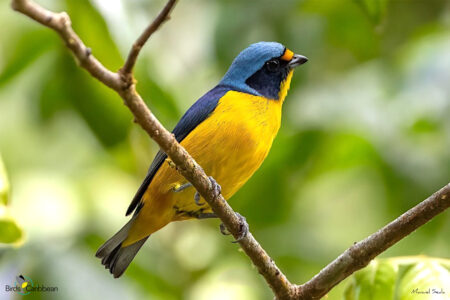
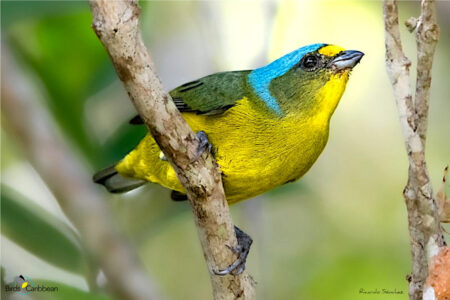
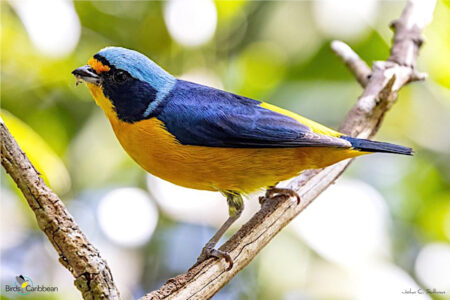
Adult males are striking, with a vivid orange-yellow forehead and a sky-blue cap that extends from the crown to the nape. The rest of the upperparts are a rich violet-blue, offset by a bright yellow rump and upper tail coverts. Their underparts start with a yellow throat that deepens to an orange-yellow on the breast and belly. Females, while more subdued, are equally beautiful—olive-green overall with a sky-blue cap with a sky blue helmet and yellowish forehead patch. Their yellow throats gradually deepen to a muted olive-yellow on the remaining underparts.
You’ll find these fashionable birds in a range of habitats, including mountain forests, lowland dry forests, and even shade-coffee plantations. They’ve been recorded in the Tabonuco, Palo Colorado, Palm, and Elfin (Dwarf) forests. Although usually high in the canopy, Puerto Rican Euphonias often come lower to forage along forest edges and in clearings—especially wherever mistletoe (Loranthaceae) grows, one of their favorite foods. They also snack on other small fruits like Yerba Capitana and Capulín (Muntingia calabura). Energetic and vocal, they hop busily through the trees, calling out with sharp “chit-it” notes and a cheerful “wheeee.” Their song is a rapid mix of squeaky, tinkling, and whistled notes.
Though much remains to be learned about their breeding behavior, we do know that Puerto Rican Euphonias nest year-round, with activity peaking from March to June. They build dome-shaped nests 3–20 meters above the ground, tucked into forks of branches or nestled near epiphytes. The nests are crafted from moss, lichen, and bark, bound with spider silk and lined with banana leaves and soft bark fibers. Clutch size ranges from 2 to 4 white eggs speckled with mauve or reddish-brown.
This species faces ongoing threats from deforestation, and hurricanes—bringing strong winds and tree fall—can also limit fruit availability. Supporting local environmental efforts to remove invasive species and restore native trees is key to making forests more resilient. With continued conservation, the Puerto Rican Euphonia and other forest birds can continue to thrive across the island.Learn more about this species, including its range, photos, and calls here. Great news! If you’re in the Caribbean, thanks to BirdsCaribbean, you have free access to Birds of the World and you can find out even more in the full species account of this bird!
Thanks to Arnaldo Toledo for the illustration and Dimaris Colón for the text!
Colour in the Puerto Rican Euphonia
Download our West Indies Endemic Bird colouring page. Use the photos below as your guide, or you can look up pictures of the bird online or in a bird field guide if you have one. Share your coloured-in page with us by posting it online and tagging us @BirdsCaribbean #CEBFfromthenest
Listen to the song of the Puerto Rican Euphonia
The song of the Puerto Rican Euphonia is mixture of whistles and tinkling, and squeaky notes.
Puzzle of the Day
Click on the image below to do the puzzle. You can make the puzzle as easy or as hard as you like – for example, 6, 8, or 12 pieces for young children, all the way up to 1,024 pieces for those that are up for a challenge!
Male Puerto Rican Euphonia. (Photo by Manuel Seda, Macaulay Library-ML626933664)Female Puerto Rican Euphonia. (Photo by Ricardo Sanchez, Macaulay Library-ML477816071)
Male Puerto Rican Euphonia. (Photo by John C. Sullivan, Macaulay Library-ML628015174-
Activity of the Day
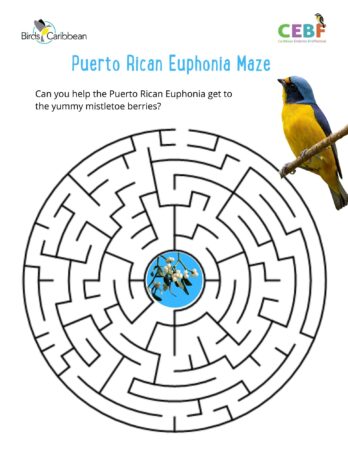
FOR KIDS : Puerto Rican Euphonias love to feed on small fruits, especially mistletoe berries!
Can you help this hungry Puerto Rican Euphonia find its way through our maze to to grab some tasty mistletoe?
Celebrate the Caribbean Endemic Bird Festival (CEBF) with us! Our theme in 2025 is “Shared Spaces: Creating Bird-friendly Cities and Communities”—highlighting the crucial role bird-friendly cities and communities can have in addressing the decline in bird populations caused by threats like habitat loss, predation, and climate change. Have fun learning about a new endemic bird every day. We have colouring pages, puzzles, activities, and more. Download for free and enjoy learning about and celebrating nature!
Endemic Bird of the Day: Hispaniolan Nightjar
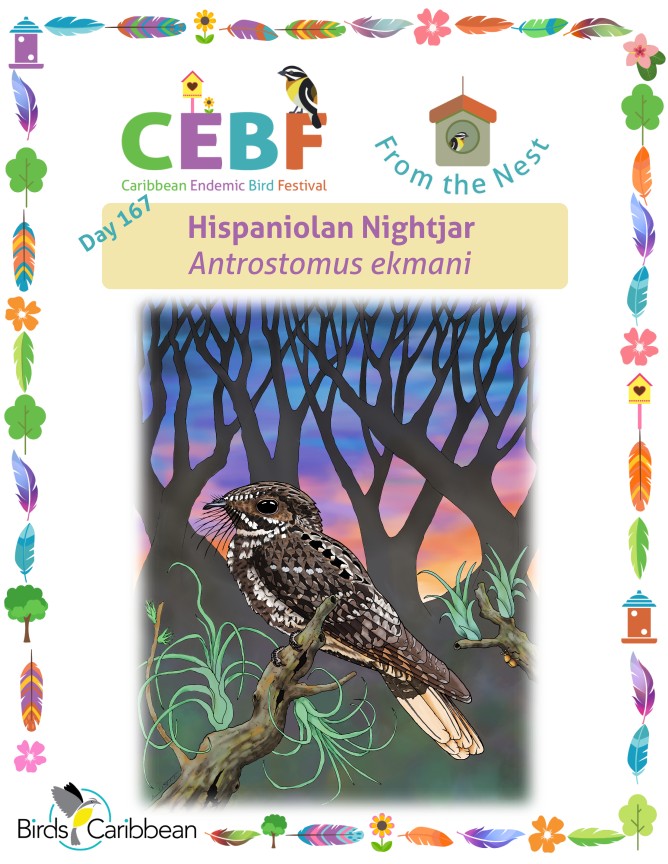
If you ever find yourself walking through the forests of Hispaniola at night, listen closely. A ghostly call—pi-tan-guaaaa—echoes through the trees. This mysterious sound belongs to the Pitanguá, or Hispaniolan Nightjar, a bird so elusive that many locals recognize its voice but have never seen it.
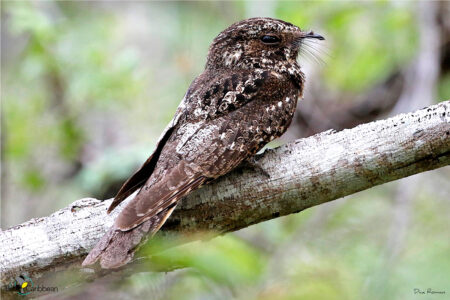
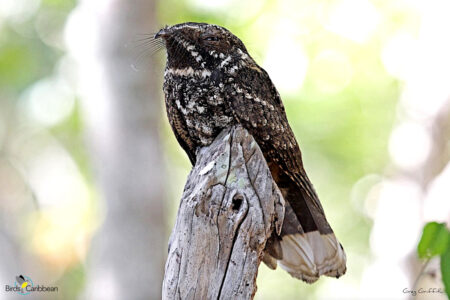
The Hispaniolan Nightjar is a master of camouflage. Its mottled dark brown and grayish plumage blends perfectly with the leaf-strewn forest floor. Males can be distinguished by the white tips on their outer tail feathers, while females have buff-colored tips. Its cryptic coloration and nocturnal habits make it one of the most difficult birds to observe in the wild.
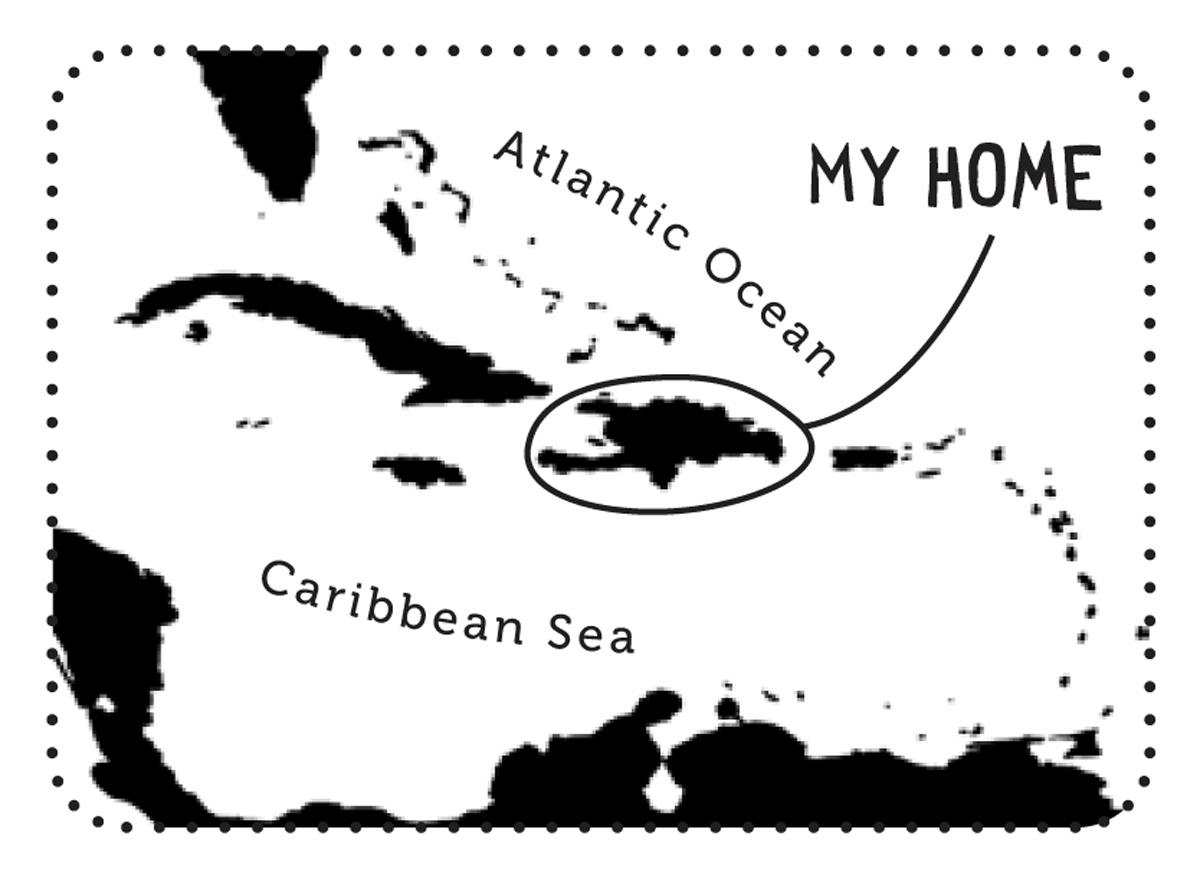
Endemic to Hispaniola, this nightjar favors mid-elevation forests in the Dominican Republic, especially in the Cordillera Central, Sierra de Bahoruco, and Loma de Cabrera. It is typically found between 300 and 750 meters above sea level, often in broadleaf forest. While its current status in Haiti today is uncertain, historical records indicate it was once more widespread across the island.
LIttle is known about tis diet, but like other nightjars, A. ekmani is an aerial insectivore. With a wide, bristle-lined mouth, it catches insects on the wing, feeding almost exclusively at night.
Its distinctive call—a prolonged pi-tan-guaaaa—is repeated throughout the night and inspired its local name. The sound carries throughout the forest and is often described as haunting or mournful, contributing to the bird’s near-mythical reputation. According to local legend, the Pitanguá’s song is believed to be the voice of wandering spirits calling out through the night forest.
The Pitanguá nests directly on the ground, laying two greenish-white eggs with brown blotches in a shallow depression hidden among the leaves. Breeding occurs from April to July, and the species relies on its excellent camouflage to avoid predators. Without a constructed nest, the eggs’ survival depends on how well-hidden they are.
BirdLife International currently considers its population trend to be stable. However, the Pitanguá has suffered significant declines due to habitat destruction and invasive species. Deforestation—especially in Haiti—has severely reduced its breeding range. Like many nocturnal birds, it is also sometimes persecuted due to superstition. More research is needed to determine its current status in Haiti and to monitor remaining populations in the Dominican Republic.
The Hispaniolan Nightjar remains one of the island’s most mysterious birds—rarely seen, but often heard. With continued conservation efforts—and a bit of luck—future generations will still hear its eerie, beautiful pi-tan-guaaaa echoing through the night.Learn more about this species, including its range, photos, and calls here. Great news! If you’re in the Caribbean, thanks to BirdsCaribbean, you have free access to Birds of the World and you can find out even more in the full species account of this bird!
Thanks to Arnaldo Toledo for the illustration and Elvin Vargas Esévez for the text!
Colour in the Hispaniolan Nightjar
Download our West Indies Endemic Bird colouring page. Use the photos below as your guide, or you can look up pictures of the bird online or in a bird field guide if you have one. Share your coloured-in page with us by posting it online and tagging us @BirdsCaribbean #CEBFfromthenest
Listen to the song of the Hispaniolan Nightjar
The song of the Hispaniolan Nightjar a burry “pit, whoo-vore?” often repeated.
Puzzle of the Day
Click on the image below to do the puzzle. You can make the puzzle as easy or as hard as you like – for example, 6, 8, or 12 pieces for young children, all the way up to 1,024 pieces for those that are up for a challenge!
A Hispaniolan Nightjar spreads its wings. (Photo by Dax Roman)Hispaniolan Nightjar. (Photo by Dax Roman)
Activity of the Day
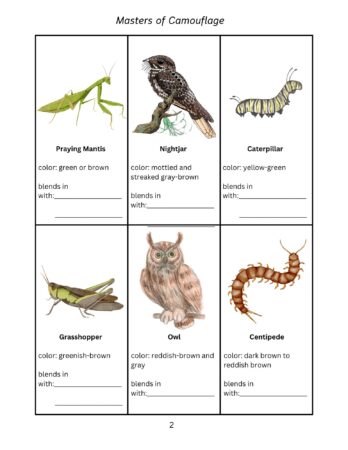
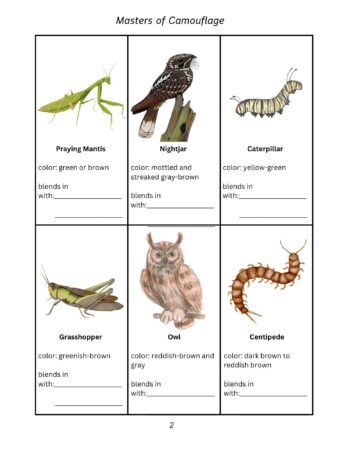
FOR KIDS : Birds like the Hispaniolan Nightjar are very good at hiding in plain sight. Their colours help them to blend in with their environment. Insects also use camouflage to blend in with their environment and keep them safe from other animals that love munching on them. But note that it also helps some insects catch prey that doesn’t see them! Their colours, patterns and even physical shape make them indistinguishable from their surroundings.
In this activity you’re going to go outside (with an adult) and help insects and birds find the best spot for them to blend in such as in the grass, amongst fallen leaves, branches, leaves, flowers, dirt, tree trunks, and other plants.
You will need:
pencil
scissors
clipboard (optional)
copy of Masters of Camouflage page
Can you find the ‘Masters of Camouflage’ page to print (in colour or black and white) and full instructions of this activity here!
FOR KIDS AND ADULTS : Enjoy this video about why Hispaniolan Nightjar was made a seperate species!
Celebrate the Caribbean Endemic Bird Festival (CEBF) with us! Our theme in 2025 is “Shared Spaces: Creating Bird-friendly Cities and Communities”—highlighting the crucial role bird-friendly cities and communities can have in addressing the decline in bird populations caused by threats like habitat loss, predation, and climate change. Have fun learning about a new endemic bird every day. We have colouring pages, puzzles, activities, and more. Download for free and enjoy learning about and celebrating nature!
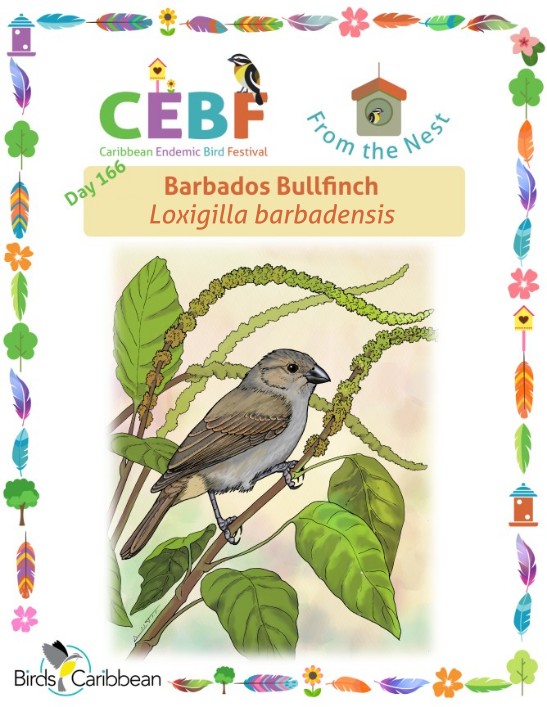
Endemic Bird of the Day: Barbados Bullfinch
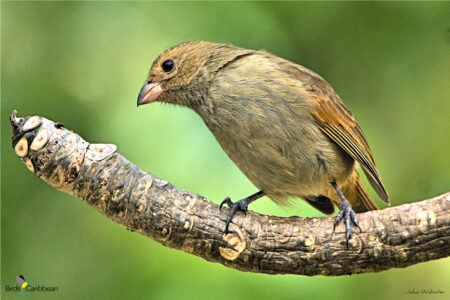
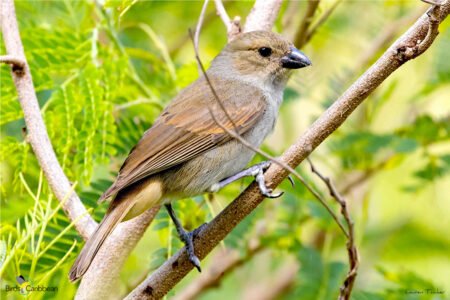
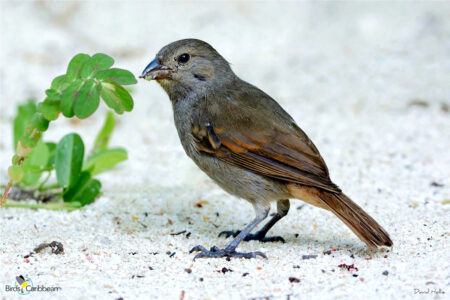
The Barbados Bullfinch, affectionately known as “Sparrow” or “Sparky” by locals, is a ubiquitous and endearing resident of the island. Arguably the easiest West Indian endemic to spot, it often finds you rather than the other way around. This charming bird, the only endemic species (so far!) on Barbados, is a testament to resilience and adaptability.
Measuring just 5-6 inches (14-15 cm) in length, the Barbados Bullfinch presents a subtle beauty. Both sexes have similar plumage: dark olive upperparts with brownish wings, and a light grey underbelly that may show faint streaking on the breast and belly. Males have a solid black, cone-shaped bill, while females sport a paler lower mandible. Their vocal repertoire is varied, ranging from rapid “tse tse tse tse tse” calls to harsh “schipp-schipp-schipp” sounds, and a drawn-out “schrrrrrrp.”
Despite its limited range—confined to just 166 square miles of Barbados—the species is classified as “Least Concern” on the IUCN Red List. This favorable status is largely due to its extraordinary adaptability. The Bullfinch thrives in nearly every habitat across the island, from dense woodlands and mangroves to grasslands and highly urbanized areas.
Its diet is just as flexible. Though primarily a seed eater—gleaning seeds from the ground or grasses—it supplements its diet with fruits and berries. On rainy days, it can be observed eating insects—darting from branches to catch them in mid-air like a flycatcher. It’s become remarkably tame, frequenting hotels, restaurants, and backyards, and is often seen accepting hand-fed treats, including processed foods like sugar. Studies have also shown the Bullfinch’s impressive problem-solving skills. In urban environments and lab settings, they’ve been observed opening sugar packets and pulling strings to access food (Lefebvre et al., 2016).
Their nesting habits are equally adaptable. Both sexes contribute to building a domed nest with a side entrance, constructed from woven dry grass or other locally available materials. While typically built in trees and shrubs, they readily adapt to man-made structures. Females usually lay 3-4 eggs, which hatch after about 14 days of incubation.
Though currently thriving, the Barbados Bullfinch faces several threats that should be monitored, including predation by feral and domestic cats, the non-native Mongoose and by African Green Monkeys. They are also subject to brood parasitism by Shiny Cowbirds.
Thanks to Arnaldo Toledo for the illustration and Julian Moore for the text!
Colour in the Barbados Bullfinch
Download our West Indies Endemic Bird colouring page. Use the photos below as your guide, or you can look up pictures of the bird online or in a bird field guide if you have one. Share your coloured-in page with us by posting it online and tagging us @BirdsCaribbean #CEBFfromthenest
Listen to the calls and song of the Barbados Bullfinch
The song of the Barbados Bullfinch is rapid “tsee-tsee-tsee-tsee…” or “tsit-tsit-tsit-tsit…”. The call is a a sharp “tseet.”
Puzzle of the Day
Click on the image below to do the puzzle. You can make the puzzle as easy or as hard as you like – for example, 6, 8, or 12 pieces for young children, all the way up to 1,024 pieces for those that are up for a challenge!
Barbados-Bullfinch. (Photo by John Webster)Barbados Bullfinch. (Photo by Lauren Tucker)Barbados Bullfinch. (Photo by David Hollie, Macaulay Library-ML608647927)
Activity of the Day
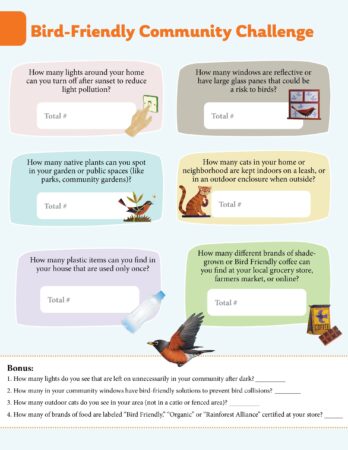
FOR KIDS : Our 2025 CEBF theme “Shared Spaces: Creating Bird-friendly Cities and Communities” highlights the many challenges our endemic birds face due to human activities and expanding urban development. To combat these challenges conservation efforts need to incorporate bird-friendly actions, making sure that our communities become havens for these unique birds. Anyone from national and local governments, businesses, community groups, and individuals can help out by being “bird-friendly”!
What does “bird-friendly” mean? “Bird-friendly” means making our environment safe and welcoming for birds. We can do this by planting native plants, providing clean water, and avoiding the use of harmful chemicals. As well as in other ways by making choices about how we use resources like electricity and our shopping choices. Why not see how bird-friendly you, and your community are, by taking part in the ” Bird-Friendly Community Challenge“. This will help you think about ways in which we can all be friends to birds!
Celebrate the Caribbean Endemic Bird Festival (CEBF) with us! Our theme in 2025 is “Shared Spaces: Creating Bird-friendly Cities and Communities”—highlighting the crucial role bird-friendly cities and communities can have in addressing the decline in bird populations caused by threats like habitat loss, predation, and climate change. Have fun learning about a new endemic bird every day. We have colouring pages, puzzles, activities, and more. Download for free and enjoy learning about and celebrating nature!
Endemic Bird of the Day: Bermuda Petrel
The Bermuda Petrel, or Cahow, is Bermuda’s only endemic bird—found nowhere else on Earth! Fittingly, it is the national bird of Bermuda, and a source of great pride for Bermudians. Like many seabirds, Cahows spend nearly their entire lives at sea, returning to land only to breed—and they nest underground, in burrows!
Few people have ever seen a Cahow in the wild. These elusive birds return to their breeding grounds under the cover of night, arriving in October or November and departing again in May or June. Juveniles are even more mysterious: after fledging, they may remain out at sea for up to four years before returning to land to breed. Incredible!
Cahows closely resemble the Black-capped Petrel, but can be distinguished by a dark gray cap that extends over the face, nape, and sides of the neck, forming a “cowl.” Their forehead and throat are white, and their upperparts are mostly gray with a white fringe bordering the darker rump. Their underparts are mostly white, and they have very long wings, with a one-meter wingspan. A powerful and agile flier, the Cahow is easily distinguished from the smaller, fluttery storm-petrels.
Why the scientific name Pterodroma cahow? Pterodroma means “winged runner,” a fitting name for a seabird that thrives in strong winds and rarely rests on land. The name “Cahow” comes from the eerie cries these birds make at night—calls that once spooked sailors and earned Bermuda the nickname “Isle of Devils.” Most likely, those ghostly sounds belonged to Cahows.
When the first settlers arrived in the 1600s, the Cahow was abundant, with an estimated half a million pairs nesting throughout the Bermuda archipelago. But within a few short years, the population had been decimated. Adults and chicks were taken by the thousands from their burrows and eaten. By around 1620, the Cahow was believed to be extinct.
During the first half of the 20th Century, four Cahow specimens were recovered, inspiring a search for its breeding grounds, which were rediscovered in 1951. That event was headline news in newspapers around the world. This led to the launch of the Cahow Recovery Program under the leadership of Dr. David Wingate, Bermuda’s first Conservation Officer (1957 to 2000), and since 2000, continued by his successor Jeremy Madeiros.
Thanks to decades of tireless effort, the Cahow has made a remarkable comeback: from just 18 nesting pairs (and 8 fledglings) in 1960, to 62 pairs (32 fledglings) in 2001, and 165 nesting pairs (76 fledglings) in 2024.
The path to recovery has not been easy. Threats included pesticide exposure (leading to thin eggshells and breeding failure), competition for nest sites from White-tailed Tropicbirds, egg predation by rats, and even predation by Peregrine Falcons. Today, rising sea levels pose a new and serious threat.
To give the Cahow every chance at success, conservationists developed wooden baffles to keep out the larger Longtails (White-tailed Tropicbirds), allowing only Cahows to access the burrows. Artificial burrows have also been installed to accommodate the growing population.
Thanks to Arnaldo Toledo for the illustration and Andrew Dobson for the text!
Colour in the Bermuda Petrel
Download our West Indies Endemic Bird colouring page. Use the photos below as your guide, or you can look up pictures of the bird online or in a bird field guide if you have one. Share your coloured-in page with us by posting it online and tagging us @BirdsCaribbean #CEBFfromthenest
Listen to the calls of the Bermuda Petrel
The calls of the Bermuda Petrel include a high pitcher “oooooooooooooo-EEK” made by males during courtship, and an answering growl of “aaaaaaaawww-AK” made by females.
Puzzle of the Day
Click on the image below to do the puzzle. You can make the puzzle as easy or as hard as you like – for example, 6, 8, or 12 pieces for young children, all the way up to 1,024 pieces for those that are up for a challenge!
A Bermuda Petrel in flight. (photo by Friedemann Arndt, Macaulay Library- ML608756232)A Bermuda Petrel at sea near Bermuda. (Photo by Friedemann Arndt, Macaulay Library- ML608756195)Close-up of a Bermuda Petrel. (Photo by Tom Johnson, Macaulay Library-ML40621211)
Activity of the Day
FOR KIDS : The Bermuda Petrel is a beautiful seabird, related to gulls, albatrosses, shearwaters and many more groups of sea loving birds! Another group of birds that can be found along our Caribbean coastline are the shorebirds. At first glance, shorebirds and seabirds might seem like they’re they are very similar. Both groups are typically found near water, and can often be seen in similar places! But when delve a bit deeper you can see that these two groups of birds are quite distinct. There are differences not just in where they typically live, how they live, and also in how they typically look (although of course in both groups there are some exceptions to the rules!).
Why not think about some of these differences and try out our “seabirds or shorebirds?” activities. Remember that whilst there are several differences between these two groups there are sometime overlaps in their lifestyles! Full instructions of this activity in here ! And you can find the answers here.
FOR KIDS AND ADULTS : Enjoy this video of a Bermuda Petrel at a nest, in the wild!
Celebrate the Caribbean Endemic Bird Festival (CEBF) with us! Our theme in 2025 is “Shared Spaces: Creating Bird-friendly Cities and Communities”—highlighting the crucial role bird-friendly cities and communities can have in addressing the decline in bird populations caused by threats like habitat loss, predation, and climate change. Have fun learning about a new endemic bird every day. We have colouring pages, puzzles, activities, and more. Download for free and enjoy learning about and celebrating nature!
Endemic Bird of the Day: Kalinago Wren
Say hello to the Kalinago Wren, Dominica’s newest officially recognized single-island endemic bird, named in 2024 to honor the island’s Indigenous people, the Kalinago. Previously considered a subspecies of the House Wren, Troglodytes martinicensis rufescens is now celebrated as its own distinct species—thanks to new research highlighting its unique genetics, song, and behavior.
Locals affectionately call it syòl, sinyòl, wòsinyòl, èsiyòl, òsiyòl, and Madam tètchyen. That last name, “Madam tètchyen” (or “Mrs. Boa Constrictor”), stems from local folklore. The wren is said to frequent the forest floor where the native boa, or tètchyen, is often found—like a husband-and-wife pair in nature. Spot a Kalinago Wren, and you may be near a boa!
Formerly found in Guadeloupe and Martinique, the Kalinago Wren has been extirpated from both islands, likely due to habitat loss and the impacts of invasive predators. That makes Dominica its last remaining stronghold—and a vitally important island for its continued survival.
You can find the Kalinago Wren throughout Dominica’s moist and dry forests, rural landscapes, and even near homes—though it tends to steer clear of towns. Its ability to adapt to human environments (including nesting in gutters and concrete blocks) is impressive and likely helped it recover after Hurricane Maria in 2017.
Its diet includes insects and even small lizards like juvenile anoles, and it’s often seen flitting low across the forest floor while foraging. Its powerful voice makes it easier to hear than see!
While still understudied, the Kalinago Wren is believed to have two breeding seasons, from May–August and November–December. However, some nesting activity has also been reported from February–April, suggesting there could be three annual breeding cycles—a topic ripe for further research! Nests are built in tree cavities from twigs, and the birds have shown clever adaptability by using human structures like gutters and concrete blocks. Clutches typically contain 2–6 whitish eggs with reddish-brown speckles.
Although its exact population size and conservation status have not yet been formally assessed, the Kalinago Wren appears widespread and stable. Still, as a single-island endemic, it is vulnerable to habitat loss and natural disasters—particularly hurricanes. That makes it a priority species for monitoring, research, and conservation efforts.Learn more about this species, including its range, photos, and calls here. Great news! If you’re in the Caribbean, thanks to BirdsCaribbean, you have free access to Birds of the World and you can find out even more in the full species account of this bird!
Thanks to Arnaldo Toledo for the illustration and Garry Auguiste for the text!
Colour in the Kalinago Wren
Download our West Indies Endemic Bird colouring page. Use the photos below as your guide, or you can look up pictures of the bird online or in a bird field guide if you have one. Share your coloured-in page with us by posting it online and tagging us @BirdsCaribbean #CEBFfromthenest
Listen to the song of the Kalinago Wren
The song of the Kalinago Wren is loud with chatters and trills.
Puzzle of the Day
Click on the image below to do the puzzle. You can make the puzzle as easy or as hard as you like – for example, 6, 8, or 12 pieces for young children, all the way up to 1,024 pieces for those that are up for a challenge!
A Kalinago Wren singing. (Photo by Yann Muzika, Macaulay Library- ML631840540)A Kalinago Wren. (Photo by Holger Teichmann)
Activity of the Day
FOR KIDS : Can you find the words in our Kalinago Wren word search? Read the text above all about this endemic bird to remind yourself of some of the interesting facts and information, as you look for all 15 hidden words!
Remember the words appear forwards and backwards, as are horizontal, vertical and diagonal! Need some help? Or want to check your answers? You can see where all the words were here.
FOR KIDS AND ADULTS : Enjoy this video of a Kalinago Wren in the wild!
Celebrate the Caribbean Endemic Bird Festival (CEBF) with us! Our theme in 2025 is “Shared Spaces: Creating Bird-friendly Cities and Communities”—highlighting the crucial role bird-friendly cities and communities can have in addressing the decline in bird populations caused by threats like habitat loss, predation, and climate change. Have fun learning about a new endemic bird every day. We have colouring pages, puzzles, activities, and more. Download for free and enjoy learning about and celebrating nature!
Endemic Bird of the Day: Cuban Blackbird
Let’s talk about the Cuban Blackbird (Ptiloxena atroviolacea)—or as it’s affectionately known on the island, the Totí. Ask almost any Cuban, and they’ll recognize the name. This striking all-black bird is a familiar sight across Cuba, from busy cities to rural areas, and it’s even embedded in Cuban culture and sayings. Locals sometimes call someone the Totí when they end up taking the blame for something—just because.
At first glance, the Cuban Blackbird looks entirely black, but catch it in the right light and you’ll see beautiful flashes of blue and purple iridescence in its plumage. Its beak and legs are black, and the eye is a dark brown. Males and females look similar, though females are slightly smaller. About 25–28 cm long, one of the best ways to tell it apart from similar black birds is its distinctive square-shaped tail. For comparison, the Greater Antillean Grackle—another all-black species—has yellow eyes and a long, V-shaped tail, while the Shiny Cowbird is smaller with more intense violet tones.
This bird is endemic to mainland Cuba, and you can find it just about anywhere—forests, grasslands, agricultural lands, towns, and cities. Its varied, musical song can often be heard echoing through both natural and urban environments. The Cuban Blackbird is adaptable and opportunistic, often seen foraging on the ground alone, in pairs, or in mixed flocks with other blackbirds. Its diet includes insects, seeds, small vertebrates, and even nectar—clearly not a picky eater!
Breeding takes place from April to August. Pairs build cup-shaped nests out of rootlets, hair, and feathers, where they typically lay 3 to 5 eggs.
While the Cuban Blackbird is common and widespread today, it’s still important not to take its presence for granted. There’s much we don’t know about this species, and as climate change and habitat loss intensify, even adaptable birds can face unexpected challenges. As the saying goes, “The time to protect a species is while it’s still common.”Learn more about this species, including its range, photos, and calls here. Great news! If you’re in the Caribbean, thanks to BirdsCaribbean, you have free access to Birds of the World and you can find out even more in the full species account of this bird!
Thanks to Arnaldo Toledo for the illustration and Saúl González Rosales for the text!
Colour in the Cuban Blackbird
Download our West Indies Endemic Bird colouring page. Use the photos below as your guide, or you can look up pictures of the bird online or in a bird field guide if you have one. Share your coloured-in page with us by posting it online and tagging us @BirdsCaribbean #CEBFfromthenest
Listen to the calls of the Cuban Blackbird
The calls of the Cuban Blackbird include a metallic “schee-o” and loud “chuck,” as well as a “chok, chok, chok, lee, lee, lee” series.
Puzzle of the Day
Click on the image below to do the puzzle. You can make the puzzle as easy or as hard as you like – for example, 6, 8, or 12 pieces for young children, all the way up to 1,024 pieces for those that are up for a challenge!
A Cuban Blackbird. (Photo by Lutz Durselen, Macaulay Library- ML204086391)A Cuban Blackbird enjoys a feeder. (Photo by Rosie Howard, Macaulay Library-ML172657491)A Cuban Blackbird perched on a flower. (Photo by Andy Goris, Macaulay Library-ML614707075)
Activity of the Day
FOR KIDS : The Cuban Blackbird looks black. But when the sunlight hits it at different angles,
colors of purple and blue are revealed. This beautiful effect is known as iridescence! Several birds have feather like this, and you might also have seen this in shiny bubbles or on butterfly wings.
You can create your own iridescent bookmark using simple materials. Just like the glossy feathers of the Cuban Blackbird. Your bookmark will shimmer and shine as you move it in the light.
You will need:
paper We recommend using black card stock because iridescence shows up best on dark colors. But you can use any kind of paper as long as it’s thick enough to go in water and doesn’t have a shiny or slippery coating.
Celebrate the Caribbean Endemic Bird Festival (CEBF) with us! Our theme in 2025 is “Shared Spaces: Creating Bird-friendly Cities and Communities”—highlighting the crucial role bird-friendly cities and communities can have in addressing the decline in bird populations caused by threats like habitat loss, predation, and climate change. Have fun learning about a new endemic bird every day. We have colouring pages, puzzles, activities, and more. Download for free and enjoy learning about and celebrating nature!
Endemic Bird of the Day: Gray Trembler
The Gray Trembler really knows how to put on a show! When it sings, its entire body trembles with excitement—its wings droop and quiver, and its tail pulses in a rhythmic shake. This bird’s got serious moves! While it sticks to one signature dance, its vocal performance is anything but predictable. One of its common songs is a series of quavering whistles that slide downward in pitch. Other times, it belts out elaborate warbles reminiscent of its cousin, the mockingbird—or switches to simpler chortling trills. It even has a raspy, buzzy call that sounds like it’s giving someone a good scolding!
If you want front-row seats to this performance, you’ll need to visit Martinique or St. Lucia–the only two places in the world where this endemic species lives. They’re year-round residents, and within these islands, they use a variety of habitats: lush lower montane rainforests, coastal dry forests, open woodlands, and even gardens. But don’t expect to find them in large numbers—they’re widespread but never abundant.
So, if you’re lucky enough to be in the right place, what should you look for besides the dancing? True to its name, the Gray Trembler is mostly gray, with a slightly darker face mask that frames a piercing yellow eye, rimmed in red. It sports a long tail, long wings, and an impressively long, curved bill. You’ll often spot it close to the forest floor, using that strong bill to flip over leaves—sometimes launching them high into the air—or to probe into crevices between vines and tree trunks. What’s on the menu? Pretty much anything it can catch: snails, beetles, small lizards, frogs, even centipedes!
We still have more to learn about the Gray Trembler’s breeding behavior, but here’s what we do know: they breed during the rainy season (April to August), laying striking greenish-blue eggs, usually laid in clutches of two to three. Their nests are open cups, built from dead leaves and twigs, placed high up in medium-sized trees. Both parents share the job of feeding the nestlings, offering a varied diet that includes fruit. And one more fun fact—they seem curious about technology—Gray Tremblers have been caught on video pecking at the cameras used to monitor their nests!
While the Gray Trembler isn’t globally threatened, it’s considered range-restricted, since it’s found only on two islands. That makes it especially vulnerable to environmental changes. One major concern is the degradation and destruction of the forests it calls home. Protecting these forests is essential, not just for the trembler, but for many other unique species that live alongside it.
What can you do? Start small: reduce waste, recycle, and avoid products that contribute to deforestation. You can also support local environmental groups, join tree-planting efforts, and share the story of the Gray Trembler and the importance of its forest habitats. Every action—big or small—helps. Learn more about this species, including its range, photos, and calls here. Great news! If you’re in the Caribbean, thanks to BirdsCaribbean, you have free access to Birds of the World and you can find out even more in the full species account of this bird!
Thanks to Arnaldo Toledo for the illustration and Dr Jennifer Mortensen for the text!
Colour in the Gray Trembler
Download our West Indies Endemic Bird colouring page. Use the photos below as your guide, or you can look up pictures of the bird online or in a bird field guide if you have one. Share your coloured-in page with us by posting it online and tagging us @BirdsCaribbean #CEBFfromthenest
Listen to the song of the Gray Trembler
The song of the Gray Trembler a slow jumble of wavering rich whistles. They also have a raspy, harsh sounding alarm call.
Puzzle of the Day
Click on the image below to do the puzzle. You can make the puzzle as easy or as hard as you like – for example, 6, 8, or 12 pieces for young children, all the way up to 1,024 pieces for those that are up for a challenge!
Gray Trembler calling. (Photo by Michael Stubblefield, Macaulay Library-ML604068631)Gray Trembler, St Lucia. (Photo Kevin-Berkoff, Macaulay Library- ML323551711)A Gray Trembler on Martinique. (Photo by Noam Markus, Macaulay Library-ML132338751)
Activity of the Day
FOR KIDS : Use the information above and the clues on the sheet to untangle our our word scramble – all about the Gray Trembler. You’ll need to know about where it lives, what it eats, and how it behaves. You can find all the answers here.
FOR KIDS AND ADULTS : Enjoy this video of a Gray Trembler in the wild!
Celebrate the Caribbean Endemic Bird Festival (CEBF) with us! Our theme in 2025 is “Shared Spaces: Creating Bird-friendly Cities and Communities”—highlighting the crucial role bird-friendly cities and communities can have in addressing the decline in bird populations caused by threats like habitat loss, predation, and climate change. Have fun learning about a new endemic bird every day. We have colouring pages, puzzles, activities, and more. Download for free and enjoy learning about and celebrating nature!
Endemic Bird of the Day: Jamaican Oriole
“Auntie Katie! You-cheat, you-cheat-you, you-cheat-you and If-you-want-it-free, don’t-ask-me!”
These whimsical lyrics mimic the melodious song of the Jamaican Oriole (Icterus leucopteryx leucopteryx), known locally as Auntie Katie, Banana Katie, or Banana Bird. This medium-sized songbird, about 20 cm long, fills the air with its rich, flute-like whistles—especially in the early morning and late afternoon. Its song, made up of rapid, down-slurred patterns, adds a bright, musical flair to Jamaica’s natural soundscape.
The Jamaican Oriole is unmistakable with its bold contrast of yellow and black. It sports a black throat, face, and upper chest; a greenish-yellow head, nape, and mantle; and a vibrant yellow belly and rump. Its wings and tail are mostly black, with a large white patch on the wing patch. Females look similar but slightly duller, while immatures are olive-green with less black on the head and dusky green tails. These adaptable birds thrive in all kinds of habitats—from forests at all elevations to gardens and towns. They’re omnivores with a sweet tooth, often seen in fruit trees feasting on bananas, mangoes, Otaheite apples, and papayas. They also enjoy the nectar provided by flowers—and will eagerly tear flowers apart to get to their nectaries. These resourceful birds also feed on insects—using their pointy beaks to probe into tree bark, bromeliads, and seed pods, or picking prey right off leaves.
Jamaican Orioles are also nature’s engineers, weaving hanging pouch-like nests out of grass, thread, fibers, and Spanish moss. These nests sway beneath tree branches and are cleverly hidden among the leaves to protect chicks from predators. Females typically lay 3–5 white eggs with brown markings, and both parents pitch in to feed and care for their young.
Although the Jamaican Oriole is currently listed as Least Concern by the IUCN, it still faces challenges. Habitat loss from deforestation and poorly planned urban expansion threatens its future. It also falls victim to the invasive Shiny Cowbird (Molothrus bonariensis), a brood parasite that lays its eggs in oriole nests, tricking orioles into raising cowbird chicks instead of their own. Planting native trees, preserving green spaces, and supporting local conservation efforts are great ways to help this charismatic bird continue to thrive.
While the Jamaican Oriole subspecies (Icterus leucopteryx leucopteryx) is found only in Jamaica, a related subspecies occurs on San Andrés, Colombia. Sadly, the species is now extinct on Grand Cayman. The Jamaican Oriole also holds a special place in the island’s birding culture—it appears on the logo of the Gosse Bird Club, founded in the 1950s, and which continues today as BirdLife Jamaica. Learn more about this species, including its range, photos, and calls here. Great news! If you’re in the Caribbean, thanks to BirdsCaribbean, you have free access to Birds of the World and you can find out even more in the full species account of this bird!
Thanks to Arnaldo Toledo for the illustration and Damany Calder for the text!
Colour in the Jamaican Oriole
Download our West Indies Endemic Bird colouring page. Use the photos below as your guide, or you can look up pictures of the bird online or in a bird field guide if you have one. Share your coloured-in page with us by posting it online and tagging us @BirdsCaribbean #CEBFfromthenest
Listen to the song of the Jamaican Oriole
The song of the Jamaican Oriole is series of rich, whistled, and slurred phrases and “cheat-you, cheat-you, cheat-you, cheat-you, cheat.”
Puzzle of the Day
Click on the image below to do the puzzle. You can make the puzzle as easy or as hard as you like – for example, 6, 8, or 12 pieces for young children, all the way up to 1,024 pieces for those that are up for a challenge!
Jamaican Oriole. (Photo by Anthony VanSchoor)A Jamaican Oriole spotted in Portland, Jamaica. (Photo by Joseph Priniotakis, Macaulay Library-ML558197951)Male Jamaican Oriole. (Photo by Peter-Hawrylyshyn, Macaulay Library-ML541878121)
Activity of the Day
FOR KIDS : Get ready to head out on a bird-friendly adventure with our bird-friendly bingo game! Ask a trusted adult if you can take a walk in your backyard, or go with them on a walk around your neighbourhood. As you walk around look carefully for things that help keep birds safe in your community. You can then mark them off on the bingo card we provide in our game! Get out there and see what you can find!
FOR KIDS AND ADULTS : Enjoy this video of a Jamaican Oriole in the wild!
Celebrate the Caribbean Endemic Bird Festival (CEBF) with us! Our theme in 2025 is “Shared Spaces: Creating Bird-friendly Cities and Communities”—highlighting the crucial role bird-friendly cities and communities can have in addressing the decline in bird populations caused by threats like habitat loss, predation, and climate change. Have fun learning about a new endemic bird every day. We have colouring pages, puzzles, activities, and more. Download for free and enjoy learning about and celebrating nature!
Endemic Bird of the Day: Hispaniolan Mango
What’s better than one mango? Two mangos. And while we’re all about that juicy, vitamin-packed fruit of the Caribbean, today we’re talking about a different kind of treat—a dazzling hummingbird!
Not too long ago, the Puerto Rican Mango and Hispaniolan Mango were thought to be the same species, called the Antillean Mango. But in 2022, scientists split them into two distinct species after discovering key differences in their size, shape, and colors.
The male Hispaniolan Mango is a stunner, with a glittering green throat, metallic green head, and upperparts, velvety black underparts, and a reddish-purple tail with blue-black edges. female is a bit more subdued, with a whitish throat and gray belly, but still quite the looker. When her tail is fanned out, the outer feathers show a broad reddish band followed by a dark band and white tips.
Trying to tell the Hispaniolan Mango apart from other hummingbirds on the island? You might mix it up with the Hispaniolan Emerald—but don’t worry, they’re easy to distinguish! The Emerald is smaller, has a straight beak, and a green belly. The Mango, on the other hand, is larger, has a longer, slightly curved beak, a sleek, black underside, and a flashier tail.
And how about that voice? The Mango’s call is a sharp, high-pitched “chip!”— like a quick “tsk!” It often repeats the call in fast little pairs or long, chatty strings, like it’s gossiping to itself in the treetops.
Found only on Hispaniola and nearby islands, including Tortue, Gonâve, Vache, and Beata, the Hispaniolan Mango lives in moist and dry forests, forest clearings, gardens, and even coffee plantations. It hovers or perches to sip nectar from flowers, and also hunts insects mid air or gleans them from leaves and tree trunks. In coffee plantations, its favorite snack comes from the Pois Doux/ Ice Cream Bean (Inga vera) tree!
Though tiny, the Mango isn’t afraid to show some attitude. It’s been seen mobbing much larger birds—like the mighty Ridgway’s Hawk and Gray Kingbirds, if it thinks they’re invading its space or favorite flowers.
During the breeding season, which runs from December to August, the female builds a cozy, cup-shaped nest using plant fibers, coated with bark flakes, lichen, and moss—all bound to the nest with sticky spider silk. She handles incubation and chick-raising all on her own, just like other hummingbird moms.
Luckily, the Hispaniolan Mango isn’t threatened, but it still needs our help to keep thriving! By planting native flowers, reducing pesticide use, and supporting reforestation efforts, we can make sure these tiny, fierce, and fabulous birds light up our skies for years to come. Learn more about this species, including its range, photos, and calls here. Great news! If you’re in the Caribbean, thanks to BirdsCaribbean, you have free access to Birds of the World and you can find out even more in the full species account of this bird!
Thanks to Arnaldo Toledo for the illustration and Holly Garrod for the text!
Colour in the Hispaniolan Mango
Download our West Indies Endemic Bird colouring page. Use the photos below as your guide, or you can look up pictures of the bird online or in a bird field guide if you have one. Share your coloured-in page with us by posting it online and tagging us @BirdsCaribbean #CEBFfromthenest
Listen to the calls of the Hispaniolan Mango
The calls of the Hispaniolan Mango include a thin trill and sharp chipping notes.
Puzzle of the Day
Click on the image below to do the puzzle. You can make the puzzle as easy or as hard as you like – for example, 6, 8, or 12 pieces for young children, all the way up to 1,024 pieces for those that are up for a challenge!
Male Hispaniolan Mango in flight. (Photo by Carl-Hackman, Macaulay Libarary-ML398939841)A Male Hispaniolan Mango takes a rest. (Photo by Carlos Gomez)
Activity of the Day
FOR KIDS : The Hispaniolan Mango is a striking bird with vivid shining colours of glittering green, inky black and vibrant violet!But who says you have to travel to the Dominican Republic or Haiti to see these beautiful colours?
In this activity you’ll make a suncatcher—a decoration that catches rays of sunlight and casts them as rainbow hued patterns across the room!
Here is a list of materials you will need:
empty clear plastic milk jug, washed and dried
permanent markers
scissors
utility Knife
hole punch
twine, string or yarn
You can download full instructions here including a bird template for you to use. This activity involves using a knife and scissors.
Make sure you have an adult to help you with the cutting.
FOR KIDS AND ADULTS : Enjoy this video of a male Hispaniolan Mango in the wild!
Celebrate the Caribbean Endemic Bird Festival (CEBF) with us! Our theme in 2025 is “Shared Spaces: Creating Bird-friendly Cities and Communities”—highlighting the crucial role bird-friendly cities and communities can have in addressing the decline in bird populations caused by threats like habitat loss, predation, and climate change. Have fun learning about a new endemic bird every day. We have colouring pages, puzzles, activities, and more. Download for free and enjoy learning about and celebrating nature!
Endemic Bird of the Day: Greater Antillean Bullfinch
Small but striking, the Greater Antillean Bullfinch is endemic to the islands of The Bahamas, Turks and Caicos, Hispaniola, and Jamaica. Measuring around 14 cm in length, and weighing just 18-22 grams—about the same as five sugar packets—this lively songbird is easy to spot if you know what to look for.
Males are glossy black, accessorized with bold reddish-orange eyebrow stripe, throat and undertail-coverts (feathers under the tail). Their shrill, whistle-like “t’zeet, t’zeet, t’seet, t’seet, seet, seet, seet” calls have earned them the endearing nickname ‘police bird’ in The Bahamas. Females look similar to males but are a duller black with more muted red markings. Juveniles are grayish-olive and have similar but smaller reddish-orange markings, especially on the throat,
This bullfinch’s short, thick black beak is perfectly built for cracking open seeds from a wide variety of plants. But it’s not a picky eater—it also feeds on flower buds and petals, many different fruits, like green plantain, coffee and peppers, as well as insects and even snails! This versatile diet helps the Greater Antillean Bullfinch thrive in many habitats, from dry coastal shrublands and gardens to lush mountain forests. You’re most likely to spot them foraging in the understory, either alone or in small, lively groups.
During courtship, males put on a show by puffing out their feathers and performing their signature little hop around the female. Once paired, the female builds a cozy bowl-shaped nest using strips of palm fronds and tree bark. She typically lays 3 to 4 bluish-white eggs marked with fine red-brown and yellow-brown speckles between March and June.
This captivating bird is currently listed as ‘Least Concern’ on the IUCN Red List, thanks to its wide range and adaptable nature. Although tree cover has declined in many areas across its range, its population remains stable. These hardy birds have shown a remarkable ability to adapt—even surviving in degraded forests.
Still, this species faces increasing challenges. Habitat loss from development and the growing impacts of climate change pose real threats to their survival. Protecting the Greater Antillean Bullfinch means taking action now—planting native trees where they live—including your backyard, switching to organic pesticides that won’t harm the insects they feed on, and supporting efforts to conserve forests and restore habitats across the region. Learn more about this species, including its range, photos, and calls here. Great news! If you’re in the Caribbean, thanks to BirdsCaribbean, you have free access to Birds of the World and you can find out even more in the full species account of this bird!
Thanks to Arnaldo Toledo for the illustration and Soraya Halkitisfor the text!
Colour in the Greater Antillean Bullfinch
Download our West Indies Endemic Bird colouring page. Use the photos below as your guide, or you can look up pictures of the bird online or in a bird field guide if you have one. Share your coloured-in page with us by posting it online and tagging us @BirdsCaribbean #CEBFfromthenest
Listen to the song of the Greater Antillean Bullfinch
The song of the Greater Antillean Bullfinch is a series of high-pitched “zit” or “seet” notes, sometimes followed by high thin buzz.
Puzzle of the Day
Click on the image below to do the puzzle. You can make the puzzle as easy or as hard as you like – for example, 6, 8, or 12 pieces for young children, all the way up to 1,024 pieces for those that are up for a challenge!
Male Greater Antillean Bullfinch. (Photo by Dax Roman)Female Greater Antillean Bullfinch – she is dull black or slaty-black compared to the glossy dark black of the male. (Photo by Matt Grube)Immature Greater Antillean Bullfinch. (Photo by Christoph Moning, Macaulay Library-ML65069001)
Activity of the Day
FOR KIDS : During our 2025 celebration of Caribbean endemic birds we will be sharing a beautiful colouring page for every single bird we feature! These lovely pages were created for us by Arnaldo Toledo, who also created a coloured in version of each bird as inspiration. Get your colour pencils ready, and read these super helpful colouring in tips below. Then go ahead, download and print each bird, and get colouring! Enjoy!
Estos consejos también están disponibles en español:
FOR KIDS AND ADULTS : Enjoy this video of a Greater Antillean Bullfinch in the wild!
With passionate fervor, the Caribbean Endemic Bird Festival is more than just an event—it’s a vibrant celebration of Caribbean birds and the communities that cherish them. This unique festival connects people to their cultural roots and natural heritage, offering much more than a gathering of experts. It’s a chance to behold the beauty of the region’s birdlife and be part of something that unites us all in the shared love of birds and country.
For over two decades, the Caribbean Endemic Bird Festival (CEBF) has brought together tens of thousands of people of all ages to celebrate the extraordinary birds that sing, swoop, and soar exclusively through our islands. The festival runs from April 22nd to May 22nd, offering a month-long celebration of our iconic birds, under the theme Shared Spaces: Building Bird-Friendly Cities and Communities. If you’re in the Caribbean, chances are there’s an event taking place on your island!
Each event offers fun activities that give you the chance to learn, share, and take action for a brighter future for Caribbean birds and your island. Whether you’re a seasoned birder, a curious nature lover, someone eager to flex your creative muscles, or looking for something fun to do, the CEBF welcomes you to join the celebration.
Presenting seven reasons (there are way more, but we don’t want to exhaust you) why you simply cannot miss this year’s CEBF!
1. The Stellar Lineup
Ever seen a bird tremble or scoop its meal mid-air? What about a bird with a crossed bill or looks like a perfect scoop of cookies n’ cream ice cream? The dazzling diversity of birdlife in the Caribbean can feel unreal! From the iridescent plumage of our hummingbirds to the mighty wingspan of raptors, and the enchanting songs of warblers, this festival is all about discovering and celebrating the icons of the Caribbean bird world.
Green-throated Carib – one of 3 endemic species of hummingbirds in Antigua and the Lesser Antilles. (Photo by Nick Hollands)
Male Hispaniolan Crossbill, one of our featured birds during CEBF2021. (Photo by Dax Roman)
Barbuda Warbler. (Photo by Jeff Gerbracht)
The Puerto Rican Tody, locally named San Pedrito, is one of the five tody species endemic to the Caribbean.
New to CEBF? Don’t worry—our experienced educators and coordinators will be with you every step of the way, ensuring you don’t miss a single moment of the action. Whether you’re spotting a bird for the first time or marveling at the antics of a local endemic, they’ll guide you and make sure you get the most out of the experience.
Key West Quail-Dove (Photo by Doug Greenberg)
St Lucia Parrot. (Photo by Horst Vogel)
Bahama Swallow swoops low to the ground. (Photo by Brendan Fogarty)
Juvenile Gundlach’s Hawk .(Photo by Maikel Cañizares)
2. Rekindle Your Sense of Wonder
CEBF events allow you to reignite the uninhibited curiosity and wonder you had as a child. You will learn fascinating facts about birds and their habitats, explore your country through birdwatching trips, and experience the thrill of discovery. Not the outdoorsy type? No problem! Our educators and coordinators know how to have fun off trails too! They offer insightful webinars and in-person presentations, quizzes, crafts, and bird-centric games.
It’s a reminder that conservation can be experimental, creative, accessible—and absolutely captivating!
3. Top-Tier Events, Hosted by Local Experts
Every CEBF event is an experience: meticulously curated by educators and coordinators who know the ins and outs of the local birdlife. These dedicated individuals volunteer their time and skills to ensure that each activity is entertaining, educational and enriching, with a focus on making memorable moments for attendees.
Dr. Lourdes Mugica and the Bird Ecology Group share educational materials on birds with the local community and children, Caribbean Endemic Bird Festival, Cuba.
They ensure every event is accessible and impactful. Whether it’s an outdoor birdwatching trip or an indoor workshop, the event location is often chosen for its accessibility and safety, ensuring that all participants, regardless of age, can join in. Activities are designed to cater to all levels of experience—from first-timers to seasoned birders—so everyone can enjoy and learn something new.
Talking birds: Justin Saunders (BirdLife Jamaica) lends a listening ear to a young birder. (Photo by Stuart Reeves)
One of the participants from SCIENCE’s 2024 bird festival at the Sandy Bay Primary School in St. Vincent and the Grenadines shared their feedback on their CEBF experience:
“I had sooo much fun at the event! The displays were super cool, and the activities were awesome. I really liked the quizzes and the coloring area where I could just chill and color bird pictures. I was excited about the chance to win prizes too! It was really cool to see all the stuff people use to watch and study birds. The PowerPoint was fun, and I liked hearing the bird sounds, especially the Whistling Warbler and the St. Vincent Parrot. It was such a fun and learning-filled day!”
Collaboration is key: our event organizers work closely with local schools, community groups, and other institutions to create events that feel inclusive and connected to the community. Sustainability is also at the heart of what we do—eco-friendly practices are embedded throughout, from the materials we use to the messaging we share on conservation.
While most events are free of charge, we encourage you to consider making a donation to support the host organization.
Need we say more? Check out the calendar of CEBF events below, head out to the festival happening in your country, learn about your unique birds, take photos, and, if you post them to Instagram, tag us @birdscaribbean!
Click on this image to download the CEBF 2025 calendar of events.
Note: This calendar will be updated regularly with more CEBF events throughout the Caribbean, so sign up for our mailing list to get the latest details about the fabulous and fun celebrations happening on your island!
4. The Feel-Good Vibes
There’s something magical about being surrounded by people who share a love for nature and a passion for uplifting one’s country. CEBF events bring together friendly, like-minded people who are committed to making a positive environmental impact and to elevating their local communities.
Iguaco (Puerto Rican Parrot mascot) from USFWS with Amigos de El Yunque. (Photo by Amigos de El Yunque)
Surfrider Foundation Puerto Rico’s small but dedicated birding group at Playa Table Rock for CEBF and GBD 2024. (Photo by Surfrider Foundation Puerto Rico)
Children and ARC Conservation members wear their hand crafted masks.
Beginner and experienced birders joined Gaea Conservation Network for their event.
These events offer spaces for connections to be made and collective action taken. Whether you’re bonding with fellow bird enthusiasts, learning something new, or just enjoying the beauty of the moment, you’ll leave each event with a deeper sense of belonging, feeling inspired, and empowered to make a positive difference.
You can protect birds through simple actions right at home like gardening with native plants, keeping your surroundings clean and your pet cats indoors, and even volunteering with local environmental organizations. Every small action contributes to creating a safer, more sustainable world for birds and people.
Learning about Caribbean endemic birds and why birds matter at the CEBF Bird Fair in Antigua.
5. More Green Time
Less screen time. The CEBF is held at the end of the dry season when nature is luxuriant and the weather is warm. Attending a CEBF event is the perfect excuse to step outside, stretch your legs, and forget about the traffic and work deadlines. Being in nature offers both mental and physical exercise—spotting birds sharpens your senses and boosts your focus, while a walk through a botanical garden, wetland or forest gets your heart pumping. Plus, spending time outdoors has been shown to reduce stress, improve mood, and enhance overall well-being.
Blue and John Crow Mountains (Photo by Jamaica Conservation and Development Trust)
A wetland in Puerto Rico. (Photo by Eric Torres Rivera)
Glenroy Gaymes birding with son Maeson in the St Vincent Botanical Gardens. (Photo by Joanne Gaymes)
Beautiful Dominica.
6. Where Art Meets Science
At the CEBF, birdwatching is just the start! It’s a celebration of how birds inspire creativity and culture. From photography and art exhibitions to storytelling and bird house building workshops, the festival showcases the beautiful ways art and science intersect.
7. Challenge What You Know About Nature
At the CEBF, you’ll have the opportunity to connect with experts and learn about bird identification, interesting physical and behavioural adaptations and how technology is being used to efficiently monitor and protect birds. Attending offers a chance to broaden your understanding of both nature and the community’s efforts to protect it. After attending the CEBF, you’ll walk away not only with new knowledge, but with a sense of excitement and purpose, and perhaps even with a few new ideas to explore further.
Mark your calendars and get ready for an unforgettable adventure! Here’s our CEBF 2025 events calendar with dates, events and locations. If you don’t see your island listed, use our CEBF Coordinators Directory to contact your local organizations to find out what’s happening on your island.
Don’t miss out—join the celebration, make new memories, and be a part of something amazing for birds and your island!
This April, as the Caribbean transitions from the golden warmth of the dry season to the lush green embrace of the wet season, the spirit of community rises to honor the incredible diversity of our iconic bird species. Join us for another unforgettable Caribbean Endemic Bird Festival (CEBF) where the wonder of birds meets the heart of island culture.
CEBF begins on April 22nd (Earth Day) and runs through May 22nd (International Biodiversity Day). This annual regional festival raises awareness of the amazing birds that live only in the Caribbean—their natural history, the threats to their survival, and how we can act to protect them and ensure that they thrive for generations to come. This year’s theme is “Shared Spaces: Creating Bird-Friendly Cities and Communities.”
What’s good for the birds will be good for humans
Creating bird-friendly cities and communities is crucial for addressing the decline in bird populations caused by threats like habitat loss, predation, and climate change. The small size of many Caribbean islands makes the preservation of green spaces even more critical, as urban areas are often closely linked to natural habitats like forests and wetlands.
The Grenada Flycatcher is a landbird that is endemic to both St Vincent and Grenada. These two were spotted at the Botanical Gardens of St Vincent and the Grenadines. (Mike Akresh)
The West Indian Woodpecker is another Caribbean endemic that can be spotted in botanical gardens in The Bahamas, Cuba, and Cayman Islands. (Photo by Roberto Jovel ML458058091)
The Yellow-billed Parrot, one of two endemic parrots in Jamaica, often spotted in Kingston at Hope Botanical Gardens. (Photo by Leo Douglas)
These shared spaces not only protect birdlife, but also offer significant benefits for people; improving mental health, providing recreational opportunities, and mitigating the impact of extreme heat. Imagine having a calm, cool refuge right in your community, a place to escape the sweltering Caribbean sun, or a serene space to simply be at peace and slow down your racing thoughts. By nurturing both our natural environments and human well-being, we ensure a more sustainable future for all.
“Although it can be challenging to inspire people to act for the planet as a whole, birds provide an opportunity to take concrete actions that truly make an impact,” shares Eduardo Llegus, Co-Regional Coordinator of the CEBF. This CEBF, we invite you to join us in creating bird-friendly cities and communities. You can help by planting native trees and plants, reducing the use of pesticides, installing birdhouses and feeders, and advocating for green spaces in your communities. By integrating these green spaces into our cities and communities, we can create interconnected corridors that provide birds with the shelter, food, and safe routes they need as they move between mountain peaks and mangroves. Every small step builds toward a greater movement for birds—get involved today!
Students plant a tree at St. Martin Primary School, Dominica.
Vibrant events across the Caribbean to connect with nature and community
If it’s one thing that’s true about Caribbean people: wherever we go we bring the vibes—and that’s exactly what our enthusiastic CEBF island coordinators and educators do with a vibrant mix of in-person and online events. These celebrations attract thousands from diverse backgrounds, eager to explore unique ecosystems, exchange knowledge about birds, and strengthen their connection to their natural heritage. From birdwatching trips and workshops to arts and crafts, bird fairs, habitat clean-ups, and birdscaping local spaces with native plants: there’s something for everyone to enjoy!
Yaritza Bobonis with Lola the Puerto Rican Parrot mascot. (Photo by Fundación Amigos De El Yunque)
Practice makes perfect! Students learn to use binoculars during the Floating Classroom field trip. (Photo by EAG)
Young girls learning about the endemic animals of St. Martin. (Photo by Mark Yokoyama)
A young member of the Piping Pawis team birdwatching in Brasso Seco, Trinidad for Global Big Day. (Photo by Giselle Ragoonanan)
Children flying their bird kites in Cuba (Photo by Kenia Mestril Cosme)
Enjoying Cuban endemic bird art for CEBF 2018 in Cuba.
How long is your wingspan? A young girl measures her arm length against a banner with various bird wing lengths printed on it. (Photo by University of Havana Bird Ecology Group)
Student bird poster on display at the Botanical Gardens, Dominican Republic. (Photo by Grupo Acción Ecológica)
A young girl plays a bird game during the CEBF festivities as a member of the Luis-Munos Marin Foundation looks on. (Photo by Eliezer Nieves Rodriguez)
Youth enjoying bird games offered by the University of Havana Bird Ecology Group. (Photo by University of Havana Bird Ecology Group)
Mark your calendars and plan to attend
Our coordinators and educators are currently planning exciting agendas, fun activities, and mapping the best endemic birding route. Events will be held throughout April and May, so be sure to use our CEBF Coordinators Directory to connect with local conservation organizations and find out what’s going on near you! If you’re part of an organization and would like to be added to the directory, reach out to us today.
While most events are free to attend, we kindly ask that you consider making a donation to support the host organization. Regardless, your presence is what matters most, and they will be happy to have you join the celebration.
Got a serious case of FOMOOTCEBF (fear of missing out on the CEBF)? Sign up for our mailing list HERE to ensure that you get the latest CEBF event calendar news, and find out first about the fantastic celebrations happening on your island.
Can’t make it out to an event? We’ve got you covered! We have lots of activities on our website and on our YouTube page: quizzes, ‘Draw and Color Caribbean Birds’ and origami tutorials, scavenger hunts, upcycled crafts, outdoor games, and many more that you can do in small or large groups.
Handmade and decorated birdhouses by secondary school students in Barbuda. (Photo by BarbudanGO)
Don’t forget to tag us in your photos and videos @birdscaribbean on social media with #CEBF #FromTheNest
Learn about Caribbean birds through art
The CEBF team has been busy preparing another stellar line-up for Endemic Birds of the Day! Our lips are sealed when it comes to this year’s selected species, but we are more than thrilled to share that Cuban ornithologist, photographer and scientific illustrator, Arnaldo Toledo, is currently busy sketching birds and mixing colors to create this year’s endemic bird coloring pages!
Artist Arnaldo Toledo at work.
Phase 1: Sketches of the Puerto Rican Tody begin the design by Arnaldo Toledo.
Phase 2: Painting begins with inspiration from the initial sketches.
Phase 3: Finishing touches are added to the bird and its surroundings.
Arnaldo skilfully captures the beauty of our natural world. His drawings bring a sense of wonder, joy, and appreciation for nature in children and adults. He shares, “it brings me joy to be able to share about the potential of this discipline in aiding conservation efforts and advancing knowledge of Caribbean birds.”
Alongside Arnaldo’s drawings, we will provide natural history information, range maps, puzzles, photos, videos, and activities, all designed to stimulate curiosity, creativity, and enjoyment for both adults and children.
Become a friend of the festival
The Caribbean Endemic Bird Festival is not just an event—it’s a celebration of nature, a chance to learn more about the incredible birds that call our region home, and an opportunity to connect with the environment in meaningful ways. By supporting this festival, you’re helping us keep vital resources available for both children and adults, ensuring that everyone has access to valuable information on how to protect our feathered friends and preserve their habitats.
https://youtu.be/BmmDESiVFBg
Your support makes a real difference in making these educational materials, workshops, and events free and accessible to all. Every contribution counts, and we are deeply grateful for your support. If you’d like to help make a lasting impact, you can make a secure and convenient donation today by clicking HERE.
Or donations can be made via mail. Please make checks payable to: BirdsCaribbean, 841 Worcester St. #130, Natick, MA 01760-2076
What a year it’s been! 2024 was a whirlwind of excitement, challenges, and growth, and we’re thrilled to share some of the highlights with you. From record-breaking events to building new partnerships, we’ve had quite the ride—and we couldn’t have done it without the support of our amazing community. Here’s a round-up of our most unforgettable moments from the year. Thank you to all our volunteers, members, donors, and everyone who believes in the future of Caribbean birds!
Fantastic fifteen for the Caribbean Waterbird Census
2024 started with us celebrating an amazing 15 years of the Caribbean Waterbird Census. From January 14th to February 3rd, over 200 birders across 14 islands helped us document over 300 CWC checklists! Highlights from this year’s count included a Baird’s Sandpiper spotted in Guadeloupe—a very rare Caribbean visitor!
A volunteer uses a Shorebird ID card at a Caribbean Waterbird Census count. (Photo by Dayamiris Candelario OPAS)
A group of Lesser Scaups at East End Pond. (Photo by Jacqueline A Cestero)
Carrying out CWC surveys on St. Eustatius. (Photo by Jethro van’t Hul)
Sanderling – X19 stopped on another winter visit to Jamaica. (Photo by Damany Calder)
Baird’s Sandpiper (Photo by Caio Osoegawa ML628469580)
Big Day got even BIGGER!
On Global Big Day, May 11, birders around the world got out and about to join in the fun. In the West Indies, we shattered our records for both participation and bird sightings! Big Day birders in the region saw 551 West Indian species, thanks to the amazing efforts of 710 eBird observers—up from 511 last year! But wait there’s more: there were more species sighted (1,354 total, 208 more than last year) and a huge leap in the number of checklists submitted—2,755 total, nearly 1,000 more than last year—phenomenal!! We’re proud of this fantastic win for citizen science in the West Indies!
Dominica’s Imperial Seekers seeking out the magnificent Imperial Amazon for Global Big Day 2024. (Photo by Garry Auguiste)
Members of Wadadli Warblers in Antigua got in on the early birding action for GBD 2024. Photo by Shanna Challenger
A subgroup of the Gundlach Team in Cuba ready to dominate the competition on the morning of GBD 2024.
Big Day wasn’t just about ticking off the birds though, our fun ‘Teams competition’ and annual fundraising efforts were back—this time to enable Caribbean conservationists to come together and strategize to protect our birdlife. We raised over $25,000, an amazing effort that helped bring many deserving Caribbean nationals to our 24th International Conference in the DR! Speaking of which…
We made BirdsCaribbean history in the Dominican Republic!
A record-breaking 338 delegates from 32 countries and islands flocked to Santo Domingo, Dominican Republic, making our 24th International Conference our largest gathering ever! Conservationists from all walks of life came together, united by a shared mission: protecting the incredible birds that define our region. Centred on the theme: “From Mangroves to Mountains: Safeguarding our Avian Treasures,” the conference featured expert-led presentations, roundtable discussions, training sessions, networking opportunities, fundraising initiatives, and birding trips to observe Hispaniola’s diverse bird species, including its unique endemics. From mangrove conservation to Hispaniola’s endemics to habitat restoration—the conference was a hub of knowledge sharing, networking, collaboration, and inspiration.
Anne-Isabelle Bonifassi, Executive Director of Haiti National Trust, speaks about ecosystem restoration in Haiti, during the Hispaniola Day symposium.
Problem tree being analysed and turned into a results tree by participants.
First time BC Conference attendee Soraya proudly stands next to her poster.
Delegates birding at Ebano Verde.
Palmchat. (Photo by Dax Roman)
Traditional Dominican dancers at the opening reception.
In collaboration with researchers from Virginia Tech, BirdsCaribbean learned more about one of these threats—human disturbance. Early in 2024 we published a report based on a survey of those who do CWC counts, which showed that they perceive human disturbance to be the most significant threat to shorebirds in our region. The report highlighted the need for more social and biological research on human disturbance, and how to tackle this threat.
As we get ready for the 2025 CWC regional count we hope Caribbean birders head for the coast to observe and record shorebird sightings! If you would like to support shorebirds and their threatened habitats, please click here.
Birds and bugs: A perfect pairing for conservation!
Are you Team Insects or Team Birds — or both?! (Photo by TTBO)
Male Puerto Rican Mango. (Photo by Rafy Rodrguez)
Posters about insect types and functions, created by STENAPA staff. (Photo by STENAPA)
Youth enjoying bird games offered by the University of Havana Bird Ecology Group. (Photo by University of Havana Bird Ecology Group)
Completed birdhouses. (Photo by BarbudanGO)
Group birdwatching at Hope Botanical Gardens. (Photo by BirdLife Jamaica)
Six more reasons to celebrate Caribbean endemic birds
This year, we welcomed six newly-recognized Caribbean endemics, bringing the total to an impressive 185! Meet the latest members of our avian family: Grenada Wren, St. Vincent Wren, St. Lucia Wren, Kalinago Wren, Martinique Thrasher, and the St. Lucia Thrasher. More birds to celebrate, more species to protect!
The St Vincent Wren has a notably long wing chord. (Photo by David Hollie ML600921241)
The St Lucia Thrasher has dark brown plumage overall and white underparts. (Photo by Blake Matheson ML214222511)
New resources to keep you informed and inspired
We’ve been busy behind the scenes, launching new resources to keep you in the loop on all things bird conservation. Our first-ever Endemic and Threatened Species Working Group (ETSWG) newsletter debuted this month, packed with the latest research and happenings in the field. Click here for an insightful and enjoyable read! For the latest news and research about our birds farther from shore, dive into our Seabird Working Group newsletter. Both are available in English, Spanish, and French. As always, we welcome your feedback.
And by the way, have you checked out the latest edition (#37) of the Journal of Caribbean Ornithology? It includes research articles and notes, as well as conservation reports, book reviews, perspectives, and opinions. Even more exciting? Volume #37 is a JCO Special Issue!—featuring the contributions from the 24th International BirdsCaribbean Conference! Check out this amazing compendium to rediscover all the fantastic insights shared at the conference!
Always released in English, Spanish, and French, the annual Seabird Working Group is the perfect resource to stay up-to-date on the latest in Caribbean seabird conservation.
From Mangroves to Mountains – Explore JCO Special Issue Vol. 37!
It’s a first edition! Dive right into the newly launched Endemic and Threatened Species WG Newsletter – in English, Spanish, or French, of course!
Training champions for birds and conservation
In October, BirdsCaribbean collaborated with a local NGO, WIRRED (Walkers Institute for Regenerative Research and Design) to conduct a week-long Caribbean Birding Trail Guide Training Workshop on the island of Barbados. Home to the endemic Barbados Bullfinch, the island’s wetlands and coastline harbour critical stopover sites and wintering habitat for migratory species. The training covered not only bird identification and guiding techniques, but also how to tell stories and make connections to the island’s rich cultural, historical, and ecological heritage through the art of environmental interpretation. Congratulations to the 21 newly trained bird guides and conservation champions from Barbados, Antigua, Sint Eustatius, and Cuba!
BirdsCaribbean is pleased to present our Caribbean Birding Trail 2024 cohort! (Photo by WIRRED)
In the US Virgin Islands, 22 educators from three islands learned to engage students with nature and science through birds! Two BirdSleuth Caribbean workshops were held in June, in partnership with SEA (St Croix Environmental Association), the USVI Dept of Environment and Natural Resources, and Horsley Witten Sustainable Environmental Solutions. Over two days, each group explored the BirdSleuth Caribbean curriculum and discovered how to bring birds into the classroom. Birds are excellent for teaching scientific skills as well as gaining appreciation of the islands’ wonderful bird life.
Our Caribbean Landbird Monitoring Program continues to build regional conservation capacity!
This year our 3rd annual bird banding workshop (as part of the Caribbean Landbird Monitoring Program) migrated down to the Lesser Antilles in St. George, Grenada. From March 7 – 11 participants learned all about songbird banding at scenic locations like the Blue Horizons Resort (featuring views of the white sand Grand Anse Beach) and in the dry forests of Mount Hartman National Park (featuring views of the critically endangered Grenada Dove). With collaboration from Klamath Bird Observatory, participants received training from internationally recognized and North American Banding Council (NABC) certified trainers on all the banding basics from how to properly handle birds, how to extract birds from mist nets, and an introduction to the topic on every bander’s mind, molt. We welcomed 18 participants from 9 different islands and at the end celebrated the certification of two more Caribbean NABC trainers: Daniela Ventura of Cuba, and Zoya Buckmire of Grenada. Congratulations!!
Daniela Ventura instructing participants during the CBB workshop in Grenada. (Photo by Holly Garrod)
We returned to the scenic mountains of Jarabacoa, Dominican Republic for our third annual Landbird monitoring Workshop from 22-26 February, 2024. This year we were ecstatic to welcome 25 participants from 14 different islands. Participants learned the ins and outs of how to set up PROALAS landbird monitoring on their islands, how to enter data using eBird, and how to train people on basic bird identification, featuring some endemic birds of Hispaniola! No workshop would be complete without excursions into the field to practice these monitoring techniques, and participants got to wander the rolling hills around Jarabacoa, finishing with a field trip to the Scientific Reserve, Ebano Verde for chances at finding a Hispaniolan Trogon! Thanks to our Caribbean Landbird Monitoring Small Grant initiative, participants are already making an impact! Six new monitoring programs have launched in The Bahamas, Dominican Republic, Grenada, and Cuba, putting skills into action to protect Caribbean birds.
Weathering the Storm: Resilience in the Face of Climate Change
2024’s hurricane season started early, impacting several of our islands to varying degrees. Climate change fueled extreme weather is no doubt becoming the “order of the day.” Hurricane Beryl (the earliest hurricane ever to reach Category 5 intensity) arrived in early July, and wreaked havoc on Union Island, destroying the 13 year-long Ashton Lagoon project, where the office of Sustainable Grenadines (SusGren) is located. Fortunately there were no casualties, but the entire island was devastated. Now, SusGren’s Executive Director Orisha Joseph is determined to “build back better and stronger.” If you would like to contribute to the restoration of Ashton Lagoon, click here. Beryl also devastated the small sister islands of Carriacou and Petite Martinique, near Grenada, and went on to cause destruction and flooding in parts of Jamaica.
The charming SusGren office before it was destroyed by Hurricane Beryl. (Photo by Sustainable Grenadines Inc.)
Sustainable Grenadines office was completely destroyed when Hurricane Beryl passed through Union Island on July 1, 2024. (Photo by Orisha Joseph)
Ashton Lagoon mangrove littered with littered with chairs, desks, filing cabinets, papers. (Photo by Orisha Joseph)
We recognized and celebrated our committed conservation community!
The BirdsCaribbean Awards were celebrated with rousing applause on the final night of our conference in the Dominican Republic.
Winners of the prestigious Lifetime Achievement Award were Christopher Rimmer, Emeritus Executive Director of Vermont Center for Ecostudies (VCE)—the “Bicknell’s Thrush man”; and Dr. Steven C. Latta, Director of Conservation and Field Research at the National Aviary of the Dominican Republic.
Lifetime Achievement Award recipient Christopher Rimmer with BirdsCaribbean Executive Director Lisa Sorenson, BirdsCaribbean President Adrianne Tossas and Andrea Thomen.
Lifetime Achievement Award recipient Dr Steve Latta with BirdsCaribbean Executive Director Lisa Sorenson, BirdsCaribbean President Adrianne Tossas and Andrea Thomen.
President Dr. Adrianne Tossas handed out the coveted President’s Awards to four exemplary organisations on the island of Hispaniola: The Peregrine Fund Dominican Republic, Grupo Jaragua, Grupo Acción Ecológica and Action pour la Sauvegarde de l’Écologie en Haïti. Meet our full roster of awardees here! Congratulations to all—you inspire us to keep pushing harder everyday!
We proudly supported 12 projects through the David S. Lee Fund for Caribbean Birds and the James A. Kushlan Research and Conservation Fund. These projects advanced avian research and conservation in seven Caribbean countries: Cuba, Jamaica, Puerto Rico, the Dominican Republic, Mexico (offshore islands), St. Eustatius, and The Bahamas. Projects ranged from establishing bird diversity data in The Bahamas, to evaluating education campaigns for the Endangered Jamaican Blackbird, studying the role of urban parks for birds in Cuba, tracking Puerto Rican Orioles, and enhancing Red-billed Tropic Bird conservation in St. Eustatius. We are thrilled to support the dedicated researchers and conservationists in our BirdsCaribbean community.
Without a doubt, we are #StrongerTogether
Giving Tuesday was a huge success, exceeding our $15,000 target! With the theme “Stronger Together: Empowering People, Saving Birds” we are continuing our fundraising efforts with a new target of $60,000! Our team members have raised just over $51,000 so far—we’ve got 18% to go and it’s not too late to help us reach our goal! View our fundraising page here—where a generous match from the BirdsCaribbean board means that any help you give is doubled to continue our work with the people and birds of the Caribbean!
Farewell to some true bird conservation legends
This year we said sad farewells to beloved champions of Caribbean birds. They will be missed…
Wayne Burke at Woodbourne Shorebird Refuge. (Photo by Yves Aubrey)
Wayne “Doc” Burke of Barbados who passed away on November 19, tackled the issue of hunting shorebirds, establishing the Woodbourne Shorebird Refuge, a former shooting swamp that became a haven for shorebirds. His pioneering efforts spurred a change in attitudes and practices among Barbadian hunters, and led to the establishment of more shorebird refuges. Read more here.
John Fletcher walking along the beach during a visit to Yallahs Salt Ponds, a place where he was always very happy. (Photo by Emma Lewis)
London-born John Fletcher, who died at the age of 95 in Kingston and adopted Jamaica as his home at a young age, became a successful businessman, a coffee producer—and most of all an avid birder and a President of BirdLife Jamaica. He was a revered and loved “guru” for bird watchers of all ages, conducting countless bird tours across the island. Read more here.
Simón Guerrero was a founding member of the Society for the Conservation and Study of Caribbean Birds. An engaging teacher and speaker with a great sense of humor, he influenced many to become fans and defenders of nature over several decades.
We remember an extraordinary environmental educator, Simón Guerrero, who passed away earlier this year. His research on urban ecology focused on making cities more habitable for wildlife, including birds. Simón had a remarkable ability to bring the wonder of birds into classrooms, captivating both students and teachers. A passionate advocate for inclusivity, he founded a birding group for blind Dominicans and emphasized the importance of ensuring that birds “know” our actions are in their favor.
Orlando Garrido was a tireless explorer of the Cuban archipelago. Garrido has to his credit the discovery of four mammalian taxa and the description of: 58 insects, 21 birds, 37 reptiles. 78 new records among birds, reptiles, and fish, and 23 taxa have been dedicated to him, and in total he has 298 publications. (Photo by Susan Jacobson)
We also said goodbye to a giant in Cuban ornithology on June 24, Orlando Garrido—an exceptional scientist, naturalist, colleague, teacher, mentor, and friend to so many. Orlando was dedicated to his work until the very end, discussing ornithology and measuring birds for another publication the evening before his passing! We are grateful to have celebrated Orlando’s numerous accomplishments with a Lifetime Achievement Award at our International Conference in Cuba in 2017 and a wonderful article with many photos on the occasion of his 90th birthday.
Looking ahead: Big things are coming in 2025!
With our focus remaining on our threatened shorebirds, we are looking forward to the 16th annual Caribbean Waterbird Census regional count (January 14 to February 3, 2025), which includes the global World Wetlands Day (February 2, 2025). With a long-term database of over 27,000 CWC lists, your participation will add to a valuable resource for bird conservation across the region. Don’t forget that we have a wealth of handy bird ID materials on our YouTube channel to help you in your quest—and you can conduct waterbird censuses at any time of the year, of course.
Speaking of shorebirds, in 2025 we will be working to have Monte Cristi in the Dominican Republic designated as a key site in the Western Hemisphere Shorebird Reserve Network. Some 20,000 birds stop off at Monte Cristi annually during their migration.
Building our banding network will also be a 2025 priority, as we seek to equip conservationists with those important skills. Applications for our upcoming workshop in the DR are now closed but keep an eye out for future opportunities!
Aerial view of the Motus station installed at Walkers Reserve Barbados. (Photo by Shae Warren)
More Motus! We hope to install more Motus stations across the region, to track our precious migratory species.
We’re off to the bird haven that is the beautiful island of Cuba for what promises to be two amazing bird tours! (January 23 – 31 and March 19 – 30, 2025). Both tours are fully booked, but you can still browse the itineraries and join the waiting list for 2026 by clicking here.
Thank You for an Incredible Year!
2024 was a year to remember, and it was made possible by you—our dedicated members, partners, and supporters.
Stay up to date with us in 2025 with the latest news from the field, BirdsCaribbean programs and events, and opportunities to get involved—free to your inbox, by signing up for our monthly newsletter. Cheers to a fantastic 2025!
Celebrate the Caribbean Endemic Bird Festival (CEBF) with us! Our theme in 2024 is “Protect Insects, Protect Birds”—highlighting the importance of protecting insects for birds and our environment. Have fun learning about a new endemic bird every day. We have colouring pages, puzzles, activities, and more. Download for free and enjoy learning about and celebrating nature!
Endemic Bird of the Day: Cuban Kite
Today we delve into the natural history of a fascinating, elusive, and controversial bird—the Cuban Kite (Chondrohierax wilsonii)! It is a distant and mysterious relative of the widely known Hook-billed Kite (Chondrohierax uncinatus). The Cuban Kite is an endemic species confined to the beautiful island of Cuba where it is called Gavilán Caguarero.
Although once sighted in various regions, from the lush savannas of Cienfuegos to the wetlands of the Zapata Swamp, its presence nowadays is restricted to the far eastern part of Cuba, specifically in the provinces of Holguín and Guantánamo. Unfortunately, its appearance in these territories has become so rare that there are serious concerns about its possible extinction, or at least its imminent functional disappearance.
The taxonomic history of the Cuban Kite has been as intriguing as its existence in the wild. Named by the prominent ornithologist John Cassin in the 19th century, this bird has gone through periods of uncertainty regarding its taxonomic status, oscillating between being considered an independent species and then as a subspecies of the Hook-billed Kite. However, it has recently regained its status as a separate species, a well-deserved recognition for this marvelous raptor.
One of the most distinctive features of the Cuban Kite is its plumage and massive bill, which reveal its unique identity. With its broad wings and barred tail, and a notably large and hooked yellow bill, this elegant raptor stood out in the Cuban landscape. It was once incorrectly believed that the Cuban Kite feasted on birds, especially doves, and the occasional lizard. But this Cuban emblem has a more sophisticated palate and prefers escargot. This bird feeds exclusively on tree snails! In the eastern part of Cuba its primary food source is the Cuban painted snail (Polymicta picta), however this species does not occur in its former range in west-central Cuba, where tree snails of the genus Liguus (presumably L. fasciatus and L. vittatus, based on range) might be its alternative food source. The Cuban Kite uses its strong hooked bill to pierce or crush the mollusk’s shell before slurping up the soft snail. As a famous animated lion cub once said, “Slimy…yet satisfying!”
Currently there are no sound recordings for the Cuban Kite, but in flight calls are believed to be very similar to that of the Hook-billed Kite. Additionally, with just a handful of sightings, most recently in 2010, information on its breeding ecology, and other social or antagonistic behaviours remain unknown.
However, ornithologists are certain that the survival of the Cuban Kite is in jeopardy. Habitat destruction, indiscriminate snail collection, and direct persecution by farmers who mistakenly believe it preys on their poultry represent significant threats to its existence. The shells of the snails that the kite feeds on come in a wide variety of colors: pastel yellow and pink, brick red and black, pearly white and ochre and are sought by collectors who sell them to tourists or trade them to the US and Europe.
The Cuban Kite reminds us of the fragility of wildlife and the importance of our role as stewards of nature. It is crucial to organize expeditions to search for the Cuban Kite and implement urgent conservation measures, ranging from the protection of its vital habitat to public awareness of the importance of preserving this unique and little-known species. Every effort to protect this majestic bird contributes to maintaining Cuba’s rich biodiversity and preserving an invaluable treasure for future generations. Learn more about this species, including its range, photos, and calls here. Great news! If you’re in the Caribbean, thanks to BirdsCaribbean, you have free access to Birds of the World and you can find out even more in the full species account of this bird!
Thanks to Arnaldo Toledo for the illustration and Nils Navarrofor the text!
Colour in the Cuban Kite
Download our West Indies Endemic Bird colouring page. Use the photos below as your guide, or you can look up pictures of the bird online or in a bird field guide if you have one. Share your coloured-in page with us by posting it online and tagging us @BirdsCaribbean #CEBFfromthenest
Puzzle of the Day
Click on the image below to do the puzzle. You can make the puzzle as easy or as hard as you like – for example, 6, 8, or 12 pieces for young children, all the way up to 1,024 pieces for those that are up for a challenge!
The Cuban Kite was once seen across Cuba. Today its presence is likely restricted to the far eastern part of Cuba, specifically in the provinces of Holguín and Guantánamo. Unfortunately, sightings of this bird are so rare that there are serious concerns about its possible extinction, or at least its imminent functional disappearance. (Art by Nils Navarro)
Activity of the Day
FOR KIDS : The only food theCuban Kite will eat is tree snails! They use their huge strong hooked bills to pierce or crush the snail’s shell, before slurping up its soft insides.
Can you help this hungry Cuban Kite find its way through our maze to to grab some tasty snails?
Celebrate the Caribbean Endemic Bird Festival (CEBF) with us! Our theme in 2024 is “Protect Insects, Protect Birds”—highlighting the importance of protecting insects for birds and our environment. Have fun learning about a new endemic bird every day. We have colouring pages, puzzles, activities, and more. Download for free and enjoy learning about and celebrating nature!
Endemic Bird of the Day: Jamaican Crow
The Jamaican Crow (Corvus jamaicensis), otherwise locally known as the ‘Jabbering Crow,’ is endemic to Jamaica and is the only species of crow on the island! They are infamous for their loud and distinctive call, consisting of a harsh “Craaaa” and various nasal jabbering, bubbling sounds. It’s a call that will surely scare the wits out of any person in the forest who is unfamiliar with this crow’s presence.
The Jamaican Crow has sooty gray-black plumage and a thick and heavy black bill. It is the smallest species of crow in the Caribbean, with a length ranging from 35-38cm. Despite this fact, it is actually the largest of the fully black birds found in Jamaica. They are often seen perched high in the trees in small flocks of up to five individuals. These birds are frequently observed in forested areas at elevations above 500m and are reported to migrate to lower regions in the dry season. They are also observed in farms, gardens, and urban areas, including towns—there just might be one outside your window!
Jamaican Crows are omnivores. They forage for fruits like soursop, banana, and plantain—but also leave no leaf or bark unturned in search of protein-rich insects. They can be found inspecting epiphytes for lizards, frogs, and other small animals. They also have an appetite for bird eggs and nestlings! They are known particularly to raid the nests of wild pigeons.They intimidate their victims with harsh vocalizations and even physical contact to get their beaks on the prized eggs. Instead of nesting in tree cavities like other crows, they usually build their nests on a high platform in tall trees. Research is needed on this species’ breeding season, clutch size, and incubation and nestling periods which remain undescribed.
Whilst the Jamaican Crow is listed as Near Threatened on the IUCN Red List, little is known about the main threats to this species. Since this crow has been observed spreading into parts of the island outside of their habitat range, notably in Westmoreland and Manchester, it is possible that they are threatened by habitat loss. The Jamaican Crow, and many other birds in Jamaica, will benefit from policies that prevent the unsustainable destruction of forests and intensive reforestation efforts where needed. Learn more about this species, including its range, photos, and calls here. Great news! If you’re in the Caribbean, thanks to BirdsCaribbean, you have free access to Birds of the World and you can find out even more in the full species account of this bird!
Thanks to Arnaldo Toledo for the illustration and Damion Whyte for the text!
Colour in the Jamaican Crow
Download our West Indies Endemic Bird colouring page. Use the photos below as your guide, or you can look up pictures of the bird online or in a bird field guide if you have one. Share your coloured-in page with us by posting it online and tagging us @BirdsCaribbean #CEBFfromthenest
Listen to the call of the Jamaican Crow
The calls of the Jamaican Crow are an emphatic harsh “raaaa” sometimes given in a series.
Puzzle of the Day
Click on the image below to do the puzzle. You can make the puzzle as easy or as hard as you like – for example, 6, 8, or 12 pieces for young children, all the way up to 1,024 pieces for those that are up for a challenge!
Jamaican Crows will feed on fruits—but also leave no leaf or bark unturned in search of protein-rich insects. They can be found inspecting epiphytes for lizards, frogs, and other small animals. (Photo by Sam Zhang, Macaulay Library-ML612254125)Jamaican Crows are frequently observed in forested areas at elevations above 500m and are reported to migrate to lower regions in the dry season. (Photo by Brandon Nidiffer, Macaulay Library-ML587100461)
The Jamaican Crow is the smallest species of crow in the Caribbean, with a length ranging from 35-38cm.
Activity of the Day
FOR KIDS : Can you work out what the Jamaican Crow saying? Test your skills to decode our Jamaican Crow Cryptogram! Once you’ve decoded the message you can can check the solution to the puzzle here.
When you have completed the cryptogram why not use the key to make your own cryptic crow messages and challenge your friends and family to decode them!
FOR KIDS AND ADULTS : Enjoy this video of a Jamaican Crow in the wild!
Celebrate the Caribbean Endemic Bird Festival (CEBF) with us! Our theme in 2024 is “Protect Insects, Protect Birds”—highlighting the importance of protecting insects for birds and our environment. Have fun learning about a new endemic bird every day. We have colouring pages, puzzles, activities, and more. Download for free and enjoy learning about and celebrating nature!
Endemic Bird of the Day: Greater Antillean Elaenia
The Greater Antillean Elaenia might not be a bird that jumps right out at you, but they do possess a subtle beauty that rewards the thoughtful eye. They have a pale breast and belly, contrasting with a dark olive head and back. Look for their two bold, whitish wing bars, the pale edges to their flight feathers, and their adorably tiny beak. They have a faint spot on their lores and just the barest hint of an eye ring. If you’re lucky, you might even get to catch a flash of their white crest, which often remains tucked away in their head feathers.
There are whispers in the birding community that the Jamaican and Hispaniolan Greater Antillean Elaenias could be different species! Some organizations like BirdLife International currently recognize them as such but for now they are still usually considered the one species. In plumage, the Jamaican subspecies seems to have a light-yellow wash to the belly, whereas the Hispaniolan subspecies is much whiter below.
Although they sport the name “Greater Antillean,” you can consistently find them on just two of the Greater Antilles—Hispaniola and Jamaica. While they prefer montane forest on both islands, they do have slightly different preferences. In Hispaniola, they prefer higher elevation pine-dominated forests, where they can be quite common and fairly easy to see. In contrast, the Greater Antillean Elaenias in Jamaica are much more enigmatic. You can find them in the highlands of Jamaica, though during nesting season you might only be lucky enough to hear them. In Jamaica, listen for their “tseerrr-che-wit-che-wit … tseerr-che-wit … che-wit … che-wit” song; on Hispaniola they have more of a fast descending trill described as “whee-ee-ee-ee-ee”, or “pwee-chi-chi-chiup, see-ere, chewit-chewit.”
After the breeding season in Jamaica, they may also do a bit of an elevational movement, migrating from the highlands of Eastern Jamaica across most of the island in the non-breeding season. In Hispaniola these elaenias aren’t so apt to wandering and are found in the mountains year-round. Vagrants (likely of the Hispaniolan subspecies) have been recorded as far east as Puerto Rico though!
In Jamaica and Hispaniola, the key to identifying the Greater Antillean Elaenia is looking for their wing bars! In Jamaica there is another species, the Jamaican Elaenia, that they can be confused with—the Jamaican Elaenia however lacks wing bars. Likewise, on Hispaniola, the similarly drab Hispaniolan Pewee also does not sport this distinctive feature.
Like many other tropical flycatchers, these birds thrive on a diet of both insects and fruits. They are adept at aerial maneuvers, sallying from a perch to snatch an insect off the underside of a leaf or hover-gleaning to find the ripest fruits. Elaenias agree that foraging is more fun with friends, and they’ve often been observed joining mixed-species flocks. In Jamaica, you can catch them feeding with both Blue Mountain and Jamaican Vireos. And you can often see them foraging in pairs.
Breeding season is similar for both subspecies—it starts as early as late April and continues through July. Greater Antillean Elaenias build a bulky moss cup, delicately lined with the softest feathers, placed either low in a bush or higher in the trees. Once the nest is built, they lay two pale pink eggs. Not much else is known about their breeding habits though, and more study is needed.
Both subspecies are not considered to be globally threatened, with a designation of Least Concern on the IUCN Red List. However, whilst we might think of them as abundant, they still face notable habitat loss in Haiti, Dominican Republic, and Jamaica. This highlights the continued need for protected areas for these and other endemic birds. If you’re lucky, you might just get to see one (or a few!) at our Ebano Verde field trip during our July conference in the Dominican Republic. We (Greater Antillean Elaenia included) hope to see you there!
Thanks to Arnaldo Toledo for the illustration and Holly Garrod for the text!
Colour in the Greater Antillean Elaenia
Download our West Indies Endemic Bird colouring page. Use the photos below as your guide, or you can look up pictures of the bird online or in a bird field guide if you have one. Share your coloured-in page with us by posting it online and tagging us @BirdsCaribbean #CEBFfromthenest
Listen to the song of the Greater Antillean Elaenia
The song of the Greater Antillean Elaenia is a descending whistled “Cheeeu” followed by a quick “wibit-wibit.”
Puzzle of the Day
Click on the image below to do the puzzle. You can make the puzzle as easy or as hard as you like – for example, 6, 8, or 12 pieces for young children, all the way up to 1,024 pieces for those that are up for a challenge!
Greater Antillean Elaenia. Like many tropical flycatchers, these birds have a diet of both insects and fruits. They can often be found feeding in mixed species flocks. (Photo by Jim Tietz, Macaulay Library-ML64580761)Both in Jamaica and Hispaniola, the key to identifying the Greater Antillean Elaenia is looking for their wing bars! By this feature, you can separate them from the Jamaican Elaenia in Jamaica, and the Hispaniolan Pewee in Hispaniola. (Photo by Dax Roman)
Activity of the Day
FOR KIDS : Can you find the words in our Greater Antillean Elaenia word search? Read the text above all about this endemic bird to remind yourself of some of the interesting facts and information, as you look for all 15 hidden words!
Remember the words appear forwards and backwards, as are horizontal, vertical and diagonal! Need some help? Or want to check your answers? You can see where all the words were here.
FOR KIDS AND ADULTS : Enjoy this video of a Greater Antillean Elaenia in the wild!
Celebrate the Caribbean Endemic Bird Festival (CEBF) with us! Our theme in 2024 is “Protect Insects, Protect Birds”—highlighting the importance of protecting insects for birds and our environment. Have fun learning about a new endemic bird every day. We have colouring pages, puzzles, activities, and more. Download for free and enjoy learning about and celebrating nature!
Endemic Bird of the Day: Cuban Emerald
Picture this—you’re enrapt in a spectacular pine forest in Cuba, quietly marveling at the many bird species that call it home—and you’re suddenly distracted by the buzzing sound of a giant bumble bee practically grazing your ear! Or so you thought! After the initial surprise, you spin around and spot the culprit and are dazzled to discover that it’s not a bee at all! Just a few feet away, much to your shock and awe, is a stunning green hummingbird—the fantastic Cuban Emerald.
As the name implies, the Cuban Emerald (Riccordia ricordii) is a vibrant green, medium-sized hummingbird. When the light hits them at just the right angle, they’re nearly impossible to miss! Males have an iridescent green throat and breast with a long forked tail, white undertail coverts, and a long thin bill that is black on top and reddish-pink on the underside. Females look similar to males except with green upperparts along with a grayish throat and breast, and a slightly shorter and less forked tail. Both sport a very distinctive white spot behind their eyes, though that of the female extends slightly further back than the male.
The vocalizations of the Cuban Emerald are not as exciting as their looks. When singing, males make repetitive, and slightly high-pitched, “cheep” notes that can often go unnoticed. When close enough though, you can easily hear the distinct buzzy (insect-like) sound produced by their wings as they flit around.
Cuban Emeralds are native to Cuba where they can be found both on the mainland and also on various surrounding cays. Locally, they are called ‘zunzún.’ These beauties are also found on three of four pine islands in The Bahamas, namely Abaco, Grand Bahama, and Andros. These agile flyers are known to use all types of habitats, including pine forests, coppice forests, gardens, parks, and plantations. It is common to see them zipping around as they forage on nectar from native plants, and snack on insects on the fly (known as hawking). They’ve even been known to eat the occasional spider!
This species breeds at any time throughout the year. Like other hummers, they build the cutest little nests! These are tiny but deep, cup-shaped nests using twigs, pieces of bark, and even spiderwebs. The nests are carefully constructed in the fork of small branches up to four meters above the ground. Females lay two tiny white eggs that they will incubate alone for about two weeks. She then takes care of the chicks until they fledge about 19 to 22 days later.
Currently, Cuban Emeralds are considered to be of Least Concern on the IUCN Red List, though the current population and population trend is unknown. Likely threats to the species include habitat loss due to natural disasters or habitat destruction by humans. and predation by invasive species such as feral cats. But we can work together to protect these glittering gems by planting native plants that can offer their favourite sweet drink—nectar. Native plants also attract tasty insects which are especially important to nesting females for egg production and to feed their young. Learn more about this species, including its range, photos, and calls here. Great news! If you’re in the Caribbean, thanks to BirdsCaribbean, you have free access to Birds of the World and you can find out even more in the full species account of this bird!
Thanks to Arnaldo Toledo for the illustration and Demonica Brown for the text!
Colour in the Cuban Emerald
Download our West Indies Endemic Bird colouring page. Use the photos below as your guide, or you can look up pictures of the bird online or in a bird field guide if you have one. Share your coloured-in page with us by posting it online and tagging us @BirdsCaribbean #CEBFfromthenest
Listen to the song of the Cuban Emerald
The song of the Cuban Emerald includes a high-pitched, descending “tsee, tsee, tsee, tse, tse.”
Puzzle of the Day
Click on the image below to do the puzzle. You can make the puzzle as easy or as hard as you like – for example, 6, 8, or 12 pieces for young children, all the way up to 1,024 pieces for those that are up for a challenge!
Male Cuban Emerald. Males have an iridescent green throat and breast with a long, forked tail, white undertail coverts, and a long thin bill that is black on top and reddish-pink on the underside (Photo by Neil Hilton)Cuban Emerald. This shining green hummingbird can be found both in Cuba (and its offshore islands and cays) and in The Bahamas where they are found on three islands: Abaco, Grand Bahama, and Andros. (Photo by Greg Lavaty)Cuban Emerald in flight. These agile flyers are known to use all types of habitats, including pine forests, coppice forests, gardens, parks, and plantations. (Photo by Maikel Canizares)
Activity of the Day
FOR KIDS : Like lots of birds, the Cuban Emerald and other hummingbirds like to bathe. But they won’t use a traditional birdbath. They prefer to take a shower in moving water: like from a mister, sprinkler, or dripper. They will also bathe in very shallow water, and will even sometimes bathe in the water droplets that collect on leaves!
Why not make a hummingbird water dripper so that these lovely little birds can take a shower in your garden? If you have an empty juice bottle you can make this dripper. Other wildlife in your yard will also appreciate having some water!
To make the dripper you will need:
1 plastic jug or bottle, clean, empty and with labels removed
craft wire, twine, ribbon, strips of cloth
1 straight pin or fine-gauge needle
Scissors
Paint or markers (optional)
Be sure to have an adult on hand when using the needle and scissors!
FOR KIDS AND ADULTS : Enjoy this video of a Cuban Emerald in the wild!
The Cuban Emerald featured in our Global Big Day Photo Awards in 2023- read our blog post to find out more!
Celebrate the Caribbean Endemic Bird Festival (CEBF) with us! Our theme in 2024 is “Protect Insects, Protect Birds”—highlighting the importance of protecting insects for birds and our environment. Have fun learning about a new endemic bird every day. We have colouring pages, puzzles, activities, and more. Download for free and enjoy learning about and celebrating nature!
Endemic Bird of the Day: Rufous-tailed Flycatcher
Known locally as “Big Tom Fool,” the Rufous-tailed Flycatcher (Myiarchus validus) reigns supreme as the largest Myiarchus flycatcher endemic to the lush landscapes of Jamaica! Standing at an impressive 24 cm (10 in), this charismatic bird captivates observers with its distinctive rufous wings and tail, creating an unforgettable sight when seen in the first morning light on the mountains.
The adult Rufous-tailed Flycatcher boasts a brown head, which may be either rounded or peaked when its crest erects for display. Its bill is large, wide, and flattened, and presents a striking contrast between the dark brown upper mandible and orange base on the lower mandible. The back is a subtle brown, while the wings and tail showcase an olive-brown hue, broadly edged with a mesmerizing orange-rufous. The throat and upper breast adopt a pale gray tone, transitioning to a yellowish hue on the belly. Undertail-coverts maintain a light brown shade, and the legs appear in a subdued grayish-brown.
Distinctive in its habitat and behavior, the Rufous-tailed Flycatcher frequents wooded hills and mountains, thriving in various forest types, dry scrub, and secondary forests. Foraging on a diet of insects and berries, including Red Birch, Sweetwood, and Bitterwood, this flycatcher demonstrates its versatility in adapting to different environments. During the breeding season, spanning from April to July, these birds nest in vertical cavities in trees and rotten fence posts, evincing their resourcefulness in creating secure habitats for their offspring.
What makes the Rufous-tailed Flycatcher truly stand out is its vocal prowess. Its fast, rolling “pree-ee-ee-ee-ee,” reminiscent of a horse neighing, echoes through the wooded hills, and is often heard more easily than the bird itself is seen! However, when in view, the Rufous-tailed Flycatcher exhibits a fascinating obliviousness to observers, allowing for extended close encounters, and earning it its endearing local moniker, “Big Tom Fool.”
Despite its distinctive features and engaging behavior, the Rufous-tailed Flycatcher faces conservation challenges. While currently listed as “Least Concern” by IUCN, the species contends with habitat loss and degradation due to hunting, timber removal, deliberate fires, and agricultural expansion. The resilience of this charismatic bird serves as a reminder of the delicate balance between human activities and the preservation of Jamaica’s rich avian biodiversity. Conservation efforts are crucial to ensuring the continued existence of the Rufous-tailed Flycatcher in the vibrant landscapes it calls home.
Thanks to Arnaldo Toledo for the illustration and Qwahn Kent for the text!
Colour in the Rufous-tailed Flycatcher
Download our West Indies Endemic Bird colouring page. Use the photos below as your guide, or you can look up pictures of the bird online or in a bird field guide if you have one. Share your coloured-in page with us by posting it online and tagging us @BirdsCaribbean #CEBFfromthenest
Listen to the calls of the Rufous-tailed Flycatcher
The calls of the Rufous-tailed Flycatcher include a squeaky, emphatic repeated “or-will,” as well at twittering sounds, a whistled “pi-pi-pi-pi-pee-pee-pee-pee,” and a harsh squeaky “pew.”
Puzzle of the Day
Click on the image below to do the puzzle. You can make the puzzle as easy or as hard as you like – for example, 6, 8, or 12 pieces for young children, all the way up to 1,024 pieces for those that are up for a challenge!
Rufous-tailed Flycatchers can be found in various forest types, dry scrub, and secondary forests. They forage on a diet of insects and berries, including Red Birch, Sweetwood, and Bitterwood. (Photo by Matt Grube)Rufous-tailed Flycatcher. Listen out for the rolling “rolling “pree-ee-ee-ee-ee,” calls this bird makes! They are often more easily heard than seen. (Photo by Zak Pohlen, Macaulay Library-ML551249461)
Activity of the Day
FOR KIDS : Our theme for the Caribbean Endemic Bird Festival this year is “Protect insects, protect birds“. Celebrate this theme in our “DIY Butterfly Costume” activity! You will have fun learning all about butterflies. From wings to antennae, you will explore the different parts of the butterfly while making your own butterfly costume!
For this activity you will need:
An empty cereal box or poster board
Scissors
Craft supplies (anything than you can decorate your wings with, such as tissue paper, cotton balls, crayons, fabric strips, markers, paints, pom poms, tinfoil)
Pipe cleaners
Glue or tape
Hole punch
Elastic string or yarn (about two feet long)
You will need a parent or trusted adult to help you with this activity! You can find all the instructions and information you will needhere.
FOR KIDS AND ADULTS : Enjoy this video of a Rufous-tailed Flycatcher in the wild.
Celebrate the Caribbean Endemic Bird Festival (CEBF) with us! Our theme in 2024 is “Protect Insects, Protect Birds”—highlighting the importance of protecting insects for birds and our environment. Have fun learning about a new endemic bird every day. We have colouring pages, puzzles, activities, and more. Download for free and enjoy learning about and celebrating nature!
Endemic Bird of the Day: Antillean Piculet
Imagine walking through the dry forests of Sierra de Bahoruco in the southwestern part of the Dominican Republic when, from up above, you hear a whistling, “kuk-ki-ki-ki-ke-ku-kuk”. You stop to look up and you spy a small bird with a large bill and olive-green wings and back! Struck by this curious sight, you quickly begin to search through your field guide and discover that it’s an Antillean Piculet (Nesoctites micromegas), a small relative of the Hispaniolan Woodpecker (Melanerpes striatus).
You focus your binoculars on the diminutive woodpecker and notice the black dots and streaks against the white to whitish-yellow cheek, throat, chest, and belly. As the piculet flutters through the overhead vegetation, you get a great glimpse of the brilliant lemon-yellow crown. After a few minutes of enjoying this wonderful sight, the bird gives a series of “wiiii” calls and is joined by another piculet! This new piculet looks just the same as the one you have been watching—except for a particularly intense orange spot on the top of the bird’s head! This new bird, with its vibrant orange dot, is a male. You’re invested now, and watch as the pair of piculets work their way to the crown of the tree, and take off for the next feeding site—giving a noisy “yeh-yeh-yeh-yeh” as they go.
The Antillean Piculet can be found throughout the island of Hispaniola, which includes the Dominican Republic and Haiti, living in many types of habitats including humid to dry primary and secondary forests, pines forests, mangroves, and occasionally fruit orchards. In these habitats, you can find the piculet clinging to vines, tree trunks, and branches, or zipping through vegetation in the understory, searching for tasty insects and fruit.
These small woodpeckers that range in size from 14 to 16 centimeters and can weigh as much as 33 grams (about as heavy as a light bulb!). However, the Antillean Piculet is unlike most woodpeckers because the female is larger than the male! Despite this size difference, both males and females will carve out the cavity and take care of the young during the breeding season which starts in February and ends in July. Cavities may be excavated in trees, palms, and fence posts, or they will use another woodpecker’s abandoned cavity—piculets are not too picky when it comes to finding a nest. In the cavities, the female will lay 2 to 4 glossy white eggs. Scientists do not yet know how long chicks take to hatch or how long they stay in the nests.
The Antillean Piculet has been given the “Least Concern” status by the Global IUCN, but habitat destruction, for development and agriculture, may pose a threat to the species in the future, especially in Haiti. For the survival of this chubby woodpecker, and other insectivores, we remind you to use organic pesticides, and to plant more native than ornamental plants which will attract native insects and provide shelter for birds and other wildlife!
Thanks to Arnaldo Toledo for the illustration and Qwahn Kent for the text!
Colour in the Antillean Piculet
Download our West Indies Endemic Bird colouring page. Use the photos below as your guide, or you can look up pictures of the bird online or in a bird field guide if you have one. Share your coloured-in page with us by posting it online and tagging us @BirdsCaribbean #CEBFfromthenest
Listen to the calls of the Antillean Piculet
The call of the Antillean Piculet is a loud staccato “kuk-ki-ki-ki-ke-ku-kuk.”
Puzzle of the Day
Click on the image below to do the puzzle. You can make the puzzle as easy or as hard as you like – for example, 6, 8, or 12 pieces for young children, all the way up to 1,024 pieces for those that are up for a challenge!
Male Antillean Piculet. This bird can be found throughout the island of Hispaniola in many types of habitats, including humid to dry primary and secondary forests, pines forests, mangroves, and occasionally fruit orchards (Photo by Miguel Landestoy)Female Antillean Piculet. The Antillean Piculet is different most other woodpeckers because the female is larger than the male. (Photo by Carlos A. Objio)
Activity of the Day
FOR KIDS : Today’s bird the Antillean Piculet searches vines, small branches and twigs, stalks, and leaf clusters for insects to eat! It feeds mainly by gleaning (‘picking’ insects of the surface of leaves, branches etc.) but will sometimes also make weak pecks in search of food items. You can find food by probing in fruits and flowers, and in leaf or pine-needle clusters. Of course having a sharp bill helps!
But birds that eat rodents, flower nectar or shrimps all need very different shaped bills feed themselves! In the following activity, you will learn about beak adaptations and how they help birds to survive.
You can find out more in our activity introduction here. You can find all the information, instructions, a guide to learning objective in our “Fit the Bill” activity guide and materials. This activity is perfect to play with school groups or outdoor education clubs etc.
FOR KIDS AND ADULTS : Enjoy this video of an Antillean Piculet in the wild!
Celebrate the Caribbean Endemic Bird Festival (CEBF) with us! Our theme in 2024 is “Protect Insects, Protect Birds”—highlighting the importance of protecting insects for birds and our environment. Have fun learning about a new endemic bird every day. We have colouring pages, puzzles, activities, and more. Download for free and enjoy learning about and celebrating nature!
Endemic Bird of the Day: Cuban Nightjar
If you are fortunate enough to visit the first national park established in Cuba—Pico Cristal National Park, you will no doubt be thrilled by the beautiful landscape and abundant wildlife. But while your eyes drink in the bountiful beauty around you, we urge you to also turn your gaze down, and scan the forest floor as you walk along the trails for an especially mysterious bird! You see, spotting this elusive species will require vigilance—it blends in superbly with the leaf litter, rocks, and twigs of the forest floor!
If you’re lucky and attentive though, you might just get a glimpse of the cryptically patterned Cuban Nightjar! You may know it as the Greater Antillean Nightjar (Antrostomus cubanensis) but this species was split in 2023 into the Hispaniolan Nightjar (Antrostomus ekmani) and Cuban Nightjar (Antrostomus cubanensis) based on vocal differences between the two populations. The Cuban Nightjar’s song is described as a low, burry “weeyo” given in rapid succession, whereas the Hispaniolan Nightjar’s song, “pit, whoo-vore?” has an overall rise in pitch.
The Cuban Nightjar has two subspecies, the nominate A. c. cubanensis and A. c. insulaepinorum. The subspecies of the Cuban Nightjar A. c. cubanensis is 25 to 29.5 cm (9.8 to 12 in) long. Males weigh approximately 76 g (2.7 oz) and females 70 g (2.5 oz). Their upperparts are dark brown mottled with grayish buff, pale buff, and grayish brown. The tail is brown and the three outer pairs of feathers are tipped white in males and beige in females. The innermost pair has grayish-brown chevrons. The wings are brown with spots, bars, and mottles of lighter shades. The face is tawny with dark brown flecks, the chin and throat dark brown with flecks of cinnamon, the breast dark brown with large spots and smaller buff-white flecks, and the belly and flanks are dark brown with gray flecks. A.c. insulaepinorum is smaller, much darker, and has a shorter tail.
The nominate subspecies of the Cuban Nightjar is found on the main island of Cuba and most of the adjacent small islands of the archipelago. A.c. insulaepinorum is found only on the Isla de la Juventud (“Island of Youth”, formerly Isla de Pinos). They inhabit forests, swamps, and adjacent semi-open habitats. The Cuban Nightjar is crepuscular. It feeds at dawn and dusk on insects, most likely sallying from a low perch or from the ground. Although it is a small and stocky bird, it has been seen maneuvering swiftly among the vegetation, wood patches, or along the edges of roads in the dark.
This bird breeds between March and July. The usual clutch of two grayish-green eggs, spotted with brown, is laid directly on the ground among dry leaves. Both male and female are believed to incubate the eggs. If a predator approaches their nesting area, the incubating birds will give an injury-feigning display, similar to the Killdeer’s broken wing display, to distract and lure the predator away from the eggs or chicks.
The Cuban Nightjar has been listed as a Least Concern species by the IUCN. In Cuba it is protected by law from direct (killing or capturing) and indirect (habitat destruction) threats. However its population is believed to be declining. Cuban conservationists emphasize this excellent insect hunter’s importance in controlling pests, and they encourage communities to not destroy its habitats. Learn more about this species, including its range, photos, and calls here. Great news! If you’re in the Caribbean, thanks to BirdsCaribbean, you have free access to Birds of the World and you can find out even more in the full species account of this bird!
Thanks to Arnaldo Toledo for the illustration and Yanelis Sánchez Serrano for the text!
Colour in the Cuban Nightjar
Download our West Indies Endemic Bird colouring page. Use the photos below as your guide, or you can look up pictures of the bird online or in a bird field guide if you have one. Share your coloured-in page with us by posting it online and tagging us @BirdsCaribbean #CEBFfromthenest
Listen to the song of the Cuban Nightjar
The song of the Cuban Nightjar is a low, rapidly repeated, burry “weeyo.”
Puzzle of the Day
Click on the image below to do the puzzle. You can make the puzzle as easy or as hard as you like – for example, 6, 8, or 12 pieces for young children, all the way up to 1,024 pieces for those that are up for a challenge!
The Cuban Nightjar has two subspecies: A. c. cubanensis and A. c. insulaepinorum. The ‘cubanensis’ subspecies is larger and less darkly coloured than the ‘insulaepinorum’ subspecies. (Photo by Arturo Kirkconnell)Scan the ground carefully for this bird! The Cuban Nightjar blends in superbly with the leaf litter, rocks, and twigs of the forest floor. (Photo by Ernesto Reyes Mourino)Cuban Nightjars feed on insects. They head out to forage at dawn and dusk, likely sallying to catch insects on the wing, from a low perch or from the ground. (Photo by Greg Griffith, Macaulay Library-ML204321841)
Activity of the Day
FOR KIDS : Birds like the Cuban Nightjar are very good at hiding in plain sight. Their colours help them to blend in with their environment. Insects also use camouflage to blend in with their environment and keep them safe from other animals that love munching on them. But note that it also helps some insects catch prey that doesn’t see them! Their colours, patterns and even physical shape make them indistinguishable from their surroundings.
In this activity you’re going to go outside (with an adult) and help insects and birds find the best spot for them to blend in such as in the grass, amongst fallen leaves, branches, leaves, flowers, dirt, tree trunks, and other plants.
You will need:
pencil
scissors
clipboard (optional)
copy of Masters of Camouflage page
Can you find the ‘Masters of Camouflage’ page to print (in colour or black and white) and full instructions of this activity in here !
FOR KIDS AND ADULTS : Enjoy this video of Cuban Nightjars in the wild!
Celebrate the Caribbean Endemic Bird Festival (CEBF) with us! Our theme in 2024 is “Protect Insects, Protect Birds”—highlighting the importance of protecting insects for birds and our environment. Have fun learning about a new endemic bird every day. We have colouring pages, puzzles, activities, and more. Download for free and enjoy learning about and celebrating nature!
Endemic Bird of the Day: St. Lucia Black Finch
Known locally as the ‘Moisson Pied-blanc,’the spectacular St. Lucia Black Finch is endemic to the eastern Caribbean island of Saint Lucia! Though it resembles the Lesser Antillean Bullfinch, which can also be spotted on Saint Lucia, this finch cannot be mistaken for its cousin as it boasts distinct field marks and calls.
Male St. Lucia Black Finches have jet-black plumage with pale pink legs, while the females sport brown upperparts and brownish-gray underparts paired with a gray crown and pale pink legs which explains the “Pied-blanc” part of its local name. Females and immature birds look alike. The similarly sized Lesser Antillean Bullfinch also sports a sleek all-black coat. But its red throat and patches above the eyes will help you to distinguish it from the St. Lucia Black Finch. It also twitches its tail from left to right while perched unlike the St. Lucia Black Finch which bobs its tail up and down.
Be sure to observe as well the St. Lucia Black Finch’s thick, large bill! This heavy bill is perfect for its diet of insects, fruits (mostly berries) and seeds which it finds in the understory. Its habitat includes both the dry forest and the rainforest. Though they can be seen alone, they are more often in pairs. The female lays two white eggs with brownish-red spots in a spherically shaped nest of twigs, located in a palm or shrub about three meters above ground, between November and June.
The call is a high “tseea-ts-ts-tsew” and a slightly squeaky “tsip!” Emphasis is placed on the second and last notes in a similar fashion to the Bananaquit.
Unfortunately, this endemic finch is listed as Endangered on the IUCN Red List. Its estimated population range is between 250 and 999 individuals. One of its major threats is habitat conversion for agriculture and tourist amenities. Other threats it faces include the clearing of the understory in commercial woodlands like timber plantations and predation by invasive species like rats and mongooses. This species will benefit from the protection of dry forests on the island which are usually targeted for development associated with tourism. There is also a need to continue public awareness and engagement to increase local support for the conservation of this bird and other wildlife found within the same habitats in Saint Lucia.
Thanks to Arnaldo Toledo for the illustration and Jeanette Victor for the text!
Colour in the St. Lucia Black Finch
Download our West Indies Endemic Bird colouring page. Use the photos below as your guide, or you can look up pictures of the bird online or in a bird field guide if you have one. Share your coloured-in page with us by posting it online and tagging us @BirdsCaribbean #CEBFfromthenest
Listen to the song of the St. Lucia Black Finch
The song of the St. Lucia Black Finch is a blurry “tick-zwee-swisiwis-you” .
Puzzle of the Day
Click on the image below to do the puzzle. You can make the puzzle as easy or as hard as you like – for example, 6, 8, or 12 pieces for young children, all the way up to 1,024 pieces for those that are up for a challenge!
Male St. Lucia Black Finch. The similarly sized Lesser Antillean Bullfinch also has black plumage, but its red throat and patches above the eyes will help you to distinguish it from the St. Lucia Black Finch (Photo by Cliff Buckton)Female St. Lucia Black Finch. Both females and immatures look alike, being brown and gray rather than black. (Photo by Peter Hawrylyshyn, Macaulay Library-ML614484439)
Activity of the Day
FOR KIDS : Can you find the words in our St. Lucia Black Finch word search? Read the text above all about this endemic bird to remind yourself of some of the interesting facts and information, as you look for all 15 hidden words!
Remember the words appear forwards and backwards, as are horizontal, vertical and diagonal! Need some help? Or want to check your answers? You can see where all the words were here.
FOR KIDS AND ADULTS : Enjoy this video of a St. Lucia Black Finch in the wild!
Take a virtual tour across St. Lucia, Dominica, St. Vincent, and Trinidad in search of Amazon parrots!
Celebrate the Caribbean Endemic Bird Festival (CEBF) with us! Our theme in 2024 is “Protect Insects, Protect Birds”—highlighting the importance of protecting insects for birds and our environment. Have fun learning about a new endemic bird every day. We have colouring pages, puzzles, activities, and more. Download for free and enjoy learning about and celebrating nature!
Endemic Bird of the Day: White-eyed Thrush
Let’s dive into the world of a Jamaican beauty—the striking White-eyed Thrush!
The White-eyed Thrush is a charming bird with a glossy, dark plumage and, as its name suggests, stunning white eyes that pop spectacularly against its dark feathers. The head is rich chocolate brown and the body has darker gray upperparts paired with light gray underparts. Its throat features white streaks on a brown background, bordered by a white patch below. These thrushes are endemic to Jamaica, where you will often spot them hopping around in the understory of lush forests. However, they are quite adaptable and resourceful birds, and can also be found in gardens, parks, and even urban areas. White-eyed Thrushes are known for their playful behavior, often seen hopping around fallen branches or splashing in puddles. These birds are quite the acrobats, so be sure to take some time to observe their entertaining antics when you spot them!
White-eyed Thrushes are omnivores, gobbling up all the tasty things that they can get their beaks on—insects, fruits, and berries. You can consider them the foodies of the bird world—they enjoy a quite diverse menu, sampling meals from the forest floor to the top of the canopy!
Their song is a melodic medley of “hee-haw” whistles and trills, a beautiful serenade which echoes through the forest. They are quite vocal, chirping away to establish territories or communicate with their mates. From April to June they focus on building their nests in the cozy nooks of trees, crafting them with twigs, moss, and other bits of nature’s treasures. Clutch size is 2-3 speckled bluish-green eggs. They are dedicated parents and take turns to incubate the eggs and feed the chicks until they fledge.
While not currently considered globally threatened, habitat loss remains a concern due to deforestation and urbanization. Invasive species and climate change also pose potential threats to their survival. We can all support White-eyed Thrush conservation efforts by advocating for the protection of their habitats, participating in reforestation projects, and spreading awareness about the importance of preserving biodiversity. So, the next time you are strolling through a Jamaican national park, keep an eye out for these delightful little thrushes—they are sure to brighten your day!
Thanks to Arnaldo Toledo for the illustration and Michelle Roberts for the text!
Colour in the White-eyed Thrush
Download our West Indies Endemic Bird colouring page. Use the photos below as your guide, or you can look up pictures of the bird online or in a bird field guide if you have one. Share your coloured-in page with us by posting it online and tagging us @BirdsCaribbean #CEBFfromthenest
Listen to the song of the White-eyed Thrush
The song of the White-eyed Thrush is a long series of very variable phrases commonly repeated two to five times.
Puzzle of the Day
Click on the image below to do the puzzle. You can make the puzzle as easy or as hard as you like – for example, 6, 8, or 12 pieces for young children, all the way up to 1,024 pieces for those that are up for a challenge!
White-eyed Thrushes are omnivores. Their diet includes insects and other invertebrates, as well as fruits and berries. (Photo by Sam Zhang, Macaulay Library-ML612222289)White-eyed Thrushes can be found in the forests of Jamaica, but can also be seen in gardens, parks, and even urban areas. (Photo by Simon Best, Macaulay Library-ML300783961)
Activity of the Day
FOR KIDS : Today’s bird, the White-eyed Thrush searches for food through the forest layers. Here it will be looking for fruits and creepy crawlies including earthworms on forest floor and insects in the leaves and branches of the trees.
In today’s activity you will learn about the different places in the forest birds feed, from low down on the ground to high up in the tree tops. You will need to put the White-eyed Thrush in the places in the forest where it can be found. You can download all the instructions for this activity here, including all the pages you need to print out to complete this activity! You can use the information in the text above, all about the White-eyed Thrush, to help you correctly place the bird where it likes to feed.
For this activity you’ll need:
printed copies of pages 2 and 3
pencil
colouring pencils
scissors
glue stick
You will need a parent or trusted adult to help you with this activity!
Celebrate the Caribbean Endemic Bird Festival (CEBF) with us! Our theme in 2024 is “Protect Insects, Protect Birds”—highlighting the importance of protecting insects for birds and our environment. Have fun learning about a new endemic bird every day. We have colouring pages, puzzles, activities, and more. Download for free and enjoy learning about and celebrating nature!
Endemic Bird of the Day: Lesser Antillean Pewee
Despite its demure colour and dainty size, the Lesser Antillean Pewee unmistakably asserts its presence with its forceful “pree-e-e” whistle. This Caribbean endemic is found only on the islands of Puerto Rico, Guadeloupe, Dominica, Martinique, and St. Lucia.In Puerto Rico, locals presumably think it is a cute but silly bird, referring to it as “Bobito”, “Jüi Pequeño”, or “Bobito antillano menor.” In Guadeloupe and Martinique it is known as “Gobe-Mouches” which simply translates to flycatcher.
The Lesser Antillean Pewee is just 15cm long (picture the length of a ballpoint pen!) and has brownish-olive upper parts, with a flat broad beak. The upper mandible is a darkish brown to black, while the lower mandible is pale in colour. There are three subspecies which differ in the colour of their underparts. The St. Lucia Pewee has reddish brown underparts whereas the Puerto Rican Pewee has cinnamon coloured underparts. The subspecies found on Dominica, Guadeloupe, and Martinique have pale yellow-buff underparts.
If you’d like to see this tiny delight, your best bet is to strap on your hiking boots and make your way up to moist mid-elevation forests and woodlands where they will likely be seen sallying out after flies, bugs, bees, wasps, and beetles! At higher elevation montane forests they may even lead you to other endemic birds! In Puerto Rico, the Lesser Antillean Pewee has been recorded joining mixed-species foraging flocks with other endemics like the Puerto Rican Tody, Puerto Rican Vireo, and the Elfin-woods Warbler. Although they love spending time in the mountain forests, you may also see them in smaller numbers in low elevation and more open habitats like dry forests, mangroves and scrub.
During the breeding season from March to June, Lesser Antillean Pewees build nests that are superbly camouflaged! Their lichen-covered cup-shaped nests are so inconspicuous they may simply be overlooked as knots or burls on a branch. Their clutch consists of two cream eggs, with dark reddish-brown spots either at the midsection (Guadeloupe, Martinique and Dominica), broad end (Puerto Rican), or all over (St. Lucia).
Although the Lesser Antillean Pewee is not threatened, their populations are decreasing in Puerto Rico, and possibly also in other islands where they face habitat loss. There was a long-term decline in pewee capture rates in tandem with decreased forest cover reported from a project monitoring bird populations at Guánica Forest in southwestern Puerto Rico. While open areas are used for feeding on insects, wooded areas are important for nesting, so maintaining a diverse range of habitat is important for the survival of this species. You can protect pewee habitats by volunteering for habitat restoration projects, buying sustainably sourced wood products, and if you’re old enough, voting for better land management laws.
Thanks to Arnaldo Toledo for the illustration and Aliya Hosein for the text!
Colour in the Lesser Antillean Pewee
Download our West Indies Endemic Bird colouring page. Use the photos below as your guide, or you can look up pictures of the bird online or in a bird field guide if you have one. Share your coloured-in page with us by posting it online and tagging us @BirdsCaribbean #CEBFfromthenest
Listen to the song of the Lesser Antillean Pewee
The song of the Lesser Antillean Pewee includes a whistled “peee-oo” often followed by a trilling whistle. They also often make a single sharp “pee” call.
Puzzle of the Day
Click on the image below to do the puzzle. You can make the puzzle as easy or as hard as you like – for example, 6, 8, or 12 pieces for young children, all the way up to 1,024 pieces for those that are up for a challenge!
Lesser Antillean Pewee on Dominica. This small endemic can be found in mid to higher-elevation forests and woodlands. (Photo by David Hollie, Macaulay Library-ML593526331)Lesser Antillean Pewee on Guadeloupe. When hoping to spot this bird, listen for its forceful “pree-e-e” whistle. (Photo by Claire Affagard, Macaulay Library-ML611100310)The Lesser Antillean Pewees on Puerto Rico have cinnamon coloured underparts, unlike those on Dominica, Guadeloupe, and Martinique that have pale yellow-buff underparts, and those on St. Lucia where they have reddish underparts. (Photo by Michael Stubblefield, Macaulay Library- ML545552701)
Activity of the Day
FOR KIDS : Today’s bird, the Lesser Antillean Pewee, loves to eat insects and is often in search of them for a tasty meal! Why not explore outside and “meet the insects” in today’s activity? You will get up close to some of those mini-beasts that are crawling, flying and even munching on leaves in your own backyard.
You can download all the instructions for this activity here, including instructions for how to make your own ‘mirror box’ for looking at the insects!
For this activity you’ll need:
an old light-colored bed sheet or towel
a magnifying glass or mirror box (see page 3)
garden gloves (optional)
camera
sheet of paper and pencil
Note: You will need a parent or trusted adult to help you with this activity!

 Did you know that the simple act of noticing a bird in your backyard could be key to saving a species? From the misty peaks of the Blue Mountains in Jamaica to the sun-drenched mangroves of Bonaire, our 187 endemic bird species are a shared heritage found nowhere else on Earth—and it’s up to us to protect them. As we prepare for the 2026 Caribbean Endemic Bird Festival (CEBF), we are calling on everyone—tell your parents, your friends, even your Nan—to turn their eyes to the skies, the trees, and the ground (we can’t forget our beloved doves!). This year we are celebrating, counting, and conserving our birds together.